Most Comfortable French Designer Heels for Walking All Day
Most people in the trade will tell you the same thing once the customer has left the room: almost nobody needs a four-inch heel, and almost everybody buys one anyway. The comfortable French designer heels that actually get worn are rarely the ones in the window. They are the moderate pumps, the slingbacks with a strap that holds, the block heels that sit under the body rather than behind it.
The correction worth making early is that a low heel is not automatically a comfortable one. A two-inch shoe with a sharp downward pitch, a cramped toe box and a rigid sole will hurt sooner than a well-built three-inch pump that lets the foot sit naturally. Height is the number on the box. Comfort is everything else.
This is a buying guide for people who intend to walk in the shoes, not admire them on a carpeted boutique floor for five minutes. The short version: choose a manageable heel, a secure upper and a toe shape that leaves room, then choose the label.
Quick Verdict Summary
Four names do most of the work here, for different buyers.
Best overall: Roger Vivier Belle Vivier Pump. A structured, polished pump on a moderate heel with the signature square buckle. It holds the foot, looks deliberate and carries a design signature without a logo across the toe. The pointed front still runs narrow, so wide feet need to be honest about it.
Best for a modern wardrobe: a moderate-heel Saint Laurent pump. Sharp, architectural, clean. The Opyum family is the recognizable version and the least forgiving; a lower, less sculptural Saint Laurent pump is the one that survives a working day.
Best for understated comfort: Sezane low and mid-heel styles. Almond toes, block heels, slingbacks, adjustable straps. Construction varies sharply by style, so the product page matters more than the brand.
Best for event glamour with controlled walking: Christian Louboutin Kate or Pigalle. Exceptional visual impact, limited all-day practicality. Buy them for dinners and ceremonies, not for the commute.
| Option | Walking comfort | Stability | Best use | Main caution |
|---|---|---|---|---|
| Roger Vivier Belle Vivier | High for a formal pump | Moderate to high | Office, events, polished daily wear | Pointed shape runs narrow |
| Chanel moderate slingback | Moderate to high | Moderate | Work, travel days, daytime events | Slingback fit and delicate leather |
| Saint Laurent moderate pump | Moderate | Moderate | Modern office and evening | Pointed toe, sharper construction |
| Christian Louboutin Kate / Pigalle | Low to moderate | Low to moderate | Short events and dinners | High pitch, narrow fit |
| Repetto heeled style | Moderate | Varies by model | Soft, understated dressing | Flexibility is not arch support |
| Sezane low or mid-heel | Moderate to high | Moderate | Regular wardrobe rotation | Construction varies by style |
Design Features That Actually Determine Walking Comfort
Why heel height is only the starting point
Heel height is measured at the back. What the foot feels is the pitch – the angle between the ball of the foot and the heel – and two shoes of identical height can sit at very different angles depending on where the sole is built up under the forefoot.
A 2.5-inch heel with a raised forefoot platform feels like a 2-inch heel. A 2.5-inch heel with a thin, flat forefoot feels like a 3.5. Most buyers never check this, because the number is printed and the pitch is not.
For commuting, workdays and long stretches of standing, a heel of roughly 2 to 3 inches is the realistic range. Experienced heel wearers can tolerate more. Tolerance is not the same as a shoe that still feels reasonable at hour seven, and it is not the same as good cost per wear.
The importance of heel placement and base width
A centered stiletto puts the entire load on a contact patch the size of a pencil eraser. A flared or block heel spreads that load and reduces the lateral wobble that makes stairs, transit platforms and uneven pavement genuinely dangerous.
Placement matters as much as width. The heel should sit directly beneath the body’s weight, not behind it. A heel set far back pulls the foot into a permanent forward slide, which is why some shoes feel like they are pushing the wearer downhill.
Toe shape, vamp height, and foot security
A sharply pointed pump creates pressure at the toes even when the length is correct, because the widest part of the foot is being asked to occupy a space that narrows before it should. A higher vamp – the material across the top of the foot – holds the foot back and stops it sliding forward into the point.
Slingback straps and ankle straps do the same job from behind, provided they are adjustable and actually sit against the heel rather than floating. An enclosed upper is the most secure option and the least forgiving in heat.
Wide-foot shoppers should not assume a French last will accommodate a broad forefoot. Many will not. The better route is a brand known for width rather than a size up – see French designer shoes for wide feet before committing.
Outsole, insole, and underfoot construction
Soft leather makes a shoe easy to put on. It does not make it supportive. Those are separate properties and the trade press routinely conflates them.
What matters after several hours is a lightly cushioned insole, a forefoot that flexes where the foot flexes, and an outsole with enough grip for wet pavement. A supple lambskin upper over a rigid sole is a beautiful shoe that will be unbearable by lunchtime.
Delicate leather soles wear quickly in city use. A thin rubber sole protector fitted before the first wear is cheap insurance and does not affect the look.
The Most Comfortable French Designer Heels Worth Considering
Roger Vivier Belle Vivier Pump – best overall for polished walking
The Belle Vivier works because the design is disciplined. The heel is moderate rather than dramatic, the upper is structured enough to hold the foot rather than collapse around it, and the square buckle gives the shoe a signature without a monogram. It reads as considered rather than branded.
The trade-off is the front. The pointed and almond-shaped versions compress wider feet, and the structured construction usually needs a deliberate break-in rather than being soft from the box. Buyers with a broad forefoot should try before buying or accept a return.
Where it earns its price is range. It handles a board meeting, a gallery afternoon and a dinner without looking wrong in any of them, which is more than most formal pumps manage. Explore the current [Affiliate: Roger Vivier Belle Vivier collection] before seasonal sizes and colors thin out.
For heel heights, colorways and how the buckle versions differ, the Roger Vivier Belle Vivier style guide covers the range properly.
Saint Laurent pumps – best for a sharp, modern silhouette
Saint Laurent makes the cleanest line in this group. The pointed toe and narrow waist look contemporary in a way that a round-toed pump does not, and the brand’s black calfskin versions are about as versatile as a formal shoe gets.
That sharpness has a cost. The toe box is narrow, the pitch is often steeper than the heel height suggests, and the stiletto versions are not built for distance. A moderate-heel Saint Laurent pump is a genuinely different shoe from the highest, most aggressively pointed version, and the difference is the whole decision.
The Opyum is a style purchase. The sculptural heel is the point of it, and it delivers status and recognition that a plain pump cannot. Treat it as event-to-evening footwear unless the specific heel height and fit happen to suit you unusually well.
The full Saint Laurent shoe guide compares the main styles, and whether the Kate pumps are worth it handles the value question directly.
Christian Louboutin Kate and Pigalle – best for occasion glamour, not long-distance walking
These are the shoes people picture when they picture a French heel. The narrow point, the high pitch and the slender heel produce the silhouette, and the red sole does the rest.
They are also the least suited to a full day on foot in this article. Kate and Pigalle are dinner shoes, ceremony shoes, car-to-table shoes. The distinction that matters is between a shoe that is comfortable for a seated evening and one that can handle a commute, a pavement and six hours of standing. These are firmly the former.
Buyers who want the look with less punishment should compare the two models before choosing – the Kate versus Pigalle comparison sets out which is easier to wear, and Kate versus So Kate covers walkability between the higher and lower versions.
Chanel slingbacks and moderate heels – best for elegance with a lower pitch
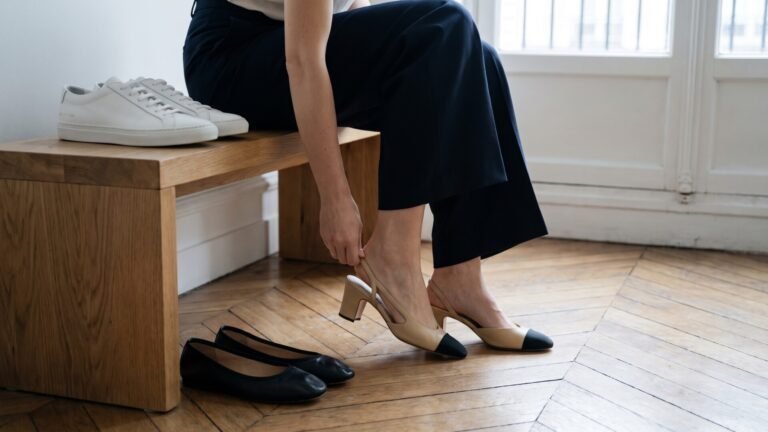
The two-tone slingback is the most useful shoe Chanel makes for anyone who walks. The moderate heel, the adjustable strap and the low-contrast coloring work for offices, travel and daytime events without announcing themselves.
The slingback is also the risk. A strap that does not sit firmly against the heel will slip with every step, and no amount of cushioning fixes that. Fit is critical, and the strap needs to be adjustable or correctly sized for the individual foot.
Materials need attention too. Soft lambskin is pleasant against the foot but creases, marks and loses shape faster than a structured calf. The premium here rests on design language, heritage and resale interest rather than on cushioning.
Repetto heels and heeled ballet-inspired styles – best for softness and understated femininity
Repetto comes from dance, and the shoes reflect it: lower, more flexible, softer against the foot than a formal pump. Buyers who find rigid shoes unwearable often get on with Repetto immediately.
Flexibility is not support. A soft, pliable construction may lack the firm arch and stable heel counter that a long day requires. Inspect the specific model’s heel and insole rather than assuming the brand’s dance heritage translates into walking comfort.
Sizing also needs care. Repetto styles can run narrow or short depending on the model and the foot. The Repetto Cendrillon sizing guide is the place to start, and Cendrillon versus Camille helps if the choice is between the two flats.
Sezane low and mid-heel shoes – best for regular wardrobe rotation
Sezane is the practical entry point. Lower and mid-heel silhouettes, almond toes, block heels, slingbacks and adjustable straps, at a price that makes regular wear reasonable rather than precious.
The brand is not uniformly comfortable, and treating it as such is a mistake. Construction varies by style, and some models are built for looks rather than distance. Check the specific product page, the heel type and the material before buying.
Where Sezane wins is cost per wear. A $200 shoe worn twice a week for three years beats a $900 shoe worn four times a year on any measure that matters. The Sezane shoe sizing and quality guide covers what to expect model by model.
What Most Buyers Get Wrong About Comfortable Designer Heels
Mistaking softness for support
Soft leather feels like quality in the hand. Under the ball of the foot at hour five, it is irrelevant. Pressure, heel slippage and pitch are structural problems, and no amount of suppleness solves them.
Judge four things separately: softness of the upper, stability of the heel, distribution of pressure under the forefoot, and security of the fit. A shoe can score well on one and fail on the others. Buyers who give a single overall comfort verdict in the boutique are usually grading the carpet.
Assuming the most expensive heel is the best investment
A $900 heel worn twice is a worse purchase than a $350 pair worn weekly for several years. Price is not value; cost per wear is.
Brand prestige supports resale, and resale is a real consideration for Chanel, Roger Vivier, Saint Laurent and Louboutin. But resale does not rescue a shoe that does not fit. The pair that stays in the box because it pinches will not recover its cost at auction, and it will not be worn either.
Choosing a size based only on length
Length is one dimension of five. Width, instep volume, heel grip, toe pressure and swelling during a long day all decide whether a shoe works.
Try heels late in the day, when feet are closest to their walking size. Use the brand’s own chart rather than assuming French labels fit alike – a 38 in one house is routinely a 37.5 in another. And never size up so far that the heel slips; a loose heel is its own kind of pain.
Believing a stiletto can be made all-day comfortable with inserts
Gel pads, forefoot cushions, heel grips and professional stretching do real work. They can soften a hard insole, stop a slight slip and relieve a specific pressure point.
They cannot correct a pitch that is too steep, a toe box that compresses the forefoot, a heel that is unstable, or a size that is simply wrong. Inserts are adjustments, not solutions. A shoe that needs three of them is the wrong shoe.
Practicality Test: How Each Heel Performs in Real Situations
Commuting and public transportation
Walking between stations, standing on trains, climbing stairs and handling uneven pavement is the hardest test a heel faces. The strongest choices here are the moderate Roger Vivier pump, lower-heeled Chanel styles and selected Sezane options with a stable heel and secure upper.
High Louboutin and sharply sculpted Saint Laurent heels are the wrong tools for this. So is any shoe with a heel set far back or a sole with no grip.
The practical answer for the longest commutes is not a better heel. It is a second pair. Carry elegant flats or low-profile sneakers and change at the desk. The shoe that does everything badly is worse than two shoes that each do one thing well.
Eight-hour office days
Office wear punishes different things: heel security during desk-to-meeting transitions, enough structure to survive being slipped off under a desk and put back on, and a toe shape that allows natural movement during the standing parts of the day.
A moderate heel with a secure upper handles this best. So does a classic color. Black, nude, navy and dark brown multiply the outfits a single pair works with, which reduces the pressure to buy several occasion-specific pairs that each get worn twice a year.
Weddings, events, and dinners
This is where the more dramatic shoes come into their own. Louboutin, the Saint Laurent Opyum and the higher Roger Vivier styles are built for controlled walking, seated dinners and short event windows, and they look better than anything else in this article doing it.
The preparation matters more than the shoe. Break them in indoors first. Plan the route from car to venue. Carry a discreet flat for the walk back to the hotel. Buyers who do these three things report very different evenings from those who do not.
Travel and city sightseeing
Even the most comfortable luxury heel is a poor primary sightseeing shoe. This is the contrarian point worth stating plainly: a heel that works for an office does not work for eight miles of cobblestones, and no French pump changes that.
Use heels for evenings and appointments. Pair them with a refined sneaker or flat for the daytime, and the trip works. The best French designer sneakers guide covers the practical half of that wardrobe.
Materials, Fit, and Break-In: How to Buy the Right Pair
Leather choices
Calfskin holds structure, creases visibly but recovers, and takes a polish. Lambskin is softer against the foot and marks more easily. Patent leather resists surface marks but feels less forgiving and does not stretch usefully. Suede is soft and weather-sensitive. Textile uppers are light and rarely as durable.
Material quality does not override a bad pattern. A beautifully finished shoe built on the wrong last for your foot is still the wrong shoe. The guide to French shoes covers the wider landscape of French footwear if the search is still open.
Sizing and fit checks
Run the same four checks on every pair:
- The heel stays secure when walking, with no lift at the back.
- The toes do not touch the front, even when standing.
- The widest part of the foot sits over the widest part of the shoe.
- The foot does not slide forward when standing still.
For pointed pumps, expect to need the length without the slip – which often means the correct size, not a larger one. For slingbacks, the strap should sit against the heel with the buckle on a middle hole. For open styles, the fit is decided by the vamp and the strap, not the length alone.
Breaking in without damaging the shoe
Short indoor sessions on clean carpet, then gradual increases in wear time. Professional stretching for appropriate leather styles only. No soaking, no heat, no aggressive home methods, particularly on patent, delicate lambskin, embellished shoes and structured designer constructions.
Fit a sole protector before the first outdoor wear and replace heel tips before they wear through. Both are cheap, and both prevent the expensive repair that follows neglect.
Which Option Still Makes Sense in Three Years?
The Roger Vivier Belle Vivier is the strongest formal all-rounder for a buyer who wants a recognizable but restrained signature. Its longevity depends on choosing a manageable heel and a versatile color rather than the most seasonal finish.
The best cost-per-wear choice is a lower or mid-heel Sezane style, assuming the specific construction fits. Regular use, repairability and ease of styling matter more over three years than entry-level prestige.
For resale, Chanel, Roger Vivier, Saint Laurent and Louboutin carry more secondary-market recognition than lesser-known labels. Condition, size, classic color, original packaging and timelessness decide actual demand – resale is a possibility, not a guaranteed return.
For pure visual impact, Louboutin Kate or Pigalle and the Saint Laurent Opyum are the strongest statements. They are sensible purchases for an occasion wardrobe and poor ones for a buyer whose main requirement is walking all day.
How the Main Options Compare
| Option | Walking comfort | Stability | Best use | Investment perspective | Main caution |
|---|---|---|---|---|---|
| Roger Vivier Belle Vivier | High for a formal pump | Moderate to high, depending on heel | Office, events, polished daily wear | Strong design recognition and timeless appeal | Pointed shape may feel narrow |
| Chanel moderate slingback | Moderate to high | Moderate | Work, travel days, daytime events | Strong heritage and resale interest | Slingback fit and delicate materials need attention |
| Saint Laurent moderate pump | Moderate | Moderate | Modern office and evening wear | Strong brand recognition | Pointed toe and sharper construction |
| Christian Louboutin Kate or Pigalle | Low to moderate for long walking | Low to moderate | Short events and dinners | Strong status signaling, condition-dependent resale | High pitch and narrow fit |
| Repetto heeled style | Moderate | Varies by model | Soft, understated dressing | More niche; value is style and wearability | Flexible construction may not provide enough support |
| Sezane low or mid-heel style | Moderate to high for everyday use | Moderate | Regular wardrobe rotation | Best cost-per-wear potential, lower luxury resale | Construction varies by individual style |
Who Should Buy Which Heel?
Choose Roger Vivier Belle Vivier if
You want the best balance of formal polish, recognizable design and manageable walking comfort. Your wardrobe includes tailored trousers, dresses, skirts and understated evening clothing. You prefer quiet luxury signals over a conspicuous logo.
Choose Chanel slingbacks if
You want a versatile heritage silhouette that moves between work, daytime events and travel. You appreciate a moderate heel and adjustable fit. You are willing to protect delicate materials and pay a premium for brand heritage.
Choose Saint Laurent if
You prioritize a sharper, more contemporary line and want a heel that moves from a modern office wardrobe to evening dressing. You can accept less forgiveness in exchange for a more sculptural silhouette.
Choose Christian Louboutin if
The red sole and dramatic profile are central to the purchase. You mainly need an event shoe rather than a commuting shoe. You understand that visual impact, not all-day walking, is the primary value.
Choose Repetto or Sezane if
You want a softer, more approachable silhouette for repeated use. Cost per wear matters more than maximum brand prestige. You are prepared to assess the exact model’s support, fit and materials rather than relying on the brand name alone.
Frequently Asked Questions About Comfortable French Designer Heels
What are the most comfortable French designer heels for walking all day?
The Roger Vivier Belle Vivier is the strongest formal all-rounder, with lower-heeled Chanel, Repetto and Sezane styles often better for repeated everyday walking. Fit and heel height matter more than the label alone.
Are French designer heels better made than other luxury heels?
French houses often excel in design heritage, leather selection and patternmaking, but construction varies by brand and model. A French label is not a guarantee of support, comfort or durability.
What heel height is best for walking all day?
A moderate heel, generally around 2 to 3 inches, is the most realistic starting range for extended wear. Pitch, heel placement and toe shape can make two heels of the same height feel completely different.
Are Christian Louboutin heels comfortable enough for a full day?
Kate and Pigalle styles are usually better suited to shorter events, dinners and controlled walking than full-day urban use. A lower heel or a roomier alternative is more practical for commuting and long periods of standing.
Do designer heels stretch with wear?
Some natural leather can relax slightly, but stretching will not reliably fix incorrect length, severe toe compression, an unstable heel or excessive pitch. Professional stretching is safer than aggressive home methods.
How should French designer heels fit?
The heel should remain secure, toes should not touch the front, and the foot should not slide forward when standing. The widest part of the foot should align with the widest part of the shoe.
Do comfortable designer heels hold their value?
Chanel, Christian Louboutin, Saint Laurent and Roger Vivier can attract stronger resale interest than less recognized labels, but condition, size, color, originality and timelessness determine actual demand. Comfort may improve wearability and condition, but it does not guarantee resale value.
The Short Version
The most comfortable French designer heels are not the most famous ones. They are the moderate pumps, the slingbacks that hold, the block heels that sit under the body. Roger Vivier Belle Vivier for the formal all-rounder, a moderate Saint Laurent or Chanel slingback for the sharper wardrobe, Sezane and Repetto for the shoes that actually get worn on a Tuesday. Buy the heel you can walk in, in the color you will wear most, and leave the four-inch stilettos to the evenings that end at a table.