Are Hermès Oran Sandals Still Trending in 2026? (And the Best French Alternatives)
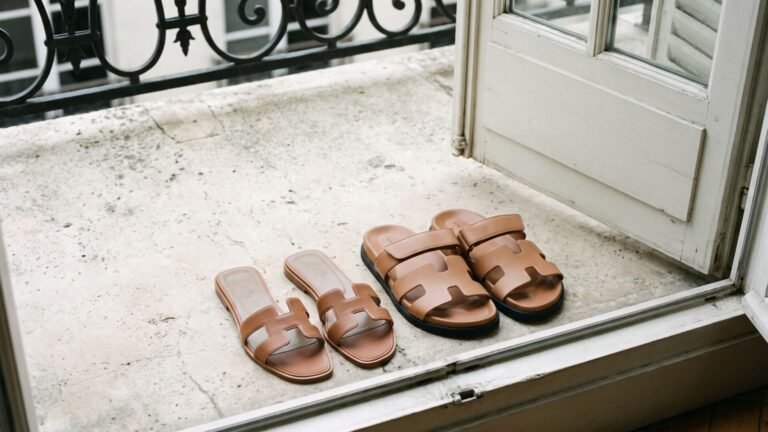
Few sandals are as recognizable as the Hermès Oran: a flat leather slide with a single wide strap and a cutout “H.” Designed in 1997 by Pierre Hardy, Hermès’s footwear creative director, and named after the Algerian coastal city of Oran, it is still in production nearly three decades later.
So is it still relevant in 2026? In short, yes, but as a quiet staple rather than a hype item, and for many buyers a cheaper or more comfortable sandal makes more sense. This guide covers where the Oran stands, what you pay for, how it compares with its comfort-focused sibling the Chypre, and which French and French-style alternatives are worth a look. For the sibling comparison, see our Hermès Oran vs. Chypre guide.
[Check latest colors and availability]
Quick Verdict
Is the Oran still in style? Yes. It no longer feels like a new trend, which is exactly why it works as a wardrobe basic: neutral, easy to dress up or down, and not tied to a single season’s look.
- Buy it if you want a timeless, recognizable luxury sandal for a minimalist wardrobe and you are happy to pay for the name.
- Skip it if comfort for long walks, novelty or value matter more. The Chypre or one of the alternatives below may suit you better.
| Option | Why consider it |
|---|---|
| Hermès Oran | The original; flat calfskin slide, instantly recognizable |
| Hermès Chypre | Technical sibling with a molded footbed, anatomical sole and adjustable strap |
| Sézane | Accessible French brand with a romantic, easy look |
| A.P.C. | Minimal French labels with no logo |
| Carel | More structured, fashion-forward Paris shoemaker |
| Repetto | Ballet-inspired, feminine |
| Jonak | Trend-led, lower-priced French brand |
[Shop Hermès Oran] [Explore French alternatives]
What Made the Hermès Oran So Popular?
The design
The Oran is a flat, open-toe slide with one wide strap across the foot. The “H” cutout in the strap is the only branding. With no hardware or decoration, it works with linen trousers, slip dresses, tailored shorts and swimwear cover-ups.
Quiet luxury and the “entry” Hermès
The Oran’s understated logo suited the shift from logo-heavy fashion to quiet luxury, and it became one of the more accessible Hermès purchases compared with bags that are hard to obtain. See our guides to the Birkin resale market and the heritage investment guide for the wider context.
Colors and materials
Calfskin is the most common version. Hermès also issues the Oran in box calfskin, Epsom leather, and seasonal materials such as suede, canvas, shearling and exotic skins, with colors changing by season. Availability and materials vary, so check the current Hermès listing.
[Read the full history of the Oran]
2026 Trend Analysis: In or Out?
The Oran remains a common sight in warm destinations and cities, but the conversation has shifted toward Hermès’s own Chypre, a more technical sandal with an anatomical rubber sole, molded footbed and adjustable strap that launched in 2020 and has been reported to be in high demand. In other words, the brand’s own newer sandal has taken some of the spotlight.
Where the Oran still wins
- Minimalist and capsule wardrobes: a slim, neutral flat that works with most outfits.
- Travel: lightweight and easy to pack.
- Dressier summer outfits: its slim profile looks more polished than a technical sandal.
Where it does not
If you want chunkier soles, sculptural heels or louder color, the trend has moved on. See our best French designer sneakers and Isabel Marant Bekett guides for where footwear attention has gone.
[Check current Oran styles]
Design and Quality
The Oran is a simple sandal built from good leather. Construction is straightforward: a cut strap, a flat leather-covered sole and clean edges, with no padding or arch support. Hermès makes its footwear in Italy, though you should confirm origin on the label of any specific pair.
What you are paying for
Retail guides put a standard calfskin Oran at roughly $800–$900 in the US in 2026, with exotic skins costing considerably more. Prices differ by market and change, so check hermes.com. The cost reflects three things:
- The Hermès name and the cachet that comes with it.
- The recognizable “H” design.
- Quality materials and finishing.
You are not paying for cushioning or ergonomic features, because there are none.
[Shop Oran by material]
Comfort and Wearability
The Oran has a flat sole with no real arch support, so it suits short outings, lunches and resort wear better than a day of sightseeing. Owners report that the strap edges can rub at first, especially in stiffer leathers; Epsom is the stiffest option, and the leather relaxes with wear without stretching much.
Sizing
The Oran follows European sizing. Retail guides suggest standard and narrow feet can usually go true to size, while wider feet, or those between sizes, often go up half a size. Try on in a boutique if you can.
Oran vs. Chypre
| Feature | Oran | Chypre |
|---|---|---|
| Launched | 1997 | 2020 |
| Sole | Flat | Anatomical rubber sole, molded footbed |
| Fit | Fixed strap | Adjustable strap |
| Look | Slim, dressier | More casual, technical |
| Approx. US price (retail guides) | ~$800–$900 | ~$1,100 |
Details and prices vary by material and market; see the full Oran vs. Chypre comparison.
[Check Oran comfort reviews]
Pricing in 2026: Is It Overpriced?
As a piece of footwear, the Oran costs far more than the materials and construction justify, and many well-made leather slides cost a fraction of the price. Whether that matters depends on how much you value the brand and the design recognition. For many buyers the answer is no, and for collectors of Hermès the answer is yes.
| Aspect | Hermès Oran | Typical alternative |
|---|---|---|
| Leather | High-quality calfskin | Varies by brand |
| Construction | Simple, made in Italy | Simple; varies |
| Comfort | Moderate; flat sole | Often better where a padded footbed is used |
| Brand recognition | Very high | Lower |
| Price | ~$800–$900 | Check each brand |
[Compare Oran pricing across retailers]
Who Should Still Buy the Oran?
Hermès fans and capsule-wardrobe dressers. If you own other Hermès pieces or want one very neutral, very recognizable flat sandal, the Oran fits.
Not ideal for comfort-first walkers, buyers who want a logo-free shoe, or anyone on a tight budget.
[Determine if Oran is right for you]
The Best French Alternatives to the Hermès Oran
These are French brands with sandals in the same spirit. Prices and models change every season, so we describe what each brand is known for and leave exact prices to the brand’s own site.
1. Sézane
Sézane, founded by Morgane Sézalory, is known for romantic, easy pieces at accessible prices. Its sandals range from flat slides to block heels. Read our Sézane shoes guide for sizing and quality notes. Best for: an affordable French look.
[Shop Sézane sandals]
2. A.P.C.
A.P.C., founded by Jean Touitou in 1987, is a minimalist Paris label with simple leather sandals and no flashy branding. It is a good fit if you want the quietest possible look. Our A.P.C. bags guide shows the same design approach. Best for: logo-free minimalism.
[Shop A.P.C. sandals]
3. Carel
Carel is a Paris shoemaker best known for Mary Janes and structured shoes, and its sandals tend to be more distinctive than a plain slide. Best for: a fashion-forward French sandal.
[Shop Carel sandals]
4. Repetto
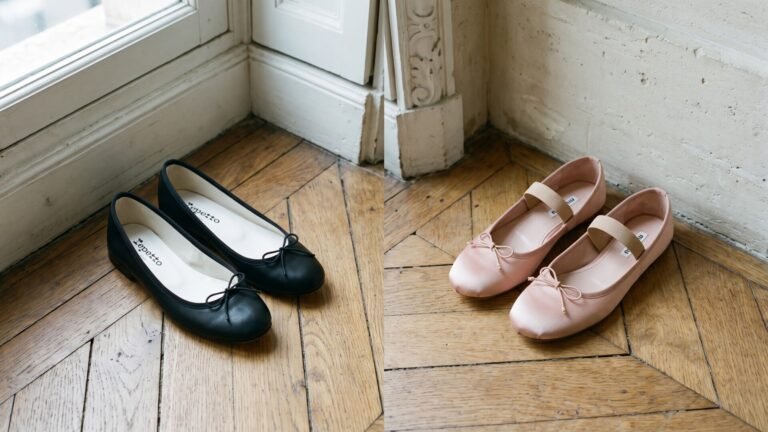
Repetto was founded in 1947 by Rose Repetto near the Paris Opéra and is best known for ballet shoes and flats. Its sandals lean feminine and delicate. See our Repetto Cendrillon vs. Miu Miu comparison. Best for: a softer, ballet-inspired look.
[Shop Repetto sandals]
5. Jonak
Jonak is a French footwear brand offering trend-led styles at lower prices, including slides in the same family as the Oran. Materials and construction are more basic than Hermès. Best for: trying the look cheaply.
[Shop Jonak sandals]
6. French Sole Alibi (Oran look-alike)
The French Sole Alibi is often cited as a close visual match for the Oran, with an H-style cutout and padded footbed. Note that we could not confirm that French Sole is a French maker despite the name, and its design is clearly modeled on the Oran, so we list it as a look-alike rather than a French alternative. Check reviews for finish durability before buying.
[Shop French Sole Alibi]
Oran vs. Alternatives at a Glance
| Brand | Known for | Choose if |
|---|---|---|
| Hermès Oran | Iconic H cutout slide | You want the original and the name |
| Hermès Chypre | Comfort-led technical sandal | You will walk a lot |
| Sézane | Accessible romantic style | Value matters |
| A.P.C. | Minimalism, no logo | You dislike visible branding |
| Carel | Structured, distinctive shoes | You want something fresher |
| Repetto | Ballet-inspired flats | You want a feminine look |
| Jonak | Trend-led and affordable | You want to test a trend |
[Compare all alternatives side by side]
How to Wear Oran Sandals in 2026
- Linen sets and neutral palettes: cream, beige, olive and navy all work with tan or black.
- Jeans and a blazer: straight-leg jeans, an unlined linen blazer and a white tank.
- Slip and midi dresses: the flat sole balances a feminine dress.
- Travel: easy to slip off at airport security and easy to pack.
- Avoid: athletic wear and busy prints that fight the simple strap.
For more French footwear ideas, browse our French shoes guide, the Roger Vivier Belle Vivier pump, and Louboutin Kate vs. So Kate.
[Shop Oran styling inspiration]
Pros and Cons
| Pros | Cons |
|---|---|
| Designed in 1997 and still current | Expensive for a flat sandal |
| Easy to style with most outfits | No arch support |
| Light and packable | Strap can rub at first |
| New colors and materials each season | No longer feels new |
| Recognizable to those who know | Visible H logo |
[Weigh your options]
Final Verdict: Still Worth It in 2026?
Yes for the right buyer. The Oran is a well-made, minimalist classic that will not look dated, but it is a purchase for brand and design rather than comfort or value. If you plan to walk a lot, look at the Chypre; if value matters, Sézane or A.P.C. make better sense.
[Browse current Oran styles or explore alternatives before summer sell-outs]
Frequently Asked Questions About Hermès Oran Sandals
Are Hermès Oran sandals still in style in 2026?
Yes. They have become a quiet wardrobe staple rather than a hype item. Hermès’s newer Chypre has taken some of the attention.
Who designed the Hermès Oran?
Pierre Hardy, Hermès’s footwear creative director, designed the Oran in 1997. It is named after the Algerian city of Oran.
Are Hermès Oran sandals comfortable?
For short outings, yes. The sole is flat with little arch support, so all-day walking can be tiring, and the strap edges may rub at first. The Chypre offers a molded footbed and adjustable strap.
Do Hermès Oran sandals run true to size?
They follow European sizing. Retail guides suggest true to size for standard or narrow feet and half a size up for wider feet or between sizes. Try them on if possible.
How much do Hermès Oran sandals cost?
Retail guides put calfskin versions at roughly $800 to $900 in the US in 2026. Exotic skins cost more. Check hermes.com for the current price in your market.
What is the difference between the Oran and the Chypre?
The Oran (1997) is a slim, flat slide. The Chypre (2020) has an anatomical rubber sole, a molded footbed and an adjustable strap, making it more comfortable for walking and more casual in look.
What are good French alternatives to the Oran?
Sézane, A.P.C., Carel, Repetto and Jonak all make French sandals at different price points and styles. Check each brand for current models and prices.
How can I tell if an Oran is authentic?
Buy from Hermès directly or from retailers with an authentication guarantee. No checklist can prove authenticity on its own, so rely on the seller’s guarantee and documentation for pre-owned pairs.