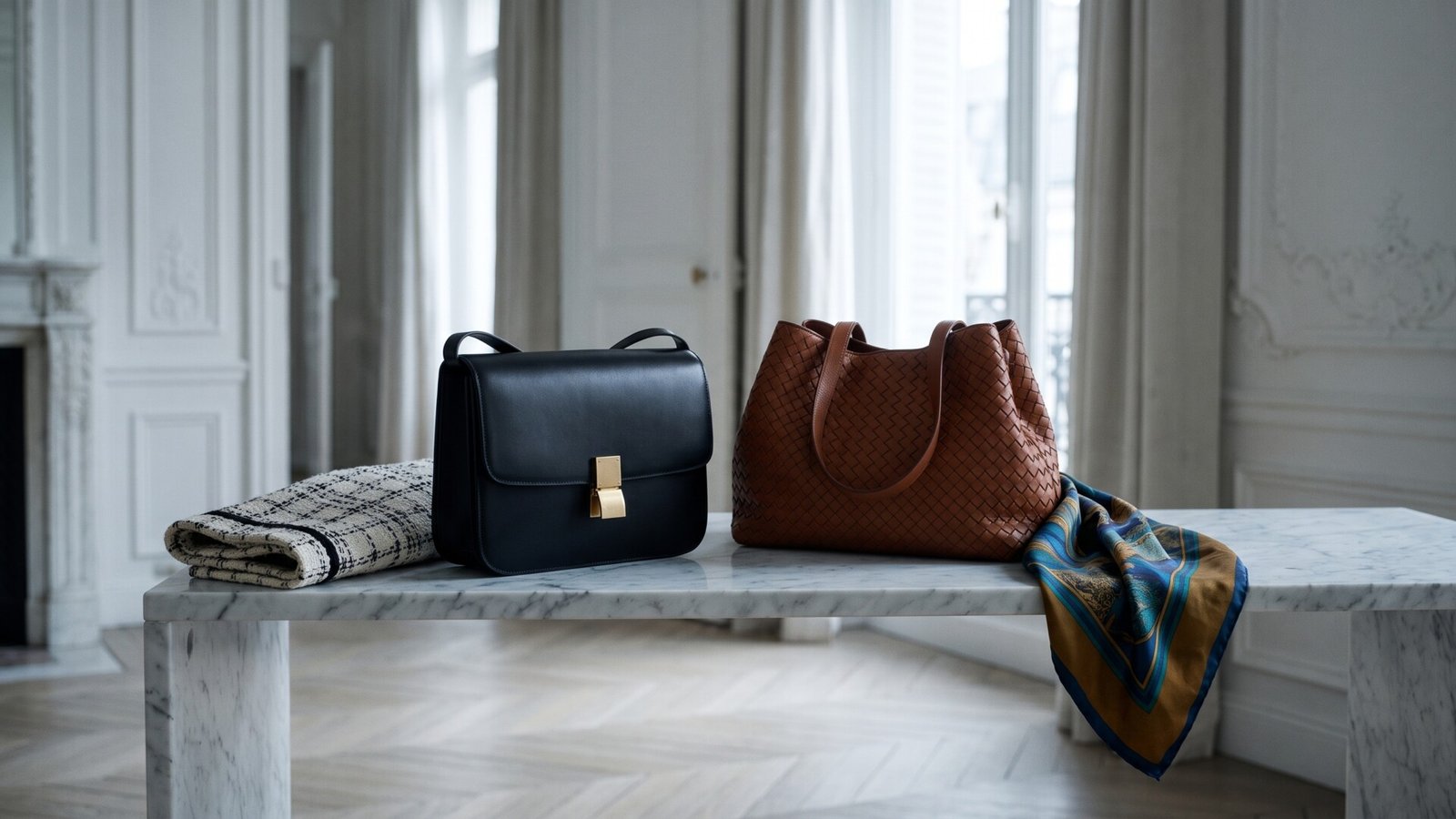
The Ultimate Guide to French vs. Italian Designer Comparisons: Two Philosophies of Luxury
Let’s settle this once and for all. Or at least, let’s have the conversation that every fashion lover has at some point: French or Italian? Which one is better? Which one should you invest in? Which one actually aligns with who you are?
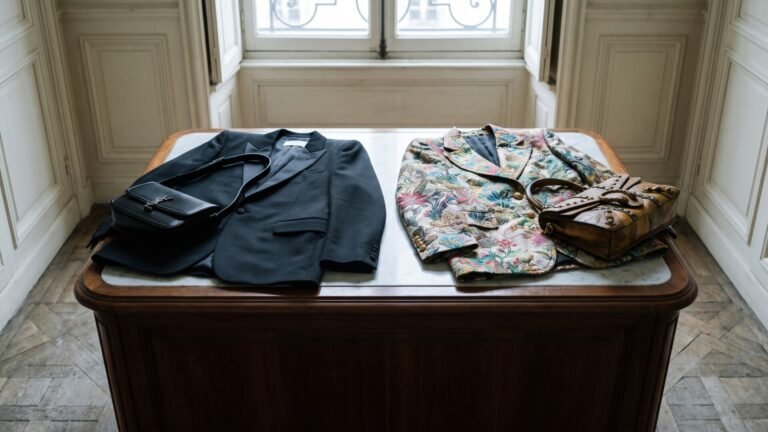
Here’s the thing—this isn’t a competition with a winner. France and Italy are the two undisputed capitals of luxury fashion, but they got there through completely different paths. French fashion grew out of royal courts and aristocratic patronage. Italian fashion emerged from regional workshops and family-run ateliers. One is about refinement and intellectual rigor. The other is about sensuality and artistic expression.
Understanding the difference isn’t just trivia—it’s essential knowledge for anyone spending real money on luxury goods. Because the bag that’s perfect for your Parisian minimalist wardrobe might feel completely wrong if your soul actually leans toward Milanese maximalism.
Welcome to the French vs. Italian Designer Comparisons hub at FrenchDesignerVault.com. This is your guide to the great debate, with deep dives into the brand rivalries that define luxury fashion. Consider this your map to the territory—we’ll keep it moving, because we’ve got dedicated sub-hubs for each comparison later.
The Big Picture: Two Philosophies of Luxury
Before we get into specific brand matchups, we need to understand the fundamental difference between French and Italian approaches to fashion.
French luxury is rooted in the court of Louis XIV, who used fashion as a tool of state power and national prestige. This tradition carries through to today: French brands emphasize heritage, precision, and intellectual rigor. The design philosophy is often described as “understated elegance”—clothes and accessories that whisper rather than shout. A French woman doesn’t want you to notice her bag first; she wants you to notice her.
Italian luxury grew from Renaissance workshops and family ateliers, where craftsmanship was passed down through generations. Italian design embraces emotion, texture, and individual expression. There’s a sensuality to Italian fashion—a love of beautiful materials, bold colors, and the kind of craftsmanship you can feel with your fingers. An Italian bag is meant to be seen, touched, and admired.
This distinction plays out in everything from leather tanning to runway shows. French leather is often chrome-tanned for consistency and protection; Italian leather is frequently vegetable-tanned to develop a rich patina over time. French silhouettes tend to be structured and symmetrical; Italian silhouettes can be fluid, experimental, and dramatic.
As fashion historian Isabelle Moreau puts it: “French luxury speaks to refinement; Italian luxury sings of passion. One whispers elegance, the other declares it”.
The Great Handbag Debate — French Structure vs. Italian Soul
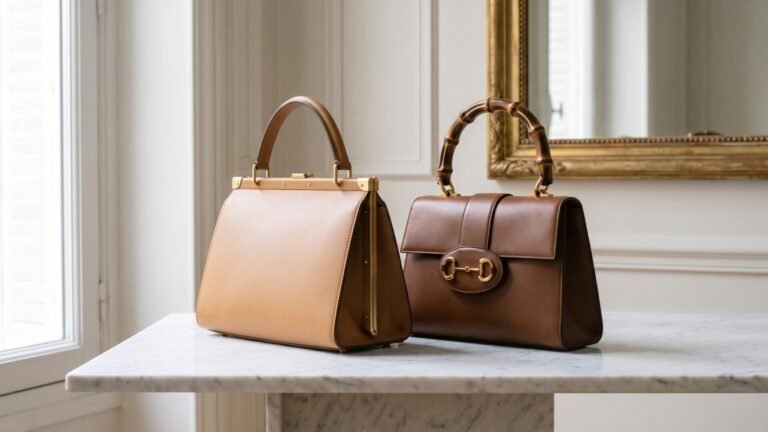
Let’s start with the category that most people care about most: handbags. France and Italy produce the world’s most coveted bags, but they get there differently.
Craftsmanship and Materials
French handbags emphasize structural integrity and timeless design. Hermès still hand-stitches many of their Birkins and Kellys using saddle stitching—a technique so durable that a well-maintained bag can last decades without unraveling. Chanel’s quilting and chain straps are engineered for balanced weight distribution and wear resistance. French houses often use calfskin with protective coatings to maintain a pristine appearance.
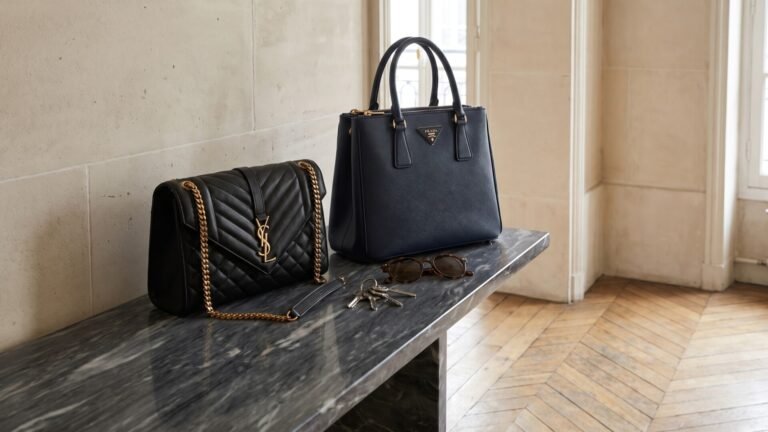
Italian handbags prioritize tactile luxury and innovative construction. Prada’s Saffiano leather—a cross-hatched, wax-coated finish—is scratch-resistant by design. Bottega Veneta’s intrecciato weave isn’t just decorative; it reinforces structural integrity while minimizing surface scuffing. Italian tanneries in Tuscany produce some of the world’s finest vegetable-tanned leathers, which develop a rich patina and gain character with use.
Durability and Maintenance
The durability question is nuanced. French bags often require more professional maintenance—Sophie Laurent, a Paris-based art curator, has her Hermès Constance professionally serviced every few years. Italian bags like Prada’s Saffiano offerings can often be maintained with simple at-home care.
The French vs. Italian Handbag Comparison
| Feature | French Handbags | Italian Handbags |
|---|---|---|
| Primary Design Ethos | Minimalist, timeless, structured | Dramatic, expressive, sensual |
| Leather Type | Calfskin, caviar, exotic skins with protective coatings | Saffiano, vegetable-tanned full-grain, buttery lambskin |
| Stitching | Hand-stitched saddle seams (Hermès), precision machine work | Mechanized with high tension; visible hand-finishing on top lines |
| Durability Focus | Long-term structural integrity | Scratch resistance and graceful aging |
| Hardware | Precious metals, thick plating, discreet | Bold, ornate, often signature-focused |
| Maintenance Needs | Higher—regular conditioning, professional care | Lower to moderate—depends on leather type |
| Resale Value | Exceptional—often appreciates | Strong—limited editions hold value well |
| Iconic Examples | Hermès Birkin, Chanel 2.55, Dior Lady Dior | Bottega Veneta Cassette, Gucci Dionysus, Prada Galleria |
Which One Should You Choose?
The answer depends on your lifestyle and priorities. If you value timeless structure, heirloom quality, and potential appreciation, French handbags deliver unmatched long-term value. If you prefer modern versatility, low-maintenance durability, and materials that age beautifully, Italian handbags are equally compelling.
The Brand Battles — Head-to-Head Comparisons
Now let’s get into the specific matchups that define the French-Italian fashion rivalry. Each pair represents different approaches to luxury, different customer bases, and different ideas about what fashion should be.
Chanel vs. Gucci: Timeless Elegance vs. Bold Maximalism
This is perhaps the most iconic matchup in fashion—the ultimate French house versus the ultimate Italian house.
Chanel, founded in 1910 by Gabrielle “Coco” Chanel, represents everything French luxury stands for: timeless elegance, classic silhouettes, and understated sophistication. The brand’s focus has always been on women, producing high-taste, classy clothing alongside luxury goods and accessories. Chanel’s designs are calm rather than loud—the little black dress, the tweed suit, the 2.55 flap bag. If you’re conservative and love timeless elegance, Chanel is your brand.
Gucci, founded in Florence in 1921, took a dramatically different path. Under the visionary creative direction of Alessandro Michele (2015-2022), Gucci embraced maximalism—bold prints, eclectic references, and what some call “geek-chic” aesthetic. Gucci’s design philosophy celebrates individuality, experimentation, and modern creativity. The brand targets young, dynamic people who want to make a statement.
The academic research confirms this distinction. Studies of luxury brand identity show that while Chanel maintains its commitment to functionality and femininity, Gucci consistently uses ornamental elements and trend colors to keep tradition alive while pushing forward.
Price comparison: Chanel is significantly more expensive—it’s difficult to find a Chanel bag under $4,000, with popular styles ranging from $5,000 to $10,000. Gucci bags range from $790 to $7,700, offering more accessible entry points.
The bottom line: Choose Chanel for investment pieces and timeless elegance. Choose Gucci for bold self-expression and modern creativity.
Hermès vs. Prada: Scarcity vs. Innovation
This matchup contrasts two completely different business models and brand philosophies.
Hermès, founded in 1837 as a harness workshop, is the ultimate expression of French craftsmanship and scarcity. Every Birkin and Kelly is handcrafted by a single artisan, taking 18 to 40 hours to complete. You can’t just buy a Birkin—you need to build a relationship with the brand. This controlled distribution creates a secondary market where Hermès bags regularly sell above retail, with some appreciating 92% over a decade.
Financially, Hermès is a fortress. The company reported €8.0 billion in revenues with an EBIT margin of 41.4%, demonstrating the strength of exclusivity and craftsmanship.
Prada, founded in Milan in 1913, takes a different approach. The brand is known for innovation—Miuccia Prada famously introduced nylon into luxury fashion, challenging conventional ideas about what “luxury materials” mean. Prada’s design philosophy embraces intellectualism, minimalism with a twist, and constant evolution.
Prada reported €2.7 billion in revenues, with retail sales making up 90%—proving the impact of retail expansion and innovation. While Hermès thrives on scarcity, Prada leverages scale and new ideas.
The bottom line: Hermès is for collectors who value heritage and are willing to play the brand’s game. Prada is for intellectuals who appreciate innovation and don’t need their luxury to be obvious.
Dior vs. Versace: Refined Femininity vs. Provocative Glamour
This matchup showcases the contrast between Parisian sophistication and Italian extravagance.
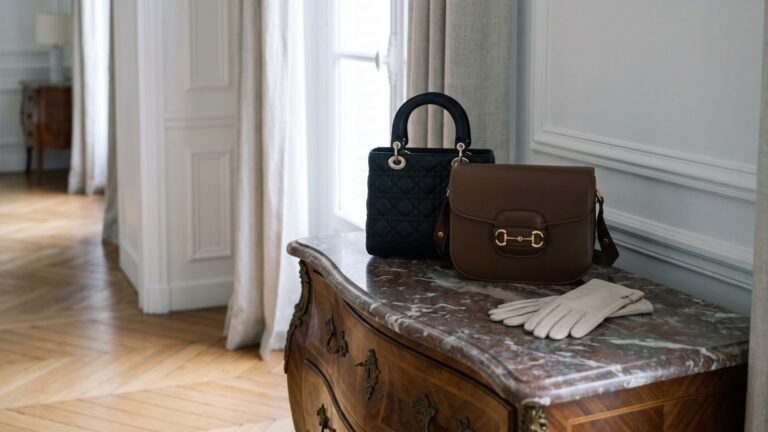
Dior, founded by Christian Dior in 1946, is a cornerstone of Parisian haute couture. The brand embodies timeless elegance, refined femininity, and sophisticated tailoring. The “New Look” silhouette revolutionized womenswear, and iconic pieces like the Lady Dior and Saddle Bag remain benchmarks of understated luxury. Dior’s style is romantic, structured, and designed for women who value investment pieces that transcend trends.
Versace, founded by Gianni Versace in 1978, represents Italian opulence at its most daring. The brand is known for bold, glamorous, and provocative designs—vibrant baroque prints, the iconic Medusa logo, Greek Key patterns, and unapologetic sensuality. Versace is for confident individuals who want to make a statement and turn heads.
Price comparison: Dior commands higher prices—ready-to-wear dresses start around $2,000, with iconic handbags between $3,000 and $6,000. Versace offers more accessible entry points, with handbags starting around $1,500 and dresses from $1,500 to $5,000.
The bottom line: Choose Dior for timeless elegance, investment-worthy handbags, and Parisian sophistication. Choose Versace for bold glamour, red-carpet moments, and unapologetic self-expression.
French Minimalism vs. Italian Maximalism — The Philosophical Divide
Beyond individual brands, there’s a deeper philosophical divide between French and Italian approaches to fashion. This is the lens through which everything else should be understood.
French Minimalism: “Less is More”
French minimalism isn’t about deprivation—it’s about precision. Every element serves a purpose. Silhouettes are clean, colors are neutral, and quality is expressed through materials and construction rather than ornamentation.
This approach traces back to Coco Chanel, who liberated women from corsets and excessive decoration. It continues through designers like Christophe Lemaire and the aesthetic of brands like Celine and The Row (founded by a French-American sister duo).
French minimalism prioritizes:
- Clean lines and structured silhouettes
- Neutral palettes (black, navy, beige, taupe)
- Discreet or absent branding
- Investment in quality over quantity
- Pieces designed to last decades, not seasons
As one fashion historian notes, French bags are designed to “disappear into your wardrobe”—they’re anchors, not statements.
Italian Maximalism: “More is More”
Italian maximalism, or “more is more,” celebrates abundance, creativity, and individual expression. This philosophy has roots in Baroque and Rococo art, which originated in Italy and France but found its most exuberant expression in Italian design.
The modern revival of maximalism in fashion is closely associated with Alessandro Michele’s Gucci, which embraced bold color, pattern mixing, and eclectic references. Other Italian brands like Dolce & Gabbana and Etro have long celebrated ornamentation, embroidery, and sensory richness.
Italian maximalism prioritizes:
- Bold colors and dramatic contrasts
- Pattern mixing and layered textures
- Visible craftsmanship and artistic expression
- Emotional impact over intellectual restraint
- Pieces that serve as the focal point of an outfit
As fashion historian Luca Moretti observes, “Italian bags are meant to be seen and felt”.
The Cultural Context
These differences reflect deeper cultural attitudes. French fashion values discretion—status is conveyed through subtlety, through knowing. Italian fashion values joy—beauty should be experienced, shared, and celebrated.
Neither is superior. They’re different ways of approaching the same goal: expressing identity through what you wear.
The Bottom Line: Which One Is for You?
After all this comparison, the question remains: French or Italian? Here’s how to decide.
Choose French luxury if:
- You value timeless elegance and investment pieces
- You prefer understated sophistication over bold statements
- Resale value matters to you
- Your wardrobe is built on neutrals and classics
- You appreciate heritage and tradition
Choose Italian luxury if:
- You love bold self-expression and creativity
- You want your accessories to be conversation starters
- You appreciate the feel and texture of beautiful materials
- Your style evolves with trends and your mood
- You value artisanal craftsmanship and regional traditions
But here’s the secret the smartest collectors know: you don’t have to choose. A truly great wardrobe includes both—a black Chanel flap for the days when you need timeless armor, and a Bottega Veneta Jodie for the moments when you want to feel powerful and expressive.
As Clara Nguyen, a vintage luxury dealer, puts it: “The true test of worth isn’t initial shine—it’s how the bag looks after a decade of love”. Whether that bag comes from Paris or Milan matters less than whether it truly belongs to you.
Ready to dive deeper? Check out our dedicated comparison sub-hubs:
- Chanel vs. Gucci: Timeless Elegance vs. Bold Maximalism
- Hermès vs. Prada: Scarcity vs. Innovation
- Dior vs. Versace: Refined Femininity vs. Provocative Glamour
- French vs. Italian Handbags: The Ultimate Face-Off
- French Minimalism vs. Italian Maximalism: Two Philosophies of Style