Christian Louboutin Kate vs Pigalle: Which Pump Is Easier to Wear?
If you bought the Pigalle first, you probably bought it for the photograph. It is the shoe that appears in the editorial, the one that makes the leg look longer and the ankle look thinner, and it does exactly what the image promised for about forty minutes. Then the forefoot starts reporting in. The Kate tends to be the shoe people buy second, once they have learned what they can actually wear, and it is usually the one that ends up by the door. The tradeoff is simple: the Kate is the easier Louboutin pump to live in, and the Pigalle is the more dramatic one to own.
Neither is a comfort shoe. Both are pointed, elevated, and built around a silhouette rather than a footbed, and the highest versions of each are evening shoes in the strict sense. The real question is not which looks better. It is whether the reader wants a cleaner fit and broader wardrobe use, or the sharper, more recognizable Pigalle profile and is willing to pay for it in wearability.
Quick Verdict Summary
The Kate is the pump most buyers should own. It has a higher vamp, a slightly more forgiving upper, and a silhouette that moves between tailoring and eveningwear without announcing itself. The Pigalle is the more seductive design, lower cut through the instep, and it asks more of the foot in return.
Kate strengths
- Broader styling range: workwear, formal events, evening dressing, repeated wear.
- Cleaner, more refined line, with a pointed toe that reads as polished rather than provocative.
- The better single-pump purchase for a buyer who wants one recognizable Louboutin, not a directional statement.
- Sits naturally in a quiet-luxury wardrobe, where the branding is subtle and the silhouette does the talking.
Pigalle strengths
- More sculptural and more exposed, with a pronounced décolleté and sharper visual impact.
- The stronger choice for collectors and for anyone drawn to Louboutin’s most overtly seductive design language.
- Compelling in classic patent finishes, and notably more wearable in the lower and mid-height versions.
- More distinctive, and correspondingly less forgiving over long periods of standing.
Key takeaway: choose the Kate for the more wearable all-purpose pump. Choose the Pigalle if its dramatic shape is the reason for buying a Louboutin at all, and if visual impact matters more than ease.
Christian Louboutin Kate
Design analysis
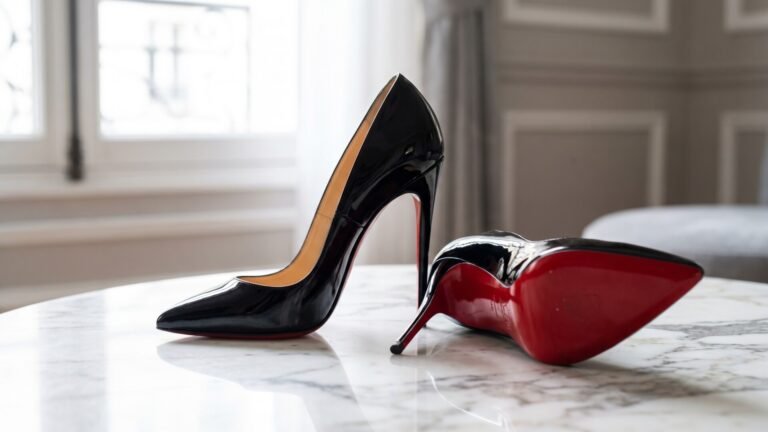
The Kate is defined by a sharply pointed toe, a high-cut vamp, a clean topline, and the red lacquered sole that identifies every Louboutin. The high vamp is the part that matters most. It covers more of the instep, which holds the foot more securely and gives a longer, more continuous line through the leg.
That construction is why the Kate works with tailored trousers, slim ankle pants, midi skirts, sheath dresses, and evening separates. It does not compete with the outfit. The pointed toe is glamorous, but the overall effect is controlled.
Material changes the character more than buyers expect. Classic patent is the most formal and the most sculptural, with a hard shine that holds its shape and shows every scuff. Nappa leather is softer from the first wear and creases where the foot flexes. Suede reads quieter and more matte, and marks in rain. None of these is a better shoe; they are different shoes with the same name.
The Kate feels more restrained than the Pigalle even though both are pointed and heeled. That restraint is the point. Christian Louboutin’s design language and craftsmanship explains why the house keeps returning to this shape.
Fit and wearability
The forefoot is narrow and sharply pointed. Buyers with wider feet, bunions, or a history of pressure in rounded-toe shoes will feel this immediately, and no amount of break-in changes a toe box.
Heel height changes the practical experience more than any other variable. The lower and mid-height Kates can be worn for an evening without planning around them. The highest versions shift weight onto the forefoot and turn a dinner into a timed event. A 70mm Kate and a 100mm Kate are related, not equivalent.
Sizing should be verified against the exact version, material, and retailer listing rather than assumed. Patent runs firmer than nappa. A suede Kate may feel looser within a week. Heel slippage is the usual complaint when buyers size up to solve toe pressure, and it is a bad trade: a shoe that slips at the heel is unstable, and instability is worse than tightness.
Try them on a carpeted surface, in the late afternoon, and walk. Where the retailer’s return policy allows it, this is the only test that counts.
Best uses and wardrobe value
The Kate is the stronger choice for a single investment pump because it moves between professional tailoring, cocktail dressing, weddings, and formal events. One shoe, several dress codes, more wears per year.
Black patent, nude-toned leather, and restrained suede versions carry the most cost-per-wear potential. Highly embellished or seasonal finishes are lovely and worn rarely, which is a different purchase with a different justification.
For buyers who want a recognizable luxury signal that stays quiet from across a room, the Kate is the version that does it. [Affiliate: Compare current Kate heel heights and materials before choosing]
Christian Louboutin Pigalle
Design analysis
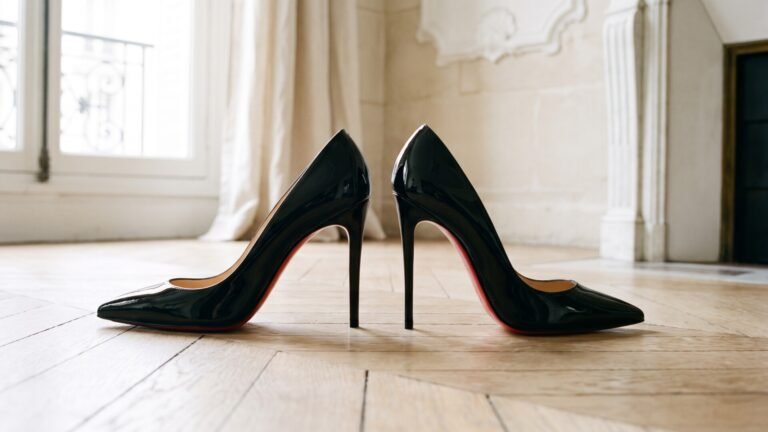
The Pigalle’s signature is a low-cut vamp, pronounced toe cleavage, a sharply pointed toe, and an intentionally sensual line through the foot. Where the Kate covers, the Pigalle reveals. That single difference explains most of the styling gap between them.
Set the two at the same heel height and the Pigalle still looks more exposed and more dramatic. The lower vamp lengthens the visible foot and draws the eye down the instep. It is traditional glamour, closer to the mid-century pump than to the cleaner, more corporate Kate.
Patent intensifies the effect, because the shine emphasizes the curve of the upper and the sharpness of the toe. Suede softens it, and a suede Pigalle reads considerably less severe. Buyers who find the patent version too overt should try the suede before dismissing the model.
Fit and wearability
The low vamp exposes more of the foot and puts more emphasis on the forefoot. In practice, that means fit becomes noticeable sooner. The shoe holds less of the instep, so the toes do more of the work.
A pointed toe, a low vamp, and a high heel together are difficult for wider feet or for anyone with limited tolerance for forefoot pressure. This is not a moral failing of the design. It is what the design is for, and buyers who want that profile accept the terms.
The Pigalle is not automatically unwearable. Lower heel versions, softer materials, and careful sizing make a real difference. What does not help is sizing up indiscriminately. Extra length creates heel slippage and instability without solving width pressure, and a Pigalle that flaps at the heel is worse than one that is snug.
Best uses and wardrobe value
The Pigalle is the stronger choice for eveningwear, statement dressing, photographs, and collectors who value Louboutin at its most alluring. It is less universally useful than the Kate and more emotionally distinctive for the right buyer.
Classic black patent and restrained nude options are the most versatile versions. Embellished and highly seasonal editions are collector purchases, not wardrobe basics, and should be bought as such.
[Affiliate: Explore the Pigalle and wider Louboutin heel collection to compare heights and finishes]
Head-to-Head Comparison
| Consideration | Kate | Pigalle | Best choice |
|---|---|---|---|
| Overall style | Clean, sharp, polished | Sculptural, sensual, dramatic | Depends on wardrobe |
| Forefoot feel | Pointed and narrow, higher vamp | Pointed and exposed, more demanding | Kate for controlled wear |
| Comfort potential | Better in lower or mid-height versions | Better in lower or softer-material versions | Kate overall |
| Styling range | Workwear, eveningwear, formal dressing | Eveningwear, statement dressing, occasions | Kate |
| Collector appeal | Iconic and versatile | More distinctive and fashion-driven | Pigalle |
| Investment logic | Easier to wear repeatedly | Strong emotional appeal, narrower use | Kate for most buyers |
The table compares relative wearability. It does not claim either pump is designed for all-day walking, because neither is.
Heel height and material may matter as much as the model name. A lower Kate is more practical than a high Kate. A lower Pigalle is more wearable than its most extreme versions. Buyers who fixate on the name and ignore the specification are choosing badly.
Practicality Test: Which Pump Is Easier to Wear?
Standing, walking, and commuting
For short walks, restaurant evenings, ceremonies, and periods of standing, the Kate holds up better. The higher vamp keeps the foot seated, which reduces the small compensations, the gripping and shifting, that tire a foot over an evening.
Neither pump is a sensible commuting shoe. Uneven pavement, stairs, and long city walks are outside the brief for both. Buyers who need one formal shoe across several controlled settings should take the Kate. Anyone facing a genuine walk should carry foldable flats and treat the Louboutins as the destination shoe.
If the Kate appeals but walkability is the sticking point, the Kate vs. So Kate walkability comparison addresses heel height directly.
Foot shape and pressure points
The pressure points differ. Both shoes load the forefoot. The Kate compresses the toes inside a higher upper. The Pigalle compresses the toes and leaves the instep less supported. Friction at the topline is a Kate issue; exposure and forefoot loading are Pigalle issues.
Buyers with wide feet, prominent bunions, high-volume forefeet, or low tolerance for elevated heels should be cautious with both. Foot shape matters more than the reputation of either pump. A buyer with a narrow foot and a high arch will find both manageable. A buyer with a broad forefoot will find neither comfortable, and the Kate only marginally less so.
Evaluate fit late in the day, when the foot is at its largest, and test standing as well as walking. This is not a substitute for professional fitting, but it catches most bad decisions.
Heel height and construction
Heel height is the most important practical variable after foot shape. A lower or mid-height Kate is the safest route to frequent wear. A lower Pigalle keeps most of the signature look with less strain on the forefoot.
Material matters next. Patent is firmer, holds its shape, and shows creasing and scuffs clearly. Smooth leather softens with wear and creases where the foot bends. Suede is the most forgiving on the foot and the least forgiving in weather. None of them break in like a sneaker; they accommodate slightly and then stop.
The red sole is a design signature, not a comfort feature. It wears, and it will need professional attention if the shoe is worn outdoors regularly.
Styling Comparison
Kate styling
The Kate works with tailored trousers, slim ankle pants, midi skirts, sheath dresses, and restrained evening separates. The high vamp makes it look polished with bare legs and with hosiery, which is more than can be said for lower-cut pumps.
Classic black and nude-toned versions are the ones to buy when building a compact luxury wardrobe. They repeat across seasons and dress codes without effort. The Kate supports quiet-luxury styling because its branding is subtle and its silhouette is recognizable mainly to people who know the shape.
Pigalle styling
The Pigalle works best when the outfit benefits from a visible leg line, toe cleavage, or a more overtly glamorous finish. Evening dresses, sharply cut suiting, dark denim, and minimalist outfits that let the shoe lead all suit it.
It overwhelms detailed clothing more easily than the Kate does. A ruffled dress and a patent Pigalle fight each other. Strong color, metallic finishes, and embellishment are occasion-specific choices, and rarely the safest first purchase.
Which is more timeless?
The Kate is the more reliable long-term wardrobe staple. Its design is easier to repeat across seasons and dress codes, and it does not depend on a particular mood or hemline.
The Pigalle is timeless as a fashion icon and less universally timeless as an everyday purchase. That distinction matters. A shoe can remain aesthetically relevant for decades and still be worn four times a year.
Buyer psychology runs against the Kate here. The Pigalle feels like the more exciting purchase, the one that justifies the price through sheer design. The Kate tends to prove more satisfying through repeated use, which is a quieter kind of pleasure and harder to feel in a fitting room.
Investment Analysis: Value, Durability, and Cost per Wear
Which model makes the better first purchase?
The Kate is the stronger first Louboutin pump for a buyer who owns neither. Broader use creates more opportunities to justify a luxury price through repeated wear, and repeated wear is the only mechanism by which an expensive shoe becomes good value.
The Pigalle is a better second purchase or a collector addition, once a reliable formal pump is already in the wardrobe. Buyers should compare current prices, material, heel height, and condition rather than assuming model prestige settles the question. the wider landscape of French luxury shoes is useful context for anyone still deciding where Louboutin sits among the alternatives.
Resale and demand considerations
Classic colors, recognizable silhouettes, and good condition generally resell more easily than unusual seasonal versions. The Kate has the broader buyer pool. The Pigalle appeals to a buyer who specifically wants that profile, which means fewer of them.
Features that weaken resale: heavy sole wear, damage to the red lacquer, severe creasing across the vamp, missing packaging, and difficult colors. A well-kept black patent Kate in a moderate heel will always find a buyer. A lime suede Pigalle in an extreme heel may not.
Neither should be bought as a financial investment. Both are fashion purchases with a residual value, and the residual is a consolation, not a strategy.
Durability and maintenance
Patent shows scuffs and creases differently from suede or smooth leather, and it cannot be conditioned back the way calfskin can. Suede needs protection before the first wear and a brush after wet days. Smooth leather is the most repairable of the three.
Budget for professional sole protection early, heel tip replacement as needed, dust bags, and careful storage. Pointed toes are vulnerable to visible abrasion at the tip, which is the first place a well-worn pair shows its age. The red sole wears through with regular outdoor use, and re-soling is a recurring cost rather than a one-time one.
The hidden cost is the pair that gets worn too rarely to justify any of this. A dramatic Pigalle bought for one event carries the highest cost per wear of anything discussed here.
Which option still makes sense in three years?
The Kate has the stronger probability of remaining useful across work, dinners, formal events, and a changing wardrobe. The Pigalle retains stronger emotional and collector value for a buyer who specifically loves its low-cut, sculptural profile.
The decision framework is short:
- Buy the Kate if expected wear is frequent and varied.
- Buy the Pigalle if expected wear is occasional but highly intentional.
- Avoid either in the highest heel if you already know pointed pumps and extended standing are a problem.
Who Should Buy Each Pump?
Who should buy the Kate
- Buyers seeking their first Christian Louboutin pump.
- Professionals and event guests who need one shoe across multiple dress codes.
- Wearers who prefer a cleaner, more discreet luxury look.
- Buyers prioritizing cost per wear, wardrobe flexibility, and easier resale.
Who should buy the Pigalle
- Experienced heel wearers who already know their tolerance for pointed pumps.
- Collectors drawn to Louboutin’s most sensual and sculptural designs.
- Buyers shopping for eveningwear, occasions, or a high-impact styling piece.
- Those willing to accept less practicality for a stronger visual payoff.
Who should avoid both
- Buyers seeking a genuinely comfortable walking shoe or a daily commuter pump.
- Anyone whose foot shape is poorly suited to narrow pointed toes and elevated heels.
- Shoppers unwilling to budget for maintenance or protect the red sole.
- Buyers choosing solely for resale rather than personal wear.
Frequently Asked Questions About Louboutin Kate Vs Pigalle
Is the Louboutin Kate more comfortable than the Pigalle?
Generally, yes, for repeated wear. The higher vamp holds the foot more securely and the upper is slightly more forgiving. Neither is comfortable over long distances, and heel height, material, and foot shape can change the outcome entirely.
Does the Louboutin Pigalle run small?
Fit varies by version and material. The pointed toe can make the shoe feel restrictive even when the length is correct, which buyers often misread as a sizing problem. Check the exact retailer sizing information and try the shoe on carefully rather than sizing up by default.
Which Louboutin pump is better for wide feet?
Neither is an obvious wide-foot choice, because both use a pointed toe. The Kate may feel more controlled thanks to its higher vamp, but buyers with significant width concerns should consider a different toe shape or a lower-demand silhouette altogether.
Is the Kate or Pigalle better for a first pair of Louboutins?
The Kate, for most first-time buyers. It is more versatile and easier to justify through repeated wear. Reserve the Pigalle for buyers already certain they love its exposed, sculptural fit.
Which Louboutin pump holds value better?
Classic colors, excellent condition, moderate heel heights, and complete packaging support resale better than unusual seasonal versions. The Kate has broader appeal, but neither shoe should be purchased as a guaranteed financial investment.
Can Louboutin red soles be repaired?
Specialist cobblers can maintain or replace certain sole components, and protective resoling is common. The original red-lacquered finish is subject to wear regardless. Confirm available repairs before purchase and protect the soles early.
Is the lower-heel Pigalle easier to wear?
Lowering the heel reduces forefoot loading and improves practicality noticeably. The pointed toe and low-cut vamp still determine much of the fit experience, so a lower Pigalle is easier, not easy.
Should the Kate and Pigalle be worn for commuting?
No. Both are destination shoes. Uneven pavement, stairs, and long walks are outside what either is built for, and carrying a foldable pair is the sensible arrangement.
Final Verdict
The Christian Louboutin Kate is the winner for most buyers seeking the easier pump to wear. It offers the broader styling range, the more controlled silhouette, and the better odds of earning repeated use. Buyers who want one Louboutin pump that works as hard as its price demands should start there, in black patent or a nude-toned leather, at a heel height they can genuinely walk in.
The Pigalle wins for the collector or the experienced heel wearer who wants Louboutin at its most sculptural and seductive. Its low vamp and exposed line are the reason to buy it, and a lower heel or a suede finish preserves that identity while making it considerably less demanding. Buy it when the design itself is the reason to compromise, not as a first pair expected to do everything.
Buy the Kate as the practical cornerstone. Buy the Pigalle when the silhouette is the point.