Hermès Oran vs Oasis Sandals: Comfort, Fit and Everyday Wear
The Hermès Oran and Oasis are not two versions of the same sandal. The Oran is a flat leather slide that will be worn four days a week and disappear into whatever is above it; the Oasis is a wedge that exists to be seen with a dress and will be worn to dinner. Buy the Oran if you want one pair of Hermès sandals that earns its keep. Buy the Oasis only if the height is the reason you are shopping, because you are paying the same money for a narrower set of occasions.
They share the H upper and the same general price band, which is why the comparison gets made at all. They do not share a walking experience. The question worth answering is not which is prettier. It is which one will still be on your feet in August of the third summer, and that depends on your foot, your pavement, and how often you actually wear a wedge.
Quick Verdict Summary
The Oran is the safer purchase for most people. It is flatter, more neutral in the wardrobe, and easier to wear repeatedly without thinking about it. The Oasis is the better purchase for a specific buyer who already knows she wants lift and dresses for it.
Hermès Oran strengths
- Best for flat-shoe comfort, understated styling, travel, and repeated everyday wear.
- Easier to pair with denim, linen trousers, dresses, and relaxed resort clothing.
- Lower walking risk because there is no wedge height or raised platform to manage.
- Stronger choice for buyers seeking one Hermès sandal with the widest wardrobe range.
Hermès Oasis strengths
- Best for buyers who want added height and a more sculpted silhouette.
- Works especially well with dresses, tailored trousers, skirts, and occasion-focused summer wardrobes.
- The wedge feels more substantial underfoot than a narrow high heel, though it still changes posture and stride.
- More visually distinctive for shoppers who already own a flat sandal such as the Oran.
Reasons to avoid both
- Neither is a guaranteed all-day walking sandal. Foot shape and break-in decide that, not the label.
- Smooth leather uppers show marks, creasing, and edge wear with regular use.
- The price is hard to justify if the sandal will only be worn for occasional logo-led outfits.
- Buyers who need real arch support or athletic cushioning should look at a different category entirely.
The short answer: choose the Oran for versatility and lower-risk everyday wear. Choose the Oasis only if the wedge height is central to the look you want.
Oran vs Oasis: What Actually Changes Between Them
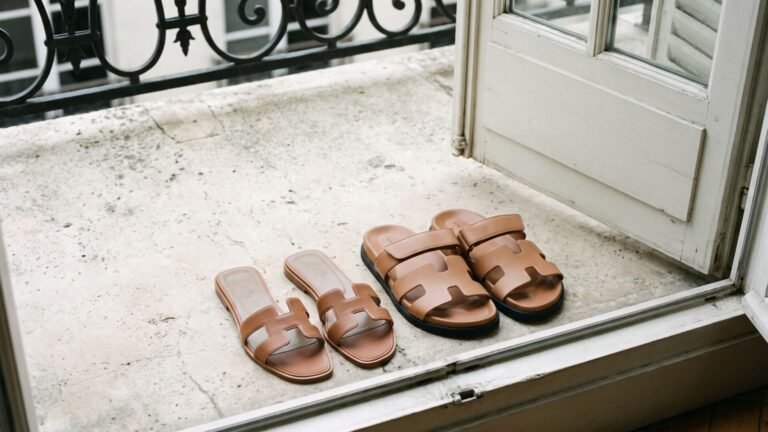
Both sandals are built around the same H-shaped cutout upper. From the top down, at a glance, they read as siblings. From the side, they are different products.
The Oran sits flat on the ground. The foot is level, the stride is natural, and the sandal’s job is to stay out of the way. The Oasis lifts the heel and part of the forefoot on a wedge, which changes the angle of the foot, the length of the stride, and the way the calf works over a long day. That is not a small technical difference. It is the whole purchase.
Same visual language, different walking experience
The comparison is not simply flat versus heeled. A low block heel and a wedge both add height, but a wedge carries more surface area and more stability than a stiletto. What the Oasis does not do is restore the flat, level stance of the Oran. The foot is pitched forward, weight shifts toward the ball of the foot, and the ankle has to manage more.
For a reader who has spent years in flats, that shows up in hour three, not hour one. The Oasis will feel perfectly comfortable across a restaurant. It will feel different after a mile of cobblestones.
The buyer psychology behind the choice
The Oran has become a quiet-luxury uniform piece because it is identifiable without being loud. The H is there, but the silhouette is minimal, and it works with almost anything. That is why it gets worn.
The Oasis appeals to a different instinct. It makes the same recognizable design feel more polished and more dressed. It photographs well with a midi dress and a tan. It also signals that the wearer chose the elevated version rather than the default one, which is part of the appeal.
Neither instinct is wrong. But the Oasis buyer is often buying a look, and the Oran buyer is often buying a shoe. The second purchase tends to get more use.
What the price difference should mean
Check current retail before buying, because Hermès adjusts prices and the gap between the two models moves. Historically they sit close together, with the Oasis usually the more expensive of the two by a modest margin.
The ticket price is the least useful number in this decision. What matters is cost per wear. A sandal worn three times a week from May to September for four summers is a different financial object from one worn to two dinners and a resort trip.
Run the arithmetic honestly before you buy. If the Oasis will be worn eight times a year, it is an expensive shoe no matter how good it looks. If the Oran will be worn a hundred times a year, it is cheap.
The Ultimate Guide to French Shoes: From Iconic Heels to Luxury Sneakers is worth reading before committing to either, because it places both sandals in the wider context of French footwear construction and helps clarify what you are actually paying for at this level.
Hermès Oran Deep Dive
Design and silhouette
The Oran is a flat leather sandal built around the signature H-shaped upper, with a thin sole and a minimal profile. It sits beneath an outfit rather than dominating it. That is the point of the design, and it is why the sandal has outlasted most of the trends it has lived through.
It works with straight-leg denim, wide-leg linen trousers, tailored shorts, simple dresses, and monochrome outfits. It also works with a swimsuit, which is more than can be said for most designer footwear.
Materials and construction
Hermès uses different leathers across Oran colorways, and they do not all behave the same way. Smooth calfskin is the most common and shows creasing and scuffs readily. Textured and grained finishes hide marks better. Lighter colors show dirt sooner; darker finishes can show scratches more.
Before buying, check four things. The softness of the upper where it crosses the toes, the finishing along the sole edge, the flexibility of the sole in the hand, and whether the footbed has any padding at all. Some Oran versions are notably firmer underfoot than others.
Do not assume every color breaks in identically. A stiff, heavily finished leather will take longer to soften than a natural one, and a pale color will show the process.
Comfort and break-in
The common pressure points are predictable. The upper where it crosses the toes, the front edge of the sole under the ball of the foot, and the absence of structured arch support.
The flat profile removes heel strain, which is why many wearers find the Oran easier than a heeled sandal. It does not remove forefoot fatigue. A flat sole with minimal cushioning transmits every paving stone, and after two hours of city walking the ball of the foot will notice.
Break-in is real but modest. The leather softens across the toes over a few wears. It should not require pain. If the upper presses hard at the fitting, it will press harder at the end of a warm day when the foot swells.
Fit and sizing guidance
Oran fit depends heavily on foot width and toe shape. The H upper is fixed, and it does not stretch much across the forefoot. Narrow feet often find it secure. Wider feet often find it presses.
Try your usual luxury-shoe size first, then assess. There is no universal size-up rule for Hermes sandal sizing, and anyone who tells you otherwise has not tried enough pairs. What matters is whether the foot sits fully within the sole with a small margin front and back, and whether the upper sits flush without indenting the skin.
Hermès sizing can feel different across sandal shapes, so a size that works in the Oran is not a guarantee in the Oasis.
Hermès Oasis Deep Dive
Design and silhouette
The Oasis takes the same H upper and raises it on a wedge. The effect is immediate: longer leg line, dressier proportion, more visual weight at the base of the outfit.
The wedge is more stable than a narrow heel, and it distributes weight across more of the sole. It is still not a flat. The foot is pitched, the stride shortens slightly, and the whole body adjusts. That is fine for a dinner. It is a consideration for a day of sightseeing.
Materials and construction
The upper materials follow the same logic as the Oran, with leather options that vary by season and colorway. The difference is that the Oasis has more visible construction: the wedge itself, the sole edge, and the attachment points where the upper meets the base.
Inspect all three. The wedge edge is where scuffs accumulate first, particularly on lighter soles. The join between upper and sole is where separation would begin if it ever did. And the profile of the wedge should be assessed from the side, not just from above, because the wedge is a major part of what you are buying rather than a technical afterthought.
Comfort, stability, and walking demands
Standing comfort and walking comfort are different tests, and the Oasis passes the first more easily than the second.
At a dinner, an event, or a resort lunch, the wedge feels stable and supportive. On uneven pavement, stairs, long shopping days, or an airport terminal, the added height and altered gait start to accumulate. Wearers who live in flats often find the Oasis appealing in the mirror and less natural by the end of an evening.
Buyers who already wear wedges and block heels regularly will have far less adjustment. That is the relevant comparison, not the Oran.
Fit and sizing guidance
The same nominal size in the Oasis does not guarantee the same feel as the Oran. The wedge changes pressure distribution and foot position, so the forefoot sits differently and the heel is held at a different angle.
Check three things when trying them. Whether the heel stays seated when walking, whether the toes slide forward on the incline, and whether the forefoot is compressed. Buyers between sizes should weigh length against heel security rather than automatically sizing up. A sandal that is slightly long but holds the heel is a better purchase than one that is the right length and slips.
Comfort and Fit: Which Sandal Is Better for Real Life?
Foot shape and width
Three profiles cover most buyers.
- Narrow feet: either may work. In the Oasis, heel security and upper placement matter more because the foot can slide forward on the wedge.
- Average-width feet: both are viable. The Oran is generally easier to wear casually and for longer distances.
- Wider feet or prominent toes: proceed carefully. The H upper can create pressure across the forefoot, and neither sandal is an athletic comfort design.
Breaking in will soften leather. It will not fix a fundamentally wrong width or length. If the upper presses hard at the fitting, walk away.
Walking, standing, and commuting
In realistic settings, the split is clear.
The Oran handles short errands, flat-ground city walking, airport travel, and packing well because it is flat and light. It is not a sightseeing sandal for a ten-mile day, but it is a reasonable one for a normal day.
The Oasis handles dinners, events, office days with limited walking, and outfits where height matters. It is less predictable for full-day city walking, stairs, and uneven ground.
Break-in and maintenance realities
Leather sandals soften with wear, but they should not be forced through a painful period. Wear them for short stretches first, keep them dry, and store them away from direct heat.
Neither sandal is a beach shoe in any meaningful sense. Water, sand, and heat accelerate wear on leather and on sole edges. A rubber sole option is more forgiving than leather in wet conditions, but the upper is still leather.
If a sole edge or upper needs repair, use a professional. Hermès can service its own products, and a good cobbler can handle sole work on most leather sandals.
Head-to-Head Comparison Table
| Category | Hermès Oran | Hermès Oasis | Better choice |
|---|---|---|---|
| Silhouette | Flat, minimalist slide | Elevated wedge sandal | Depends on wardrobe |
| Everyday walking | Easier for regular flat-ground wear | Better for shorter outings | Oran |
| Height | No added height | Adds visible lift | Oasis |
| Stability | Simple flat stance | Wedge stability, altered gait | Oran for natural walking |
| Styling range | Casual through polished | Dressier and occasion-led | Oran |
| Best buyer | Frequent sandal wearer | Height-seeking event and resort dresser | Depends on use |
The Oran is not universally comfortable, and the Oasis is not uncomfortable by definition. The distinction that matters is how each handles distance, height, and formality. A reader who walks a lot and dresses casually should buy the Oran. A reader who drives, dines, and dresses up should consider the Oasis seriously.
What Most Buyers Get Wrong About Everyday Wear
The Oran is not automatically an all-day walking sandal
Flat does not mean supportive. The Oran removes heel height, which helps, but it does not provide arch support or cushioning. Those are different problems, and the Oran solves only the first.
It can disappoint on long city walks, for wearers with high arches, for sensitive forefeet, and for anyone who expects a designer flat to behave like a comfort shoe. It behaves like a well-made leather sole with a thin layer between the foot and the pavement, because that is what it is.
The Oasis is not just an Oran with extra height
The wedge changes the use case, not just the silhouette. It shifts weight forward, shortens the stride, and asks the ankle to work. Buyers who love the Oran’s ease often assume the Oasis will feel similar with a lift. It does not.
That does not make it a bad shoe. It makes it a different shoe, and it should be bought for different reasons.
If you want a more substantial Hermès sandal for daily wear, how the Oran compares to the Chypre is the more useful comparison, because the Chypre solves the support question in a way neither the Oran nor the Oasis does.
Logo recognition does not determine cost per wear
The more recognizable option is not automatically the better investment. A simple sandal worn weekly across four summers will outperform a more distinctive one that only works with dressier outfits, regardless of which one turns heads at a restaurant.
Cost per wear is arithmetic, not aesthetics. Do the division.
Styling and Wardrobe Versatility
Oran styling
The Oran’s strongest pairings are straightforward.
- Straight-leg or relaxed denim with a crisp shirt.
- Linen trousers and understated knitwear.
- Midi dresses and simple skirts.
- Tailored shorts, resort separates, and monochrome outfits.
Color drives versatility more than anything else. Black, white, tan, and understated brown function as wardrobe anchors and will be worn with everything. Bright shades are more expressive and reduce total wear, which is fine if that is the intent.
Oasis styling
The Oasis works best where height improves proportion.
- Fluid midi dresses.
- Wide-leg trousers that benefit from extra lift.
- Tailored summer suiting.
- Evening separates and resort dressing.
It balances long hemlines and voluminous trousers well. It can look too formal or visually heavy with very casual clothing, which limits its range.
For readers weighing French houses more broadly, the guide to French luxury fashion houses sets out where Hermès sits relative to the alternatives and what each house does best.
Which one better reflects quiet luxury
The Oran has the edge. Its shape is recognizable without requiring a dramatic silhouette, and it does not ask the outfit to cooperate. That is the definition of understated.
The Oasis is the stronger choice for buyers whose version of quiet luxury includes polished proportions and subtle height. It is less quiet in silhouette, though not in branding.
Investment Value, Durability, and Ownership
Which one is more likely to earn its place in a wardrobe?
Use wear frequency as the test.
- Choose the Oran if it will be worn weekly with multiple outfit categories.
- Choose the Oasis if the wardrobe regularly includes dresses, tailored trousers, and occasions where height improves proportion.
- Avoid either if the intended use is too narrow to produce repeated wear.
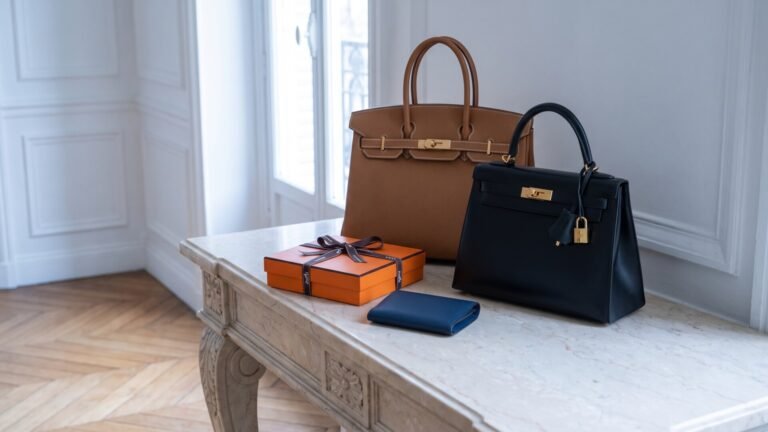
The parent-brand context matters here. the guide to Hermès bags, leather goods, and investment luxury explains why Hermès holds value across categories and what that actually means for a buyer, which is more nuanced than the resale mythology suggests.
Durability and visible aging
Neither sandal is fragile, but both show their age in predictable places: sole abrasion at the heel and ball, edge scuffing, leather creasing across the toes, discoloration, and loss of finish on lighter colors.
Lighter colors show dirt more readily. Darker and textured options disguise some marks but can show scratches more clearly. Leather soles wear faster than rubber on abrasive pavement, and a rubber sole is the more practical choice for heavy daily use.
Resale considerations
Resale is a secondary benefit, not a guarantee. Condition, size, color, seasonality, packaging, and proof of purchase all affect the outcome, and the model alone does not decide it.
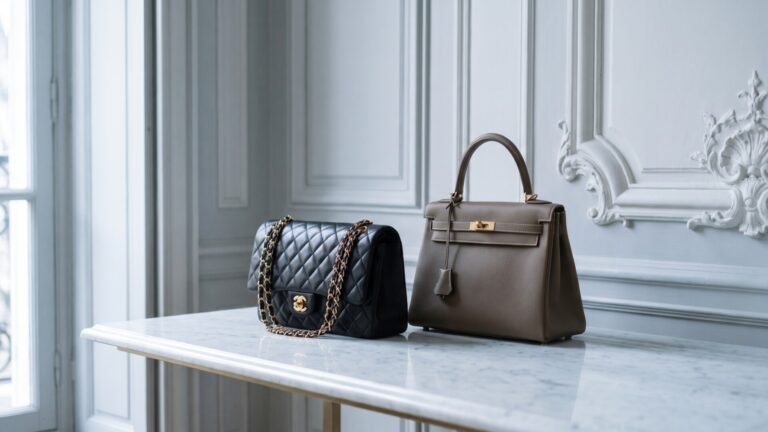
The Oran’s broad styling appeal likely supports a larger buyer pool. The Oasis appeals more strongly to a narrower shopper who specifically wants a wedge. Chanel versus Hermès on investment and exclusivity is useful context for readers weighing how much of the purchase price is craftsmanship and how much is access.
Which option still makes sense in three years?
The Oran is the safer long-term purchase for most buyers. Its flat shape is less trend-sensitive and more useful across casual wardrobes, and it will still look correct with the clothes most people actually own.
The Oasis is the better long-term purchase only when the wearer genuinely uses and prefers a wedge sandal. Under those conditions it earns its place. Under any other conditions it sits in the closet and quietly depreciates.
Who Should Buy the Oran and Who Should Buy the Oasis?
Choose the Hermès Oran if
- You want one luxury sandal for frequent summer wear.
- You walk on relatively flat ground and prefer a natural, low-profile feel.
- Your wardrobe is built around denim, linen, relaxed tailoring, and simple dresses.
- You prioritize versatility and cost per wear over added height.
Choose the Hermès Oasis if
- You specifically want a wedge and do not want a completely flat sandal.
- You often wear dresses, wide-leg trousers, skirts, or polished resort clothing.
- You want a more elevated silhouette for dinners, events, and shorter outings.
- You already own a flat sandal and want a distinct second option.
Avoid both if
- You need substantial arch support, athletic cushioning, or a performance walking shoe.
- The H upper causes pressure during fitting.
- You are buying mainly for status but cannot identify regular outfits or occasions for the sandal.
- Your lifestyle involves frequent wet conditions, rough terrain, or heavy daily mileage.
Final Verdict
Why the Hermès Oran wins
The Oran is the overall winner for everyday wear. Flat construction, understated profile, and a wide styling range make it the more defensible investment for most luxury shoppers. It is strongest for buyers who want one recognizable Hermès sandal that moves between casual and polished clothing without effort.
It is not a comfort shoe and should not be sold as one. It is a well-made flat sandal that suits a normal day and a normal wardrobe, which is more than most designer footwear manages.
Why the Hermès Oasis wins
The Oasis wins for buyers who value height, dressier proportions, and a more structured summer silhouette. It is not a substitute for the Oran. It is the better choice when a wedge is the point of the purchase rather than an afterthought.
Explore the current Oran collection before seasonal colors sell through if the flat is the right answer. If the wedge is the answer, review the Oasis styles with the same urgency, because core sizes move early.
Frequently Asked Questions About Hermes Oran Vs Oasis
Is the Hermès Oran more comfortable than the Oasis?
For flat-ground everyday wear, generally yes, because there is no wedge height to manage. Comfort still depends on foot width, upper pressure, cushioning expectations, and how the leather breaks in. A narrow foot in a stiff colorway may find the Oran less comfortable than expected.
Do Hermès Oran and Oasis sandals fit the same?
Do not assume so. The wedge changes foot position and pressure distribution. Check length, toe pressure, heel security, and width in each style separately, even if you already know your Oran size.
Should you size up in Hermès Oran sandals?
There is no universal rule. Compare actual foot length and width, then test whether the upper sits securely without pressing across the toes. Some buyers take their usual size; others go up half a size for forefoot comfort. Fit the foot, not the number.
Can you walk all day in Hermès Oasis sandals?
Some wearers manage extended standing and moderate walking. The wedge and altered gait make it less predictable for full-day city walking than the Oran, particularly on uneven ground and stairs. It is a good dinner sandal and a reasonable resort sandal, not a sightseeing shoe.
Are Hermès Oran sandals worth the price?
They can be, for buyers who wear them frequently, value Hermès leather-goods construction, and choose a versatile color. The purchase is harder to justify for occasional wear or logo-driven outfits. The arithmetic of cost per wear is the honest test.
Which Hermès sandal is better for wide feet?
Neither should be assumed to suit wide feet. Focus on forefoot pressure and toe placement during the fitting, and do not rely on break-in to fix a restrictive fit. If the H upper presses hard when you try it on, it will press harder in July.
Which has better resale value, the Oran or Oasis?
The Oran likely has broader resale appeal because more buyers want a flat, versatile sandal. Condition, size, color, timing, and completeness of the original purchase matter more than the model alone. Treat resale as a bonus, not a plan.
Is the Oasis harder to walk in than a block heel?
Usually easier, because the wedge distributes weight across more of the sole and offers more surface contact than a narrow heel. It is still not a flat, and the change in gait is real over long distances.
Most buyers should stop at the Oran. It is the cheaper decision in practice even when the ticket price is similar, because it will be worn more often, with more outfits, for more summers. The reader who genuinely lives in wedges, dresses for dinner, and wants the lift should buy the Oasis and will get good value from it.
The rest should not spend the extra on height they will not use. Buy the flat, in a neutral, and wear it until the sole needs attention. That is what the money is for.