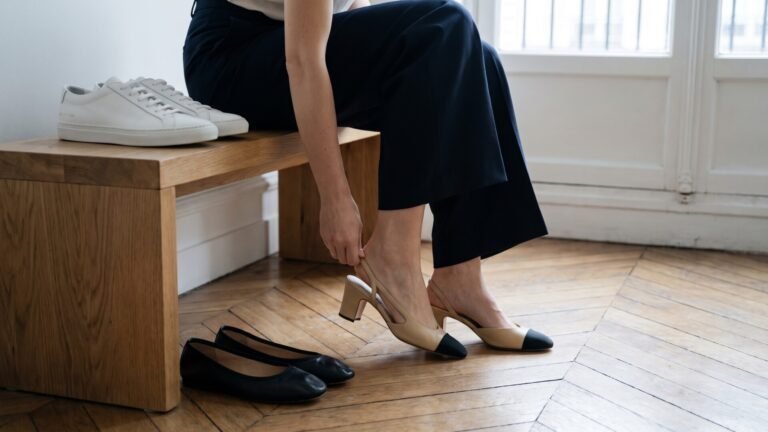
Best French Designer Shoes for Wide Feet: Luxury Brands That Actually Fit
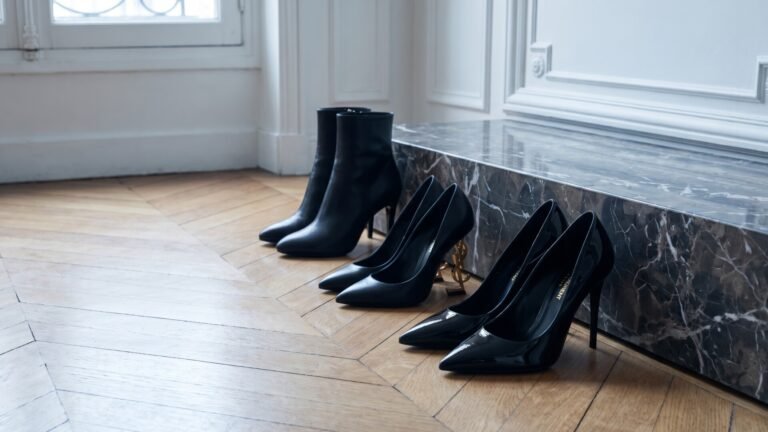
If the shoe has a sharp point and a heel over three inches, it is not the answer, and the fact that it is French does not change that. The most photographed pumps in Paris – the Louboutin Kate, the Saint Laurent Opyum, the sharply drawn Roger Vivier – are built on lasts that taper hard at the toe. On a broad forefoot, that taper is where the money goes wrong.
Wide-foot shoppers can still buy excellent French footwear. The productive categories are loafers, sandals with adjustable straps, leather sneakers, soft ballet flats, and boots with a rounded or almond toe. What follows separates the shoes that genuinely accommodate a broad forefoot from the ones that merely survive a ten-minute try-on in a carpeted boutique.
The useful question is not whether a shoe is labeled wide fit. Almost no French luxury house offers a meaningful width range. The question is whether the last, the upper, the fastening, and the sizing leave room where this particular foot needs it.
Quick Verdict Summary
Best overall: J.M. Weston loafers. A structured leather loafer on a roomier last, fitted properly, is the most reliable route to a refined French shoe that a broad foot can wear twice a week for a decade.
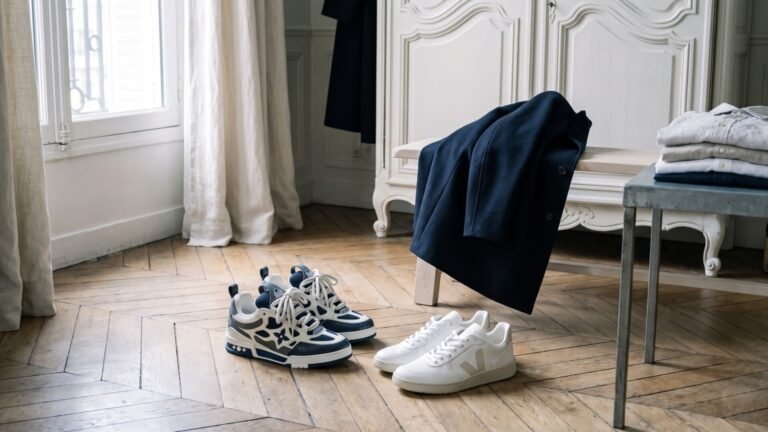
Best casual choice: Veja leather sneakers. Lacing, a soft upper, and a rubber sole give more adjustment than any slip-on flat at twice the price. Less formal, less investment, more likely to be worn.
Best sandal choice: Hermès Oran or Chypre. Open construction removes the enclosed toe-box problem entirely. The Oran is the elegant one; the Chypre is the one that survives a long walk.
Best soft flat option: Repetto Cendrillon. Flexible leather that forgives a moderately wide foot. Not a genuine wide-fit shoe, and it should not be sold to the reader as one.
Approach with caution: Louboutin Kate and So Kate, Roger Vivier Belle Vivier, and sharply pointed Saint Laurent pumps. These are not wide-foot shoes, and sizing up does not make them so.
How to Identify a Luxury Shoe That Can Accommodate Wide Feet
Three different feet get called wide, and they need three different solutions. A genuinely wide foot is broader than the standard last at the ball. A high-volume foot is deep – it presses up against the vamp rather than out at the sides. A foot that is merely broad across the toes needs length and shape at the front, not volume everywhere.
Getting this wrong is how people end up buying the wrong shoe twice. A high instep needs a lower-cut vamp or a laced fastening; a broad ball needs a wider sole and a rounder toe. Neither is solved by the same purchase.
Look at the shape before the label. A rounded or almond toe leaves more usable room than a pointed one of identical length. A visible forefoot platform spreads the foot over more sole. A low vamp that crosses the foot below the widest point will not cut into it. An upper that can relax without losing its line – supple calfskin, suede, woven textile – will give a little where a patent finish will not.
Sizing up is the reflex, and it is usually the wrong move. Extra length moves the widest part of the foot forward of the widest part of the sole, so the ball ends up compressed against a narrower section of the shoe. The heel then lifts, the shoe creases in the wrong place, and the walk becomes unstable. The foot has not got wider; the shoe has got longer.
Run one test in the shop. The widest part of the foot should sit over the widest part of the sole. The little toe should not press against the upper. And the shoe should not require pain to become wearable – a small amount of firmness at the heel counter is normal, pressure across the ball is not.
For the wider picture on how French houses cut their lasts and where the accommodating shapes sit in each collection, [the ultimate guide to French shoes](the ultimate guide to French shoes) is the place to start before narrowing to a single style.
The Best French Designer Shoes for Wide Feet
Ranked by how reliably each solves the problem, not by how much attention it receives.
J.M. Weston loafers – best for polished everyday wear
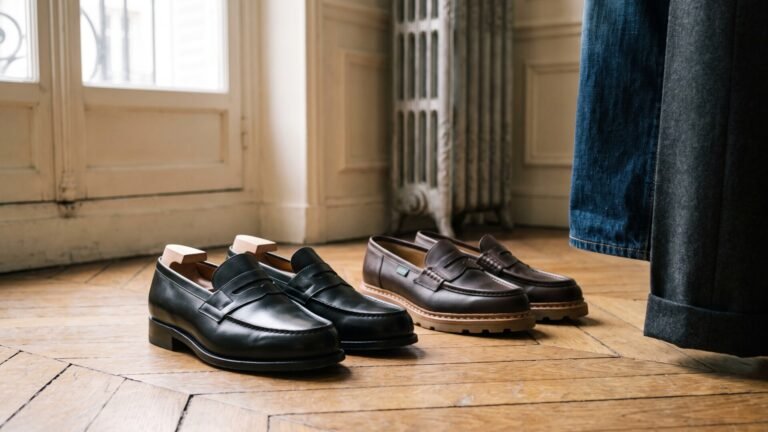
A loafer is the most forgiving dress shoe shape there is, and J.M. Weston makes one of the more substantial versions in France. The toe is rounded rather than tapered, the sole is thick enough to spread weight, and the leather is firm in a way that holds structure rather than collapsing around the foot.
The brand matters here for a specific reason: fit is tied to last and width selection, and the house has historically offered more than one. That makes an in-person fitting genuinely useful rather than a formality. Buy from a stockist with a real return window if a fitting is not possible, and do not guess a width from a size conversion table.
The case for the purchase is cost per wear. A pair resoled and looked after will run for years, and the restrained shape does not date. The case against is the break-in. Firm calfskin on a structured last will be unyielding for the first weeks, and the wrong width will not soften into comfort no matter how long it is worn. Buy the fit, not the hope.
Readers comparing constructions and heritage across the category will find the men’s side covered in [the guide to French loafers from J.M. Weston to Paraboot](the guide to French loafers from J.M. Weston to Paraboot), which is useful for understanding what a properly built loafer actually is.
Hermès Oran and Chypre sandals – best for open-toe comfort
An open sandal sidesteps the entire enclosed toe-box problem. Nothing presses on the little toe because nothing covers it. For a foot that is broad across the front but otherwise normal in volume, that is a genuine solution rather than a compromise.
The Oran is the streamlined one – a flat leather footbed with a single H-cut strap across the top. It reads as elegant with linen and tailored trousers and it packs flat. The Chypre is the heavier, more substantial shape, with a thicker sole and a more outdoor profile. It handles a longer walk and a rougher surface; the Oran handles a lunch.
Neither is automatically wide fit, and this is where buyers get caught. The strap crosses the foot at a fixed point. A very broad forefoot or a high instep can find that strap pressing rather than resting. Try before buying, or buy from somewhere with a return policy that assumes you might.
For where these sit in the current market and what else is worth considering, [whether Hermès Oran sandals are still trending](whether Hermès Oran sandals are still trending) covers the alternatives honestly.
Veja leather sneakers – best for casual versatility
Sneakers are not automatically wide. A sleek fashion sneaker on a narrow Italian last is as restrictive as a pump, and rather less forgiving because there is no give in a rubber-cupped sole. Veja is the exception because the leather low-tops are built on a more generous, rounder shape with proper lacing.
Lacing is the point. It lets the upper be adjusted across the instep and the forefoot independently, which no slip-on flat or pump allows. A thin insole can be swapped for a thinner one to gain a few millimeters of depth. That is real adjustability, not marketing.
The sizing rule is simple. If the shoe feels short, or pinches at the little toe, loosening the laces will not fix it – the last is wrong and a half size up is the only move. If it feels snug across the top but the length is right, the laces and a thinner insole will usually do it.
The trade-off is honest. Veja is a practical shoe with limited resale appeal and no formal polish. It is also the pair most likely to be worn four days a week, which counts for more than a boxed pump. [The best French designer sneakers](the best French designer sneakers) covers the wider field if a dressier sneaker is wanted.
Repetto Cendrillon – best for a soft, feminine flat
The Cendrillon is a soft leather ballet flat with a flexible sole, and flexibility is what makes it usable for a moderately wide foot. The upper relaxes where a structured pump would press.
It is not a wide-fit shoe. On a genuinely broad forefoot, the foot spreads over the edge of the sole and the topline cuts across the instep. That is a fit failure, not a break-in issue, and no amount of wear fixes it.
Sizing up is the common mistake. Extra length lets the heel lift out of the shoe at every step while the forefoot stays compressed – the worst of both. If the Cendrillon does not fit in the usual size, it does not fit.
Use it for what it is: office days, short errands, polished travel outfits. Not a full day on hard pavement. Readers weighing it against the obvious alternative will find [the Cendrillon versus Miu Miu comparison](the Cendrillon versus Miu Miu comparison) useful, and [the Repetto Cendrillon sizing guide](the Repetto Cendrillon sizing guide) answers the run-small question directly.
French designer boots with rounded or almond toes – best for cooler weather
Boots can be the most forgiving category in winter, provided the toe is round or almond and the shaft is soft. A rounded toe gives the forefoot room; a soft shaft and a side zip or lacing let the ankle and calf be adjusted rather than forced.
The failure mode is the sharply pointed boot with a narrow ankle opening. It creates pressure at the toe and at the ankle simultaneously, and no amount of sock adjustment solves both. Rigid leather makes it worse.
Fit boots with the socks actually intended. Measure the calf and ankle, not just the foot, and check that the instep has room – a high instep in a low-cut boot is a common and painful mismatch. Buy boots in person where possible; returns on footwear are more awkward than on a scarf, and a boot that presses in three places is a boot that stays in the box.
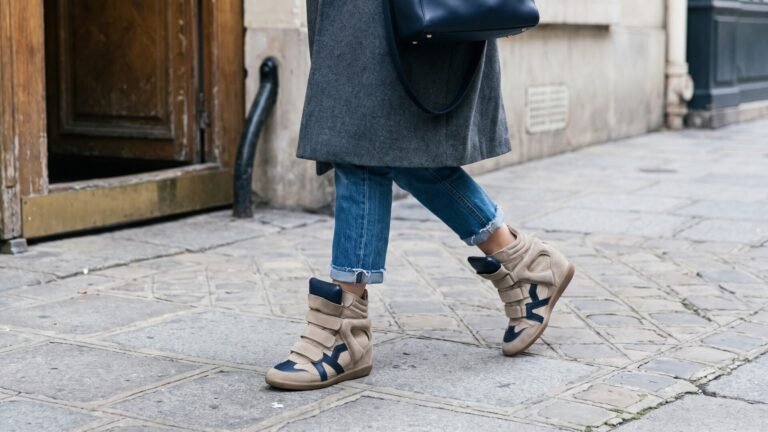
[The best French designer boots worth investing in](the best French designer boots worth investing in) covers the rounded-toe options across the houses, including the softer Isabel Marant shapes and the more structured Saint Laurent cuts that work.
What Most Buyers Get Wrong About Wide-Fit Designer Shoes
A larger size is not the same as a wider shoe
Sizing up adds length. It does not add width. The foot slides forward into a narrower part of the shoe, the heel lifts, and the shoe creases across the vamp instead of the toe. The result is a shoe that is simultaneously too long and still too tight.
Choose a wider last, a softer upper, an adjustable fastening, or a more open construction before adding length. If none of those exist in the style, the style is wrong.
Soft leather helps, but it cannot rescue a bad last
An upper that relaxes can accommodate a modest amount of forefoot spread. A sole and toe shape that permanently restrict the foot cannot be stretched into comfort. Cobblers can ease a tight seam by a few millimeters; they cannot redesign the last.
Aggressive stretching distorts the shoe, damages the finishing, and creates uneven pressure elsewhere. A shoe that needs to be forced into shape was the wrong purchase.
Sneakers are not automatically wide
A fashion sneaker on a sleek last is as narrow as a pump. Look for actual forefoot room, adjustable lacing, a supportive insole, and an outsole wide enough to support the foot rather than a decorative sole under a narrow upper.
A comfortable first try is not proof of long-term comfort
Feet swell through the day, in heat, on a plane, and after hours of standing. A shoe that fits at ten in the morning may be unbearable by six. Try shoes late in the day, wear them indoors for an hour before committing, and judge comfort after the foot has expanded rather than during a brief morning fitting.
How the Leading French Luxury Styles Compare
| Shoe or category | Width friendliness | Best for | Main risk | Investment outlook |
|---|---|---|---|---|
| J.M. Weston loafers | Moderate to high when correctly fitted | Polished daily wear | Firm break-in; wrong-width purchases | Strong craftsmanship and repair potential |
| Hermès Oran | Moderate for open-toe feet | Elegant warm-weather dressing | Strap pressure; limited adjustability | Strong brand demand and recognizable design |
| Hermès Chypre | Moderate | Casual luxury and longer walks | Foot volume and strap fit | Strong demand, but more trend-sensitive than the Oran |
| Veja leather sneakers | Moderate to high depending on model | Travel and everyday casual wear | Fashion lasts may still run narrow | Practical value; lower resale appeal |
| Repetto Cendrillon | Moderate at best | Soft feminine flats | Forefoot pressure; limited support | Iconic design; condition drives resale |
| Pointed Louboutin or Saint Laurent pumps | Low | Formal statement dressing | Toe compression and painful walking | Brand recognition, but comfort limits wear |
The table points one way for the buyer who wants a single refined shoe: J.M. Weston, fitted properly, is the strongest overall investment. Veja is the practical answer for daily movement and travel, where a shoe that is worn often beats a shoe that is admired. Hermès takes the warm-weather slot, with the Oran for elegance and the Chypre for support.
The pointed pumps retain status value and nothing else that matters here. [The Oran versus Chypre comparison](the Oran versus Chypre comparison) settles the sandal decision properly if that is the choice being made.
Practicality, Materials, and Long-Term Ownership
Which materials are most forgiving
Supple calfskin gives the most. It relaxes over the first weeks, molds to the foot, and creases in a way that looks intentional. Suede is softer still but vulnerable to water and staining, and it wears unevenly at the toe. Smooth leather is the middle ground – firm at first, forgiving later, and easy to maintain.
Patent leather and heavily structured finishes are the least forgiving. They do not stretch, they show every pressure point, and they crack rather than crease. Textile uppers on sneakers are flexible and light but offer less structure and less support over a long day.
What tends to fail first
Loafers wear at the heel and the outsole first, with creasing across the vamp that is cosmetic rather than structural. Sandals fail at the strap and the footbed, where the sole flattens and the leather rubs. Sneakers go at the heel lining and the outsole, and the insole compresses long before the upper does. Ballet flats and pumps lose support at the sole and stretch at the topline.
Knowing what fails first is what makes a repair worth doing. A resoled loafer is a new shoe. A collapsed ballet flat is not.
Cost per wear and repairability
A $900 loafer worn twice a week for five years costs about $1.70 a wear. A $1,000 pump worn four times a year costs $50 a wear for the same period, and considerably more if it is uncomfortable enough to stay in the box. That arithmetic is the whole argument.
Repairability matters more to wide-foot shoppers than to anyone else, because comfort determines whether the shoe is worn at all. A shoe that can be resoled and reheeled earns its price back. A shoe that cannot be worn earns nothing.
Resale is a separate question from ownership value. A fashionable shoe may hold attention and still be a poor purchase if its narrow shape limits wear. [The best Saint Laurent shoes guide](the best Saint Laurent shoes guide) is useful for readers weighing the brand’s occasion pieces against their actual walking plans.
Styles to Avoid or Approach With Caution
Christian Louboutin Kate and So Kate
The pointed toe and the high heel combine badly for a broad forefoot. The toe tapers to a point where the foot is widest, and the heel pitch pushes weight forward onto exactly that point. Kate and So Kate differ in heel height and pitch, which changes how long they can be worn, but neither is a wide-foot solution.
For a mildly wide foot, tried in person, they can work as an occasional shoe. For a genuinely broad foot, they are the wrong purchase at any price. [The Kate versus So Kate comparison](the Kate versus So Kate comparison) covers the walkability question in detail for anyone still considering them.
Roger Vivier Belle Vivier pumps
The Belle Vivier is a formal pump with a structured toe and a decorative buckle. The buckle is the identity; it does not adjust anything at the toe, which is where the pressure is. A narrow, structured pump on a broad foot is uncomfortable regardless of the hardware.
A more rounded or lower-heeled Vivier shape is the better route if the house appeals, subject to what is currently in the collection. [The Belle Vivier style guide](the Belle Vivier style guide) covers the current shapes and how they differ.
Saint Laurent pointed pumps and Opyum styles
Sharp toe boxes, rigid uppers, and dramatic heel geometry reduce practical wear. These are occasion shoes for a mildly wide foot, not daily luxury investments. Compare the beauty of the silhouette with the walking plan and the return policy before committing.
Very narrow ballet flats and slip-ons
A flexible upper without a supportive sole can still squeeze the forefoot or let the foot spread over the edge of the sole. Any style that creates immediate side pressure should be left in the shop, however soft the leather feels.
Choosing by Buyer Type
The quiet-luxury professional
A properly fitted J.M. Weston loafer is the strongest primary purchase. Restrained branding, durable leather, repair potential, and a shape that moves from desk to dinner without announcing itself. Add a soft leather sneaker rather than forcing a second narrow dress shoe into the rotation.
The frequent traveler
Veja leather sneakers for the airport and the walking days, with the Hermès Chypre as a warm-weather alternative if the strap fit works. Packability, cleanability, stable fastening, and comfort after six hours matter more than formal status. Delicate ballet flats and high pumps are poor travel-first purchases for a wide foot.
The formal-event buyer
Buy the least restrictive elegant shape available – an almond toe, a lower heel, a slightly softer upper – rather than defaulting to the sharpest point in the collection. A shoe that can be worn for the whole evening is worth more than a shoe that photographs well for twenty minutes. Match the purchase to the standing and walking the event actually requires.
The collector and investment-minded buyer
Prioritize a J.M. Weston loafer or an established Hermès sandal over a narrow seasonal shoe. Recognizable design and condition support resale, but broad appeal and real wearability make an item a stronger wardrobe investment. Keep the box, the dust bags, the receipt, and the care records – though not every luxury shoe appreciates, and none should be bought on that assumption alone.
Final Buying Recommendation
J.M. Weston wins for most wide-foot luxury shoppers because it offers the clearest path to a refined, durable, understated shoe when the fit is handled properly. The loafer shape avoids the most restrictive part of a designer pump, and the value comes from construction and longevity rather than novelty. That is what makes it a cost-per-wear purchase rather than an expensive one.
Veja wins for practical everyday wear. It is the easiest recommendation for a reader whose priority is walking, travel, and flexible casual styling, and the lacing provides adjustment that no luxury flat or pump offers. It is not the strongest choice for formal dressing or resale, and it is more likely to be worn often.
Hermès wins for warm-weather wardrobes. The Oran and Chypre remove the enclosed toe-box problem while keeping a recognizable French luxury appeal. The Oran is the more elegant; the Chypre is the better choice for a longer day on foot. Fit still has to be assessed, because open construction does not remove strap pressure.
The styles wide-foot shoppers should not force are Louboutin Kate and So Kate, sharply pointed Saint Laurent pumps, and rigid Roger Vivier pumps. For a mildly wide foot, tried in person, they can make sense as occasional purchases. They are not everyday investments, and they should never be bought on the assumption that the leather will give.
Frequently Asked Questions About French Designer Shoes For Wide Feet
Which French designer shoe brand is best for wide feet?
J.M. Weston is the strongest structured option when the correct width and last are selected. Veja offers the most practical everyday flexibility, and Hermès sandals work well for feet that are broad across the toes rather than high-volume.
Do French designer shoes usually run narrow?
Luxury footwear generally prioritizes a sleek silhouette over extensive width options, but the category varies widely by last, material, fastening, and shoe type. Pointed pumps are more restrictive than loafers, sneakers, and sandals, and the difference between categories is larger than the difference between brands.
Should I size up in designer shoes if I have wide feet?
Usually not. Sizing up adds length, not width, and often produces heel slip and instability without relieving pressure at the ball of the foot. Choose a different last or a more adjustable construction first.
Are Hermès Oran sandals good for wide feet?
The open toe is more forgiving than an enclosed shoe, but the fixed strap can still press across a broad or high-volume foot. Assess the Oran individually rather than assuming it is wide fit.
Do Repetto ballet flats stretch for wide feet?
Soft leather relaxes slightly, but stretching cannot turn a narrow toe shape into a genuinely wide shoe. A close fit that creates side pressure should not be bought on the assumption that it will improve.
Are Christian Louboutin pumps suitable for wide feet?
Kate and So Kate are difficult choices because of the pointed toe and high heel. They can work for a mildly wide foot as an occasional shoe, but they are not practical for broad feet or extended walking.
Which is better for wide feet, luxury loafers or pointed pumps?
Loafers, in almost every case. A more stable base, less restrictive toe geometry, and a shape that can be worn regularly all favor the loafer. The final fit still depends on the specific last and width.
The box on the top shelf is where the beautiful mistake lives. It was bought in a size up, on the theory that leather gives, and it has been worn twice. The pair that gets worn instead is the one that fit in the shop – the loafer with room at the ball, the sneaker that did not pinch the little toe, the sandal whose strap sat flat across the foot. Buy the shoe that fits on the day, and the box on the shelf stays empty.