Chanel Classic Flap Sizes: What Fits in Small, Medium and Jumbo?
The boutique assistant puts three bags on the counter in a row, clasps facing the same way, and steps back. The Small looks like jewelry. The Medium looks like the photograph everyone knows. The Jumbo looks like a different proposition entirely – substantial, almost a tote, and noticeably heavier before anything is inside it. The customer picks up the Jumbo first. They almost always do.
The Medium Classic Flap is the safest all-purpose choice for most buyers. The Small is the better bag for a streamlined day-into-evening wardrobe, and the Jumbo is the practical answer only for those who genuinely carry a full-size wallet, sunglasses case and cosmetics every day. Sizing on this bag is not a capacity question. It is a weight, proportion and shoulder-comfort question, and the larger the bag, the more the answer turns on how it will actually be worn rather than how much it will hold.
The three sizes, briefly
The Small is the most polished of the three and the least forgiving. It carries the essentials and nothing else, and it looks best when it is nearly empty.
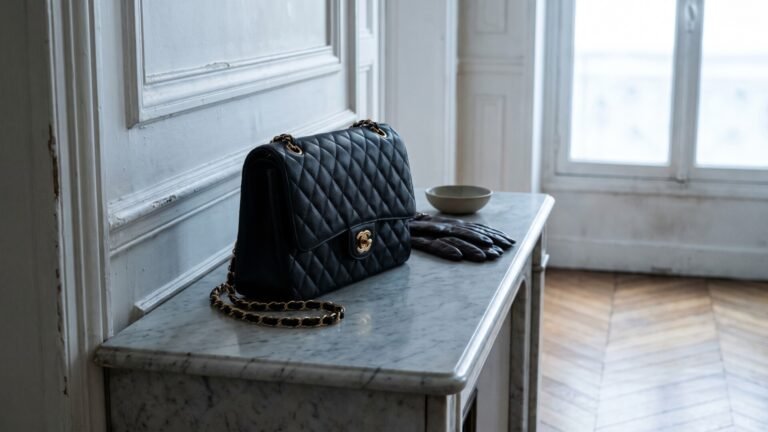
The Medium is the size most people picture when they picture a Classic Flap. It holds a working everyday load without looking stuffed, and it moves between denim, tailoring and evening dress with less effort than either of its neighbours.
The Jumbo holds what the other two cannot. It is also the only one of the three that can feel like a burden by the end of a long day, and the only one that reads as a day bag first and a Chanel second.
The short answer: buy the Medium unless you can name a specific reason not to. The rest of this guide is about establishing whether you have one.
Chanel Classic Flap sizes at a glance
Approximate dimensions, in the terms Chanel and the resale trade generally use. Measurements vary by production year, leather stiffness and whether the bag is measured flat or across its curved profile, so treat these as a guide rather than a specification.
| Size | Approximate dimensions | Best use | Main limitation |
|---|---|---|---|
| Small | About 9.3 x 5.7 x 2.6 inches (23.6 x 14.5 x 6.6 cm) | Evening, dinners, light daily carry | Limited interior capacity |
| Medium | About 10 x 6.1 x 2.6 inches (25.4 x 15.5 x 6.6 cm) | Everyday, office-to-evening use | Does not comfortably suit bulky items |
| Jumbo | About 11.8 x 8 x 3.9 inches (30 x 20.3 x 9.9 cm) | Full daily carry, travel-adjacent use | Heavier and less evening-oriented |
How Chanel naming actually works
Chanel’s size labels are less reliable than buyers expect. Retailers, resale platforms and vintage listings use "Small," "Medium" and "M/L" inconsistently, and a bag labelled Medium from one decade may not match a current Medium in the hand. Seasonal and pre-owned listings are the worst offenders.
Verify the actual measurements, the leather, the hardware and the production year rather than trusting the label. Ask for dimensions taken flat and across the base. A bag described as Medium that measures closer to 11 inches across is a different proposition on the shoulder.
The Classic Flap is also not the same bag as the Chanel 2.55 Reissue. The Reissue has its own proportions and its own sizing language, and the two do not map onto each other neatly. If you are still deciding between the two families, how the 2.55 Reissue and the Classic Flap compare is the place to settle it before you start worrying about centimetres.
The size factors buyers overlook
Capacity is decided by the gusset and the structure, not by the exterior footprint. A stiff caviar bag with a shallow gusset holds less than its dimensions suggest, because the sides will not give. A lambskin bag of identical measurements will accept a soft pouch that the caviar version refuses.
Leather changes the experience in other ways. Caviar – the pebbled, coated calfskin – holds its shape and hides scratches, which is why it is the practical choice for daily use. Lambskin is softer, takes colour more deeply, and marks if you look at it too long. It also compresses slightly, which can buy you a centimetre or two of usable space.
Chain drop matters as much as capacity. All three sizes can be worn doubled on the shoulder or long and crossbody, but the proportions change completely. A Jumbo worn crossbody sits at hip level and reads as a large bag. A Small worn doubled sits high and reads as an accessory.
The Small Classic Flap: what fits and who it suits
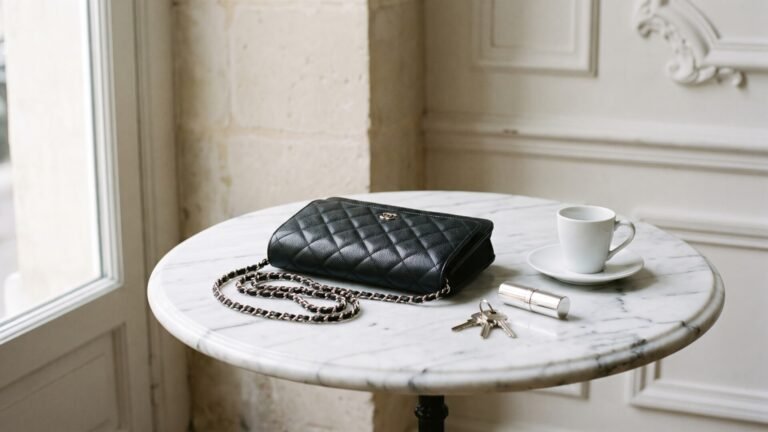
The Small holds a phone, a cardholder or slim wallet, keys and a lipstick. That is the honest list. Add a compact sunglasses case and the bag is full; add a full-size wallet as well and you will be rearranging contents at the table.
A few flat extras will go in – tissues, a slim power bank, a folded tote. Anything with volume will not. A full-size wallet, a large sunglasses case, a cosmetics pouch or a passport alongside other essentials should be treated as out of scope.
Why the Small reads as formal
The compact proportions do the work. At roughly 9 inches across, the Small sits closer to a clutch with a chain than to a handbag, and that is precisely why it looks right with a dress, a tailored jacket or a minimalist column of knitwear. It does not compete with an outfit.
There is a quiet-luxury argument here that is not entirely marketing. A bag that forces you to carry four things encourages a deliberately edited carry, and an edited carry looks more considered than a full one. The Small rewards discipline.
The drawback nobody mentions
The problem is not the limited space. It is the friction. A tightly packed Small has to be opened, emptied around and repacked every time you want the item at the bottom, and the turn-lock and flap structure makes that a two-handed operation. Do that six times a day and the bag stops feeling elegant.
There is a second cost. Buyers who choose the Small for its lower visual profile often discover within a year that they need a second, larger everyday bag. That is a false economy at this price point. If the Small is going to be your only Chanel, be certain the life you actually lead fits inside it.
If what you want is an even lighter Chanel for evenings and essentials, the Wallet on Chain as an entry point is worth a look before committing to a Small Flap – it occupies similar territory at a lower weight and price.
Who should buy the Small
- The evening-focused buyer who already owns a practical day bag and wants the Classic Flap for dinners, events and polished city dressing.
- The minimalist who genuinely uses a cardholder and carries four things.
- The petite wearer who finds the Jumbo visually overwhelming and the Medium slightly large.
- Anyone building a wardrobe around dresses and tailoring rather than denim and knitwear.
The Medium Classic Flap: the size most people should buy
The Medium holds a phone, a medium wallet, keys, sunglasses in a compact case and a lipstick, with room for a cardholder or a thin cosmetic item if the contents are organised. A standard wallet fits, but once sunglasses go in as well the bag is working, not relaxing.
What it will not do: a tablet, a water bottle, a large makeup bag, a hardback book or travel accessories. The Medium is an edited bag. Buyers who expect otherwise are the ones who end up disappointed.
Why it works across more wardrobes
At roughly 10 inches across, the Medium hits the proportion that made the bag recognisable. It is large enough to look like a handbag and small enough to look like an evening bag when worn doubled on the shoulder. That range is the whole argument.
It works with denim and a blazer. It works with a dress. It works with knitwear and tailoring and, within reason, with occasion dressing. The chain and the structured shape keep it formal-adjacent even when the outfit is not, which is either the point or an irritation depending on what you wanted.
Crossbody wear is possible and useful, though the bag is more formal than a soft leather shoulder bag and will look it. For commuting and errands, most owners wear it doubled on the shoulder.
The trade-off most buyers miss
The Medium is routinely described as the universal size. It is better described as the size that fails least often. Its capacity is edited, not generous, and the exterior looks more accommodating than the interior actually is.
The bag works when the owner commits to a slim wallet, a compact sunglasses case and a small set of personal items. It works badly when the owner treats it as a smaller version of a tote. That is a packing decision, not a sizing decision, and it is the single most common source of dissatisfaction with this size.
Who should buy the Medium
- The first-time Classic Flap buyer.
- Anyone who wants one bag to cover work-adjacent occasions, dinners and weekends.
- Buyers thinking about long-term versatility and resale liquidity.
- Anyone torn between the Small and the Jumbo who wants the least risky compromise.
The Jumbo Classic Flap: maximum capacity, real trade-offs
The Jumbo holds a full-size wallet, a phone, a sunglasses case, keys, a cosmetics pouch and several small items without strain. It will take a passport and short-trip travel essentials, provided the bag is not overfilled. A slim notebook will go in. A laptop will not, and neither will a water bottle or a thick book in any comfortable way.
It is often described as a work bag. It is not a work bag. It is a spacious shoulder bag, and the distinction matters because buyers who expect tote behaviour from it end up carrying too much and blaming the chain.
Why the Jumbo is more useful than glamorous
The Jumbo earns its place during the day. It suits taller frames, heavy outerwear and relaxed tailoring, where its scale reads as proportionate rather than large. On a petite wearer in a slip dress it reads as borrowed.
Packed full, it also loses some of the restraint that makes the Classic Flap work. A Jumbo with a wallet, sunglasses case, pouch and keys bulging the gusset looks like a bag being used hard. That is fine. It is simply not the same object as the Medium in a restaurant.
Weight, chain comfort and overpacking
The Jumbo’s construction, chain and hardware are heavier before you put anything in it. Loaded, the chain presses into the shoulder in a way the Small never will, and the bag’s own weight becomes part of the calculation on a long day.
Extra space also invites extra contents. Owners routinely report carrying more than they need simply because the bag will take it, which increases the weight and defeats the purpose. Treat the Jumbo as a spacious shoulder bag with a firm ceiling, not a bottomless carryall.
Who should buy the Jumbo
- Buyers who carry a full-size wallet, larger sunglasses, cosmetics and daily necessities as a matter of course.
- Taller wearers, or those who prefer a substantial bag proportion.
- Buyers who want a daytime Chanel rather than an evening-first accessory.
- Anyone who has already tried smaller bags and knows restricted capacity will irritate them daily.
Head-to-head: size, capacity and wearability
| Factor | Small | Medium | Jumbo |
|---|---|---|---|
| Visual impression | Delicate, evening-oriented | Balanced, the recognisable proportion | Substantial, practical |
| Everyday capacity | Limited | Edited but workable | Generous |
| Comfort when packed | Easiest | Moderate | Most demanding |
| Best wardrobe role | Evening and light day use | One-bag versatility | Daytime and full carry |
| Resale flexibility | Strong, buyer depends on proportion | Broadest appeal | Strong, but condition and weight matter more |
| Best buyer | Minimalist or occasion-focused owner | First-time or versatile buyer | Capacity-focused owner |
Body scale and proportion
Height alone does not decide the size. What matters is the relationship between the bag’s width, the shoulder line and the volume of the outfit. A Small disappears against an oversized coat. A Jumbo dominates a narrow frame in a way that has nothing to do with the wearer’s height.
The Medium is the most adaptable proportion, which is a large part of why it sells. Chain length and how the bag is worn still change the result – doubled on the shoulder shortens the visual line, worn long it lengthens it.
Shoulder and crossbody use
The Small is the easiest to wear for hours because it weighs almost nothing when lightly packed. The Medium is the best balance and becomes uncomfortable only when densely packed. The Jumbo is at its best on the shoulder, organised rather than stuffed, and is the least pleasant of the three worn crossbody for any length of time.
Leather and structure
Caviar’s grain and stiffness help a bag keep its shape over years of use, and make it the sensible choice for a Jumbo that will carry weight. Lambskin is softer and more delicate, compresses slightly, and shows corner wear and scratches sooner. A rigid bag always feels less accommodating than its measurements suggest.
On pre-owned examples, inspect corners, quilting, the leather woven through the chain and the interior lining before anything else. Those four points tell you more about condition than the exterior photographs do.
What most buyers get wrong about Classic Flap sizing
Choosing by dimensions alone. Two bags with the same exterior measurements can behave differently depending on gusset depth, leather stiffness and age. Measure the interior opening, not just the body.
Assuming the Jumbo is the better investment because it is bigger. Larger is not more desirable. The Medium’s broad use case means it gets worn, and a bag worn three times a week delivers better value than one that sits in a dust bag. A Jumbo in excellent condition is genuinely sought after, but weight and visible wear narrow its audience.
Buying the Small because it looks more elegant. A beautiful silhouette is not enough if the owner cannot carry what they need. Repeatedly leaving essentials at home, or transferring contents to another bag, quietly cancels out the purchase.
Ignoring the chain and hardware. Chain weight, strap drop and hardware finish affect both comfort and visual balance, and they are the parts that show wear first. Try the bag with your intended contents in it. Trying it empty tells you nothing.
If you are still deciding whether the Classic Flap is the right Chanel at all, whether the Classic Flap is still worth buying covers the ownership case in full, and if the choice is between silhouettes rather than sizes, the Classic Flap against the 2.55 Reissue is the more useful comparison.
Which size makes sense in three years
Cost per wear is the only number that matters after the first month. Divide the purchase price by the number of times you realistically expect to carry the bag, then adjust for maintenance and what it will fetch if you sell.
A Medium carried three times a week for five years is a different financial object from a Small worn a dozen times a year. Neither is wrong. But the Small has to justify itself on pleasure rather than arithmetic, and buyers should be honest about which they are buying.
On resale, the Medium has the broadest appeal because it suits the widest range of buyers. The Small performs well when condition, colour and hardware are desirable, particularly in black caviar with gold hardware. The Jumbo sells, but its audience is narrower and weight-sensitive, so condition and leather matter more than they do on the other two.
For the wider context on how Chanel sits within the French handbag market, the guide to French handbag investments is worth reading before you commit. If you are weighing Chanel against its closest rival on resale grounds, Chanel against Hermes on investment and exclusivity sets out the trade-off honestly.
Choosing the size that protects against regret
Recommend the Small only when you can name the items you will leave at home. Recommend the Medium when you want one Classic Flap with the widest range of uses. Recommend the Jumbo when you can identify a recurring capacity problem the Medium will not solve.
That last test is the one buyers skip. If you cannot describe the specific daily failure the Jumbo fixes, you are buying capacity you will not use and weight you will.
Buying new, pre-owned, and what to check
Boutique purchase makes sense when you want a current-season colour, pristine condition and provenance you do not have to verify. It also lets you choose the exact size, leather and hardware combination rather than accepting whatever the resale market offers this month. The premium is real; so is the certainty.
Pre-owned makes more financial sense when you want a discontinued colour, a vintage proportion or a lower entry price. Condition matters more than age. Inspect corners, quilting, chain leather, interior lining, turn-lock function and smell. Ask for exact measurements and interior photographs, and confirm what is included. The 2026 Chanel price audit explains why the pre-owned route has become the more sensible one for many buyers.
Size-specific checks:
- Small: look for stretched interior lining and pressure marks from overpacking. A Small that has been used as a daily bag often shows it inside.
- Medium: corners and chain leather first, since this is the size most often used every day.
- Jumbo: shoulder wear, chain stress and sagging from heavy loads. Check that the base still sits flat.
For broader brand context and the full range around this bag, the Chanel brand and investment guide covers the rest of the house.
The final recommendation
The Small wins for an evening-led wardrobe, light carry and a deliberately compact silhouette. It suits buyers who already own a practical day bag and want the Classic Flap to play a polished supporting role. It should not be bought by anyone who routinely carries a full wallet, sunglasses case and cosmetics.
The Medium wins for most first-time buyers. It offers the strongest combination of visual balance, daily usefulness, styling flexibility and resale appeal, and it is the right answer when you want one Chanel Classic Flap rather than a collection of sizes.
The Jumbo wins for capacity-first buyers who genuinely need the room. It works best as a daytime shoulder bag on wearers who prefer a substantial proportion, and it is the wrong choice for anyone sensitive to shoulder weight or looking for a discreet evening bag.
Frequently Asked Questions About Chanel Classic Flap Sizes
What is the most popular Chanel Classic Flap size?
The Medium is the most broadly appealing size, because it balances the recognisable Classic Flap proportions with usable everyday capacity. Popularity is not suitability. A size that sells well can still be the wrong size for a particular owner’s daily load.
Does a Chanel Small Classic Flap fit a phone and wallet?
It fits a phone and a slim wallet or cardholder. Add a full-size wallet, a sunglasses case and cosmetics and the interior becomes cramped quickly. The Small rewards a short contents list.
Does the Chanel Medium Classic Flap fit an iPhone?
Current large smartphones generally fit, but the remaining space depends on the case, the wallet, the keys and everything else. Check the interior measurements against your phone in its case before buying, particularly on pre-owned examples where the lining may have stretched.
Is the Chanel Jumbo too heavy for everyday use?
It can be carried daily, but the weight becomes noticeable once it is filled, and the chain presses into the shoulder on long days. It suits buyers who need the capacity and keep the contents disciplined. Anyone who overpacks will find it tiring by mid-afternoon.
Which Chanel Classic Flap size is best for a first purchase?
The Medium, for most people. It has the broadest wardrobe role and the least restrictive capacity without the Jumbo’s weight. Choose the Small or the Jumbo instead only when your daily life clearly points that way – evenings and light carry for the former, a genuine capacity requirement for the latter.
Which Chanel Classic Flap size has the best resale value?
Resale depends on condition, colour, leather, hardware, age, authenticity and current demand, not on size alone. The Medium usually has the widest buyer pool. Desirable Small and Jumbo examples in black caviar with gold hardware also perform strongly.
Should I choose caviar or lambskin?
Caviar is the practical choice if visible wear and shape retention matter to you, and it is the better match for a Jumbo carrying weight. Lambskin suits buyers who prioritise softness and a more delicate finish and who accept that corners and scratches will show. Neither leather removes the need for careful storage.
The one thing to remember
If you take a single rule into the boutique, take this: buy the size that matches what you carry on an ordinary Tuesday, not the size that photographs best or the size that seems like the better investment on paper. The Medium answers that question for most people, which is why it is the recommendation here. The Small and the Jumbo are both excellent bags, and both are answers to questions most buyers do not actually have.