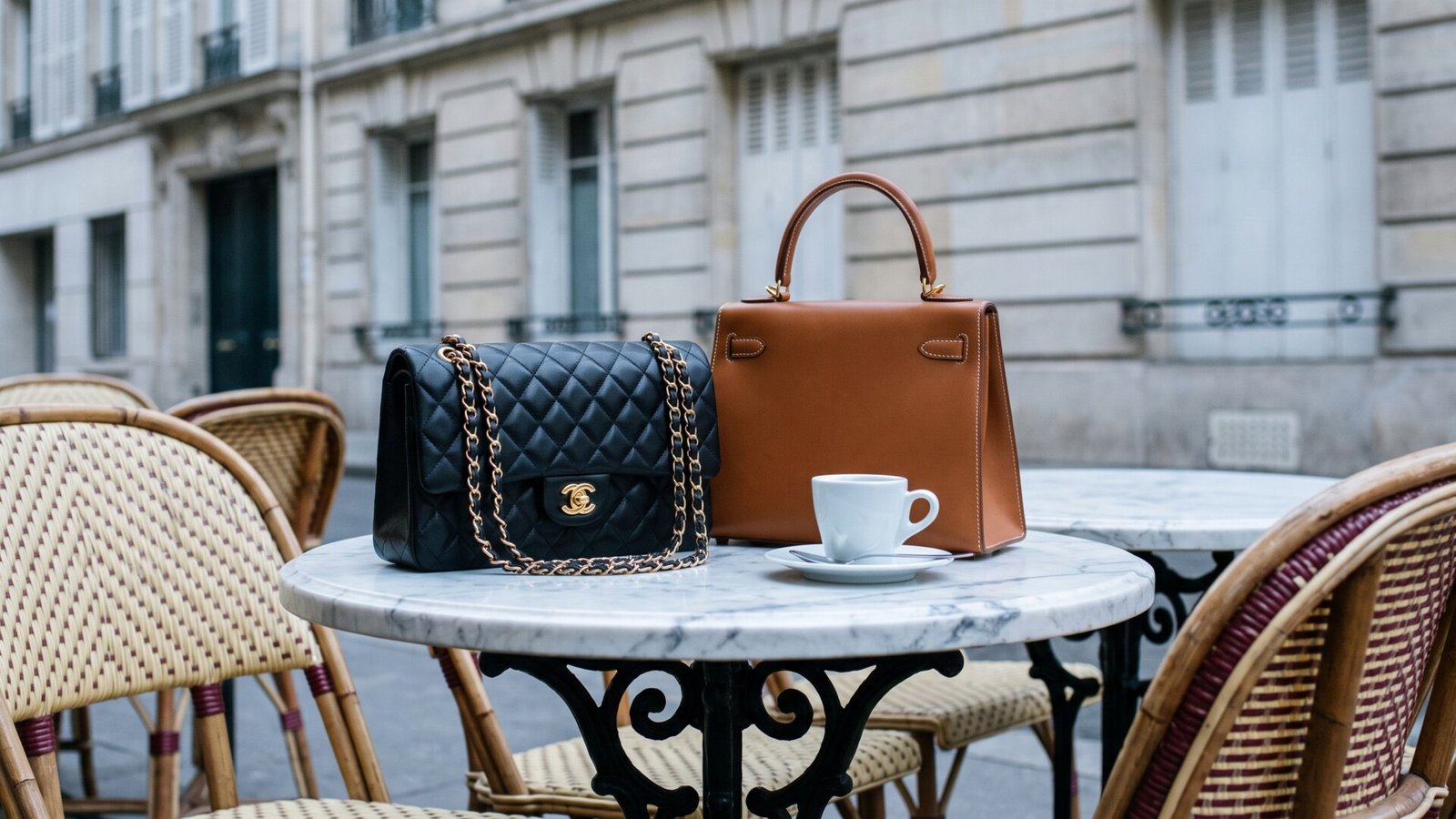
The Ultimate Guide to French Handbags: Icons, Investments, and Everything You Need to Know
A French luxury bag is rarely just a bag. It is usually a design with a documented history, a specific construction and, for some models, a resale record that buyers study before they spend. This hub covers the icons that built the industry, the houses behind them, and what the resale data does and does not tell you.
Prices in this guide are US-dollar boutique prices or ranges unless stated, and they change often, so confirm the current figure with the brand or retailer before buying. Resale percentages come from published industry reports and describe past market behavior, not a guarantee of future value. Not sure where to begin? Our guide to the best French handbag brands compares the houses side by side.
French Handbags at a Glance: Quick Picks
Short on time? Here is how the most important French bags compare on price, resale strength and who they suit best. Each one is covered in more depth below.
| Bag | Price tier | Resale outlook | Best for |
|---|---|---|---|
| Hermès Birkin | Ultra-high (allocation only) | Often above retail | Collectors and long-term value |
| Hermès Kelly | Ultra-high (allocation only) | Often above retail; the Kelly Mini II resold at 282% of retail in 2025 | Formal dressing, collectors |
| Chanel Classic Flap | Very high ($11,700 Medium, US) | Strong, especially black caviar with gold hardware | The classic investment flap |
| Lady Dior | High | Moderate; classic sizes and colors hold best | Polished, ladylike style |
| Louis Vuitton Neverfull | Mid-range (varies by size and finish) | Solid, typically 60–80% of retail | Everyday tote |
| Goyard Saint Louis | Mid | Very strong; Goyard averaged 132% retention in 2025 | Discreet everyday luxury |
| Celine Triomphe vs Saint Laurent Manhattan | Mid ($2,490–$4,500) | Moderate | Quiet luxury |
| Polène | Accessible (several styles under $500) | Modest; buy to use | First French designer bag |
| Longchamp Le Pliage | Entry (under $250) | Low; buy to use | Travel, commuting, gifting |
What Makes a French Handbag French?
Before we dive into specific bags and brands, we need to understand what we’re actually talking about. What makes a French handbag distinct from, say, an Italian one? This is a debate that rages in fashion circles, and the answer reveals a lot about national character.
French handbags are often described as intellectual. They’re not just about looking good; they’re about embodying an idea. Think of the Chanel 2.55—every detail tells a story about Coco Chanel’s life. According to the house and the commonly told story, the burgundy lining echoes the uniforms of the convent orphanage where she grew up, and the Mademoiselle lock nods to her unmarried status. That is brand storytelling rather than documented fact, but it shows how much narrative French houses build into a design. French bags have layers. They reward the person who knows the history.
Italian handbags, by contrast, are often described as sensual. They’re about the feel of the leather, the drape, the immediate visceral impact. A Gucci Jackie or a Bottega Veneta Cassette hits you differently—it’s about texture and presence rather than narrative.
Neither is better. They’re different philosophies. But if you’re drawn to bags with stories, bags that carry the weight of their own history, you’re probably a French handbag person.
There’s also the question of craftsmanship traditions. France has a rigorous system of artisanal training, with the Compagnons du Devoir passing down techniques through generations. The Métiers d’Art—the specialized workshops that do everything from featherwork to leather pleating—are concentrated in France, many of them owned by the big luxury groups. When you buy a French handbag, you’re buying into that ecosystem of expertise.
The Icons: The Bags That Built the Industry
Four bags define the category. Each has an origin story, and in each case the popular version is worth reading with a little caution.
The Hermès Birkin
The Hermès Birkin dates to 1984. In the popular version of the story, actress Jane Birkin sat next to Hermès executive chairman Jean-Louis Dumas on a Paris–London flight, complained about the lack of a good leather weekend bag, and Dumas sketched a design on an airsickness bag. Her own prototype sold at Sotheby’s Paris in July 2025 for $10.1 million, the highest price ever paid for a handbag at auction.
Hermès says each Birkin is handcrafted by a single artisan in its French workshops, in leathers such as Togo, Epsom and Clemence. Distribution is controlled and there is no public waiting list, which feeds a secondary market where bags often sell above retail. Informally, access depends on a buyer’s relationship and purchase history with the house rather than on a queue. A widely cited 2016 Baghunter analysis put annual value growth at 14.2%, ahead of the S&P 500, though that is a historical figure and no guide to what a new purchase will do. Rebag’s 2025 Clair Report put 10-year resale appreciation for the Birkin at 92%, against 43% for Hermès retail price growth over the same period. Weighing new against pre-owned? See our 2026 Birkin resale market report.
The Chanel Classic Flap
Coco Chanel introduced the 2.55 in February 1955, named for its release date, with a shoulder strap that freed women’s hands. According to the house, the burgundy lining and the “Mademoiselle” lock refer to her convent upbringing and unmarried status. In the 1980s Karl Lagerfeld replaced that lock with the interlocking CC turn-lock and wove leather through the chain, creating the Classic Double Flap.
The Classic Flap family now includes the Reissue 2.55, the Mini Flap and the 19. If you are torn between the first two, see Chanel 2.55 Reissue vs Classic Flap, and for the newer model our Chanel 19 guide. The Reissue 2.55 is Lagerfeld-era homage to the original, the Mini Flap is the entry point to the family, and the 19 was Lagerfeld’s last design for the house. Lambskin is soft but delicate; caviar leather is grained and scratch-resistant, which is why black caviar with gold hardware is the usual resale favorite. In Rebag’s 2024 Clair Report Chanel averaged 92% retention.
The Lady Dior
The Lady Dior debuted in the mid-1990s, designed under Gianfranco Ferré and originally called the “Chouchou”. In 1995 the French first lady presented it to Princess Diana at an exhibition at the Grand Palais, and Dior renamed it in her honor. Its signatures are the cannage quilting inspired by Napoleon III chairs, the rounded top handles and the D.I.O.R. charms. Maria Grazia Chiuri added the more casual Lady D-Lite, an embroidered-canvas version with a customizable strap, and Jonathan Anderson, creative director since 2025, introduced the Mini Lady Dior Clover and Buttercup, embroidered with lucky-charm motifs, for Spring/Summer 2026. The bag is structured and polished, so it suits dressier settings, and it remains especially popular across Asia, where it is still nicknamed the “Princess Diana bag”.
Choosing a size? See Mini vs Medium Lady Dior, our verdict on whether the Lady Dior is still worth it in 2026 and the collector’s guide to Lady Art.
The Louis Vuitton Neverfull
Launched in 2007, the Neverfull is a tote with side laces that cinch for security or loosen for capacity. It comes in BB, PM, MM and GM, with the MM the usual choice, and uses coated canvas originally developed for trunks and travel bags, with reinforced straps built for heavy everyday loads. The name reflects the design: you can always add more. The canvas is water- and scratch-resistant. Finishes rotate (Monogram, Damier Ebene, Damier Azur, Epi, Empreinte), and pricing depends on size and finish, so check Louis Vuitton’s site. Wondering whether a challenger has arrived? Read whether the Louis Vuitton Tilted is the new Neverfull.
Brand-Specific Bag Guides: Finding Your Perfect Match
Each house has its own range. These are the models worth knowing beyond the four icons.
Chanel, Dior, Louis Vuitton and Hermès
- Chanel: the Boy Chanel (2011), the Gabrielle hobo, and the Coco Handle sit below the Classic Flap and Reissue in resale strength. New to the brand? Start with the Chanel Wallet on Chain and see whether the Boy Bag is still trending.
- Dior: the Book Tote, the Saddle (John Galliano, 1999), the Caro and the Bobby. Our guides cover the Saddle, the Book Tote for work and the Bobby. Anderson’s collections have also introduced the Dior Bow bag.
- Louis Vuitton: the Speedy (1930), the Alma, the Capucines and the Petite Malle. Explore the lineup in our Louis Vuitton guide.
- Hermès: the Kelly (from the 1930s Sac à dépêches), Constance, Evelyne and Lindy. See our Hermès guide.
Beyond the Big Four
Goyard. Founded in Paris in 1853, Goyard posted 132% average resale retention in Rebag’s 2025 Clair Report, second only to Hermès. Compare its two totes in Goyard Saint Louis vs Artois (or the shorter zip-top take).
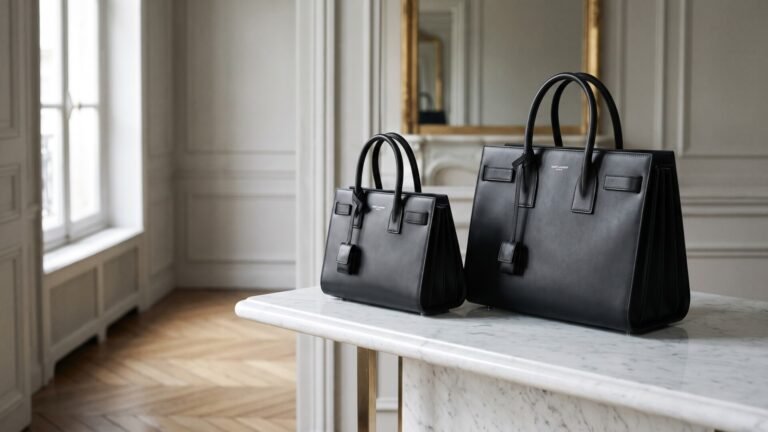
Saint Laurent. The house splits between logo-forward styles like the Loulou and Niki and logo-free designs like the Manhattan and Sac de Jour. Start with our Saint Laurent guide, then Niki vs LouLou and the Sac de Jour review.
Celine. Hedi Slimane revived the 1970s Triomphe motif in 2018, and Michael Rider now leads the house. Read why the Triomphe defines quiet luxury, Triomphe vs Manhattan and the Celine 16 as a power tote.
Polène. Sculptural leather bags at a fraction of heritage-house prices. See our Polène guide, the Tonca review and the top Polène bags to buy.
Jacquemus, Longchamp, Chloé, Givenchy, A.P.C. and L’Uniform. Jacquemus made micro bags a phenomenon with the Le Chiquito (see our Jacquemus guide and Le Bisou vs Le Bambino). Longchamp’s foldable Le Pliage (1993) is the most accessible French icon. Chloé is back to its bohemian roots under Chemena Kamali (five bags to know). Givenchy pairs 1952 heritage with relaxed shapes (guide, Voyou vs Rodeo). For quieter small labels, see our A.P.C. bags guide and L’Uniform canvas totes.
Heritage House or Accessible French Label?
The biggest decision is not which logo, but which tier. Heritage houses sell scarcity, history and resale potential; accessible French labels sell design and everyday usability at a far lower price. Neither is the better buy in the abstract.
| Factor | Heritage houses (Hermès, Chanel, Dior, Louis Vuitton) | Accessible French labels (Polène, Longchamp, A.P.C.) |
|---|---|---|
| Price | From the low thousands to five figures; Chanel Classic Flaps start at $5,400 (Mini) | Roughly under $250 (Longchamp Le Pliage) to a few hundred dollars (many Polène styles) |
| Resale | Some models hold or gain value; most still depreciate | Modest; best bought to use |
| Where made | Varies by house and model; check the origin stamp | Varies; Polène makes most bags in Spain |
| Buying experience | Boutique, waitlists or allocation at the top end | Online or in-store, usually in stock |
| Best for | Collectors, milestone purchases, long-term value | Daily carry, first designer bag, trying a shape before investing |
Still deciding? Our affordable French luxury bags and best French handbag brands guides rank the options in each tier.
Are French Handbags Actually Made in France?
Not always, and it is worth knowing before you pay a premium for “French” craftsmanship. Hermès says its bags are made in its French workshops. Other labels are French by design and ownership but produce elsewhere: Polène designs in its Paris studio, and according to its own support page, most of its bags are made in Ubrique, Spain, with some lines made in Madagascar, Italy and Portugal. The brand notes that each item’s origin stamp shows its actual country of production.
The practical advice is simple: read the origin label on the product page or the bag, and judge a bag on materials, construction and warranty or repair support rather than on the country name alone.
Investment & Resale Guides: Spending Smart
This is where we get practical. French handbags aren’t just beautiful—they can be genuine investments. But not all bags are created equal, and knowing which ones hold value (and which don’t) is crucial.
Are Chanel Bags Worth It?
The short answer is yes—with caveats. Chanel has raised prices dramatically in recent years, with the Medium Classic Flap now retailing at $11,700 in the US after the April 2026 increase. This has sparked debate: are they still worth it?
| Chanel Classic Flap size | US retail price (April 2026) |
|---|---|
| Mini Square | $5,400 |
| Mini Rectangular | $5,600 |
| Small | $11,300 |
| Medium | $11,700 |
| Jumbo | $12,600 |
| Maxi | $13,200 |
The data says yes for the right bags. Chanel classic styles in black caviar leather with gold hardware can retain 90% or more of their value on the resale market. The Mini Flap, in particular, has become a standout performer, often selling close to or above retail due to scarcity.
However, seasonal colors, less popular sizes (the Maxi Jumbo can be harder to move), and non-classic styles depreciate faster. The key is to buy what you love, but if investment matters to you, stick to the classics. For the full numbers, see why pre-owned Chanel is now often smarter than boutique.
Do Birkin Bags Appreciate?
Historically, often yes, but past performance is not a guarantee. Published resale analyses have shown the Hermès Birkin outpacing many traditional investments over the past couple of decades. However, not every Birkin is a winner. The most valuable are:
- Classic leathers: Togo, Clemence, Epsom in neutral colors (black, gold, etoupe, craie)
- Popular sizes: 25, 30, and 35 cm (the 25 and 30 generally command the strongest premiums right now, while demand for the 35 has softened)
- Hardware: Gold hardware typically outperforms silver in most markets
- Condition: Pristine, with original box, dustbag, and receipts
Exotic skins (crocodile, ostrich) and limited editions can fetch astronomical prices but are a more niche market. The sweet spot for most investors is a classic Togo Birkin 30 in a neutral color.
French vs. Italian Handbags
French bags tend toward structure, narrative and timeless minimalism, so they hold their shape and are designed to look current for decades. Italian bags lean toward leather feel, drape and more trend-driven detail such as bold logos and seasonal shapes. Italian houses like Gucci and Prada are also generally easier to buy at retail, while Hermès and Chanel have become hard to buy, which has supported their resale values. French houses, especially Hermès and Chanel, have had the stronger resale record so far, though results depend on model, condition and market. Read French vs Italian Handbags: Which Luxury Tradition Is Right for You?, or explore the Italian side at our sister site, Italian Designer Vault.
How to Choose the Right French Designer Handbag
Start with purpose (daily use, work, travel or evening), structure (soft to structured), material (smooth, pebbled, exotic or canvas), weight and capacity, and how long the style will stay versatile.
French Handbags by Budget
- Under $500: Longchamp Le Pliage and Polène leather bags such as the Tonca. More ideas in our guide to affordable French luxury bags.
- $2,000–$5,000: Saint Laurent Manhattan and Sac de Jour, Celine Triomphe, Goyard Saint Louis, and the Chanel Wallet on Chain.
- $5,000 and up: Chanel Classic Flaps (from $5,400 for the Mini), the Lady Dior, and Hermès icons such as the Kelly, Birkin and Constance.
Choose by Category
Each category below has its own sub-hub.
- French Leather Handbags: Refined leathers and fine stitching for everyday use and collectors. Bags to know: the Hermès Kelly, the Chanel Classic Flap and Polène’s Numéro line (compare the Numéro Dix and Numéro Huit). Full guide: French Leather Handbags.
- French Travel Bags: Reinforced handles and lightweight, roomy builds. Bags to know: the Louis Vuitton Keepall, the Goyard Saint Louis GM and Longchamp’s Le Pliage travel bags. Full guide: French Travel Bags.
- French Tote Bags: Generous interiors, minimal logos and comfortable straps for work and city life. Bags to know: the Louis Vuitton Neverfull, the Goyard Saint Louis and Artois (see which holds its value) and the Dior Book Tote. Full guide: French Tote Bags.
- French Evening & Bridal Bags: Compact, embellished pieces for weddings and formal events. Bags to know: the Louis Vuitton Petite Malle, the Chanel Wallet on Chain, the Jacquemus Le Chiquito and Dior’s Lady Art editions. Full guide: French Evening & Bridal Bags.
- French Crossbody Bags: Hands-free comfort with adjustable straps and secure closures. See also our ranking of the best French crossbody bags. Bags to know: the Hermès Evelyne, the Dior Saddle and Bobby, and the Celine Triomphe. Full guide: French Crossbody Bags.
- French Work Bags: Structured forms with laptop and document space. Bags to know: the Celine 16, the Saint Laurent Sac de Jour and the Dior Book Tote. Carrying a laptop? See the French work bags that fit a 16-inch laptop. Full guide: French Work Bags.
Investment Takeaways: What the Resale Data Says
In Rebag’s 2025 Clair Report, Hermès led all handbag brands with 138% average resale retention, with Goyard close behind at 132%. According to the same report, the top-performing French bags include the Hermès Kelly Mini II (selling at 282% of retail), the Sellier Birkin (183%), and the Chanel Classic Flap (hovering near 100% retention). The Louis Vuitton Neverfull and Speedy also perform well, typically retaining 60-80% of their value depending on condition.
The key takeaways:
- Buy what you love, but love wisely
- Classic styles in classic colors are the safest bet
- Condition matters enormously—buy the best you can afford
- Keep all original packaging and receipts
- Understand that not every bag is an investment—some are just for joy, and that’s okay too
Navigating the French Handbag Market
Where to Buy
Boutiques: The ultimate experience. You get the full brand presentation, the white gloves, the orange box (if it’s Hermès). For Hermès, building a relationship with a specific sales associate is essential for quota bag access.
Department Stores: Galeries Lafayette, Le Bon Marché, Printemps in Paris offer extensive selections and the ability to earn points/rewards. They’re also great for comparing multiple brands in one visit.
Resale Platforms: The secondary market has matured dramatically. Platforms like Vestiaire Collective, The RealReal, Rebag, and Sotheby’s offer authenticated pre-owned bags. For rare pieces, specialized resellers and auction houses are the way to go.
What to Look For
When buying any French handbag, inspect:
- Stitching: Should be even, consistent, and slightly slanted on Hermès (saddle stitching)
- Hardware: Should have weight, proper engraving, and smooth operation
- Date stamps/authenticity codes: Each brand has its own system—learn them
- Leather quality: Should feel substantial, smell like leather (not chemicals), and have consistent grain
- Box and papers: Original packaging adds significant value for resale
Caring for a French Handbag
Good care protects both daily use and resale value. Store bags in their dust bags, lightly stuffed so they keep their shape, away from direct sunlight and damp. Rotate bags rather than carrying one every day, avoid overloading structured shapes, and follow the maker’s care guidance for the specific leather or canvas. For repairs, edge paint and hardware problems, go to the house’s own repair service or a specialist rather than experimenting at home.
A note on authentication: the inspection points above are general guidance and cannot prove a bag is genuine. For expensive pieces, buy from the brand or from resale platforms that offer their own authentication and a return policy.
Scenario Finder: Where to Start Reading
If you already know what you need the bag to do, this table points you to the guide that covers it in the most detail.
| If you want… | Start with |
|---|---|
| A quiet-luxury shoulder bag with no visible logo | Saint Laurent Manhattan vs. Celine Triomphe |
| A French designer bag for a 16-inch laptop | Best French work bags for a 16-inch laptop |
| A lower-priced entry into French design | Affordable French luxury bags or the Polène Tonca |
| A tote that handles daily use | Goyard Saint Louis vs. Artois or French tote bags |
| To understand resale before buying | Chanel price audit and the pre-owned Birkin report |
| A comparison with Italian bags | French vs Italian handbags |
| A trend-led, newer-house option | Jacquemus Le Chiquito or Chloé’s Chemena Kamali-era bags |
More French Designer Guides
Browse the house guides for Chanel, Dior, Louis Vuitton, Hermès, Saint Laurent, Celine, Jacquemus, Longchamp and Polène. For the logo-free debate, read Saint Laurent Manhattan vs. Celine Triomphe, and for a second Goyard angle see Goyard Artois vs. Saint Louis.
Related guides across the site: French luxury fashion houses, French shoes, French jewelry and watches, French perfume and beauty, French haute couture, the Heritage Investment guides and French vs. Italian designer comparisons.
Common Mistakes When Buying a French Handbag
Most regrets come from a handful of avoidable errors. None of these rules guarantees a good outcome, but they cover the situations buyers describe most often.
- Buying a trend piece as an investment. Classic shapes in classic colors have the better resale record. Seasonal colors and limited styles can sell more slowly.
- Treating resale percentages as promises. Figures from industry reports are brand-wide averages from past years. They say little about the exact bag, size and condition you are considering.
- Ignoring size and weight. A bag that looks right in photos can be too small for a laptop or too heavy for daily use. Check dimensions against what you actually carry.
- Skipping the paperwork. Receipts, boxes and dust bags help at resale. Keep them even if you never plan to sell.
- Relying on a checklist to prove authenticity. Stitching, hardware and date codes are useful signals, but no checklist can confirm a bag is genuine. For significant purchases, use a boutique or a resale platform with an authentication guarantee.
- Ignoring the cost of ownership. Leather, canvas and exotic skins age differently, and repairs and cleaning cost money. Factor care into the price.
The Bottom Line
French handbags are repositories of history and craftsmanship, and for a handful of models they have held or gained value on the resale market. Know what you are buying, why it matters, and whether you are buying for love, for investment, or ideally both. We aim to date our prices, separate documented history from brand storytelling, and point you to a dedicated guide for every bag and house mentioned here.
Start with the budget section above, then follow the links into the house and model guides that match your shortlist.
Frequently Asked Questions About French Handbags
Which French handbag holds its value best?
Hermès is the clear leader. In Rebag’s 2025 Clair Report the brand averaged 138% resale retention, and the Kelly Mini II resold at 282% of retail. Goyard, which averaged 132%, and classic Chanel flaps in black caviar leather with gold hardware are the next safest bets.
What is the cheapest way to own a Chanel bag?
Buy small or buy pre-owned. The Wallet on Chain and the Mini flaps are the lowest-priced entry points at retail, while authenticated resale platforms let you buy classic styles below current boutique prices.
How much is a Chanel Classic Flap in 2026?
After Chanel’s April 2026 increase, the Medium Classic Flap retails for $11,700 in the US, with the Small at $11,300 and the Jumbo at $12,600. Chanel adjusts prices regularly and by market, so confirm the current figure before buying.
Who is the creative director of Dior?
Jonathan Anderson, who took over in 2025. His first Lady Dior designs, the Mini Lady Dior Clover and Mini Lady Dior Buttercup, arrived for Spring/Summer 2026.
Is Goyard a French brand?
Yes. Goyard was founded in Paris in 1853 and remains one of the most discreet French heritage houses, best known for the Saint Louis tote.
What is the most affordable French designer bag?
Longchamp’s Le Pliage is the most accessible French icon, typically under $250. For leather, Polène offers several sculptural styles under $500.
Is the Louis Vuitton Neverfull still worth buying?
For everyday use, yes. It is durable, practical and typically retains 60–80% of its value on the resale market depending on condition, making it one of the safest everyday luxury totes.
Are French designer handbags made in France?
Not always. Hermès says its bags are made in its French workshops, but other labels produce partly or mostly abroad. Polène, for example, designs in Paris and makes most of its bags in Ubrique, Spain, according to its own support page. Check the origin stamp on the product page or the bag itself.
What is a good first French luxury bag?
It depends on budget and use. For everyday use under a few hundred dollars, Longchamp Le Pliage or a Polène leather bag is a low-risk start. In the mid-range, a Saint Laurent Manhattan, Celine Triomphe or Goyard Saint Louis are common first purchases, and the Chanel Wallet on Chain is the usual entry point to that house.
Are French handbags a good investment?
A few models, mainly Hermès, Goyard and classic Chanel flaps, have held or gained value on the resale market, according to industry reports. Most French bags depreciate like other luxury goods, and past resale performance does not guarantee future value, so buy what you will use.
Explore the French Designer Handbags Collection
Start here to immerse yourself in the elegance of French handbag design, then dive into each sub-hub to discover the full spectrum of craftsmanship:
- French Leather Handbags
- French Travel Bags
- French Tote Bags
- French Evening & Bridal Bags
- French Crossbody Bags
- French Work Bags
Each category represents a distinct facet of French style — united by refinement, heritage, and timeless sophistication.