Saint Laurent vs Chanel: Modern vs Timeless Luxury
The luxury fashion landscape presents a fascinating dichotomy between two French powerhouses: Saint Laurent and Chanel. One speaks to the rebellious spirit of contemporary culture, the other to an enduring legacy of elegance that has defined luxury for nearly a century. For the discerning buyer, this is not merely a choice between brands—it is a decision about identity, investment, and personal style philosophy.
Saint Laurent represents the modern edge of luxury: sharp silhouettes, unapologetic sensuality, and a connection to youth culture that keeps the brand perpetually relevant. Chanel embodies the opposite pole: heritage craftsmanship, iconic codes that transcend trends, and a position in the luxury hierarchy that few brands can challenge. Understanding these differences matters because a luxury purchase today is rarely just about the item itself. It is about what the item says about you, how it performs in your life, and what it will be worth tomorrow.
This article will dissect the distinct identities of Saint Laurent and Chanel across design philosophy, craftsmanship, practicality, investment potential, and resale value. By the end, you will have a clear framework for deciding which brand aligns with your priorities—whether you seek a modern statement piece or a timeless heirloom. [Explore the latest Saint Laurent collections] and [browse current Chanel offerings] to see the contrast firsthand.
Quick Verdict Summary
Saint Laurent Strengths
- Cutting-edge designs that resonate with contemporary fashion sensibilities
- Strong brand association with music, film, and youth culture
- Versatile pieces that transition from day to evening with ease
- Lower entry price point compared to Chanel, offering accessible luxury
Chanel Strengths
- Iconic status with designs that remain relevant for decades
- Unmatched heritage and artisanal craftsmanship
- Exceptional resale value, often appreciating over time
- Strong collector market and waiting lists for limited releases
Key Takeaway
Choosing between Saint Laurent and Chanel ultimately hinges on your personal style priorities. If you value modernity, edge, and versatility at a more accessible price point, Saint Laurent delivers. If you seek timeless investment pieces with strong resale potential and heritage cachet, Chanel is the superior choice. Neither is objectively better—they serve different buyers with different goals.
Design Philosophy
Saint Laurent: The Architecture of Modern Rebellion
Saint Laurent’s design language is rooted in the brand’s revolutionary history. Yves Saint Laurent himself introduced the tuxedo jacket for women in 1966, challenging gendered fashion norms. Today, creative director Anthony Vaccarello continues this legacy with sharp tailoring, bold shoulders, and a distinctly Parisian sensuality that feels both dangerous and refined.
The brand’s aesthetic is characterized by clean lines, monochromatic palettes, and unexpected cutouts. The Le 5 a 7 bag exemplifies this: a structured hobo silhouette in smooth calfskin with a distinctive YSL clasp. It is modern without being gimmicky, edgy without sacrificing elegance. The Saint Laurent woman is confident, urban, and unafraid to make a statement.
What sets Saint Laurent apart is its ability to reference subcultural codes—rock and roll, punk, the Parisian nightlife—and translate them into luxury goods. The result is a wardrobe that feels current without chasing fast trends. This is not disposable fashion; it is investment dressing with an attitude.
Chanel: The Grammar of Timelessness
Chanel operates on a different plane entirely. Gabrielle Chanel created a vocabulary of luxury that remains largely unchanged: the tweed suit, the little black dress, the quilted bag with chain strap, the camellia flower, the double-C logo. These are not design elements; they are cultural artifacts.
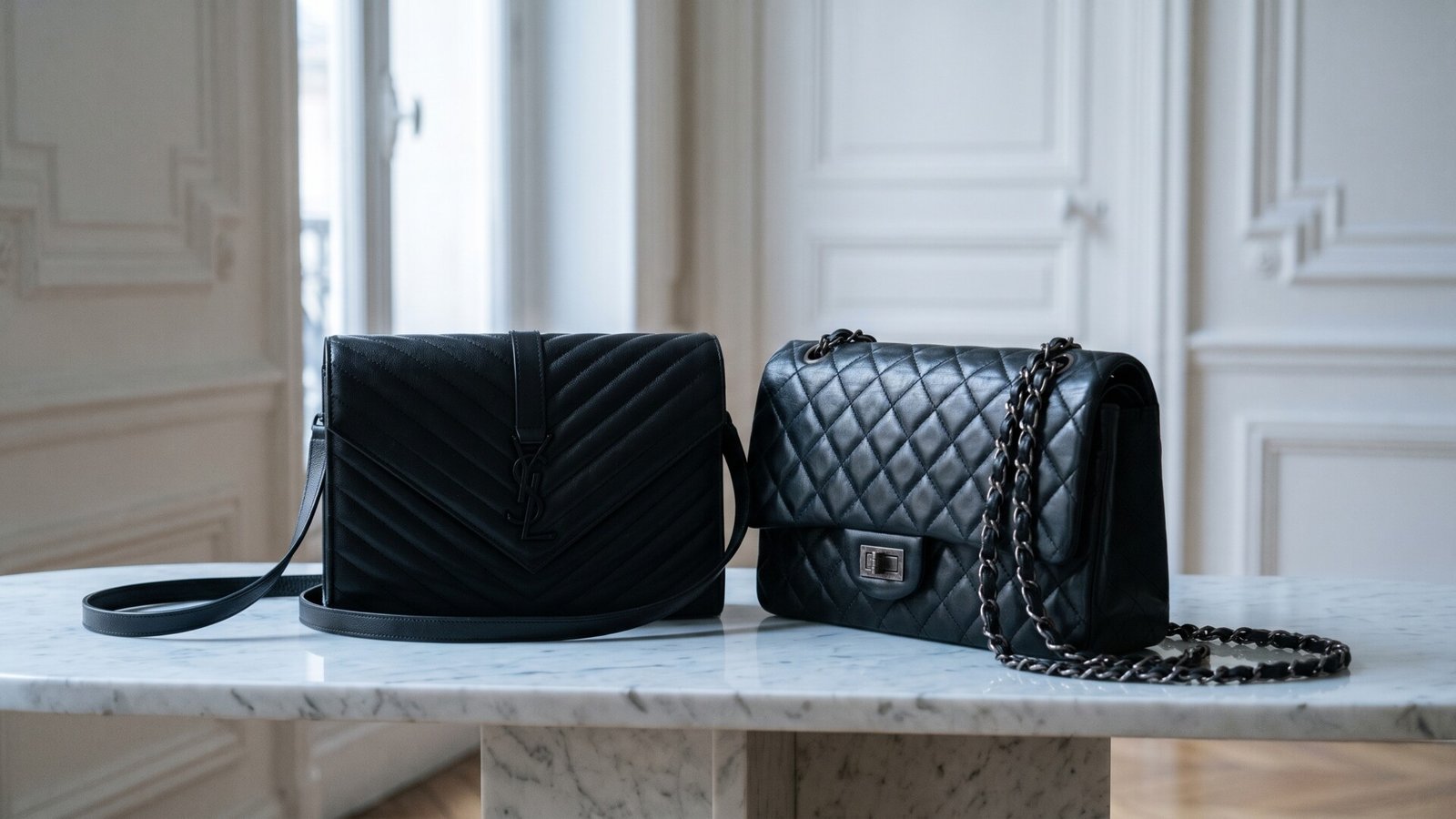
The Classic Flap Bag, introduced in 1955 (the 2.55), has seen refinements but no fundamental redesign. The quilted pattern, the chain strap, the CC turn-lock—these details are instantly recognizable and have been copied by countless brands. Chanel’s genius is that it does not need to innovate in the way Saint Laurent does. Its power lies in consistency, in the reassurance that a Chanel piece purchased today will look appropriate in ten, twenty, or fifty years.
This is not to say Chanel is static. Karl Lagerfeld and now Virginie Viard have introduced new silhouettes and materials, but always within the brand’s established framework. The Boy Bag, for example, added a more masculine, edgy option to the lineup while maintaining Chanel’s signature quilting and chain details. But the core identity remains unchanged: Chanel is the benchmark for what luxury should look like.
Winner: Chanel for timelessness; Saint Laurent for modernity. The choice depends on whether you want to participate in fashion history or define it.
Quality and Craftsmanship
Saint Laurent: Precision Manufacturing
Saint Laurent’s production is primarily based in Italy, with some pieces made in France. The brand uses high-quality materials—full-grain calfskin, smooth lambskin, metallic hardware with ruthenium or gold finishes—but the craftsmanship reflects modern manufacturing efficiencies rather than artisanal traditions.
The Le 5 a 7 bag features a structured silhouette with precise stitching and a smooth leather interior. The hardware is weighty and secure. However, the leather is treated for durability rather than developing a rich patina over time. This is not a flaw; it is a design choice that prioritizes consistency and ease of care. Saint Laurent bags are built to withstand daily use without requiring special maintenance.
The ready-to-wear collections demonstrate similar precision. Tailoring is sharp, seams are clean, and materials perform well. But you are paying for design and brand cachet as much as craftsmanship. The quality is excellent for the price point, but it does not reach the hand-finishing levels of true haute couture houses.
Chanel: Artisanal Heritage
Chanel’s craftsmanship operates at a higher tier. The brand owns several specialized ateliers through its Paraffection subsidiary, including Lesage for embroidery, Goossens for jewelry, and Lemarie for feather work. The Classic Flap Bag is assembled by hand in Chanel’s workshops, with each bag requiring approximately 18 hours of labor.
The leather selection is more rigorous. Chanel uses only the top 5% of calfskin and lambskin hides, rejecting any with visible imperfections. The quilting is done by hand using a technique that creates the signature puffy appearance while maintaining structural integrity. The chain strap is interwoven with leather strips to prevent tangling and reduce wear.
This attention to detail extends to every element. The CC turn-lock mechanism is engineered for smooth operation over decades. The interior compartments are designed for practical organization. Even the serial number authenticity card is crafted with care.
Winner: Chanel, by a significant margin. The craftsmanship justifies the higher price point and contributes directly to the brand’s investment value.
Practicality and Versatility
Saint Laurent: Daily Wearability
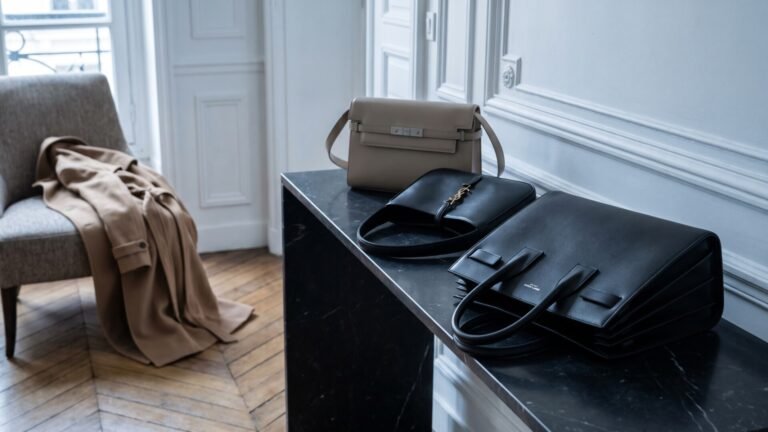
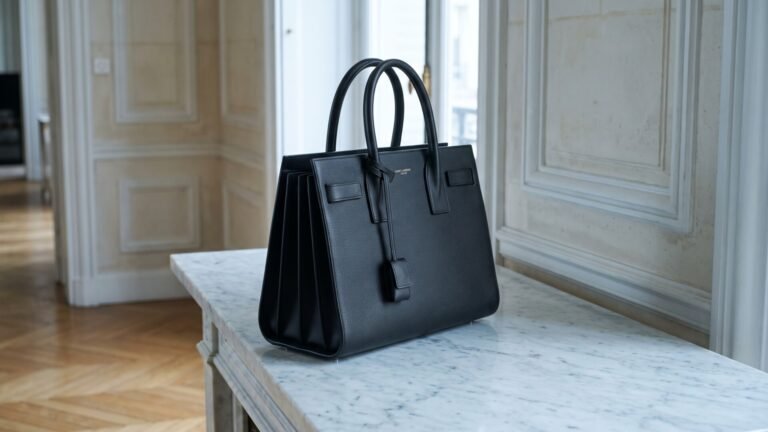
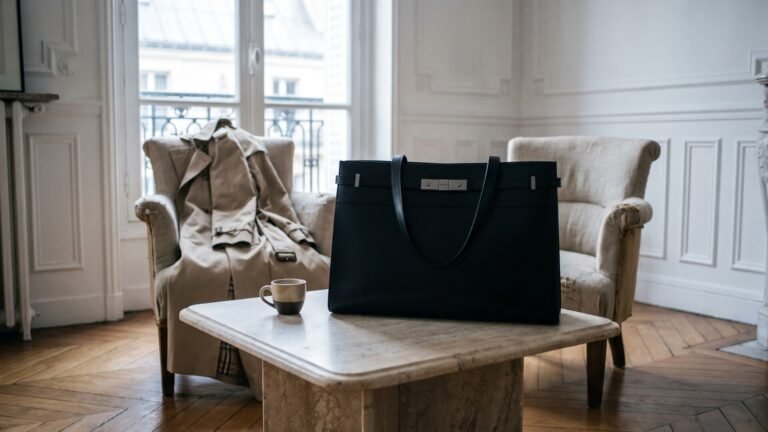
Saint Laurent designs are inherently practical for modern life. The Sac de Jour tote, for example, features a structured silhouette that fits a 13-inch laptop, documents, and daily essentials without losing its shape. The leather is scratch-resistant and easy to clean. The top handles and detachable shoulder strap offer multiple carrying options.
The Le 5 a 7 bag, while smaller, is ideal for evenings and weekends. It fits a phone, cardholder, lipstick, and keys—everything you need for a night out. The open-top design provides easy access, though it lacks a zipper closure for security.
Saint Laurent’s ready-to-wear follows similar logic. Blazers are cut for movement. Dresses transition from office to dinner. The color palette—black, navy, beige, white—ensures pieces coordinate easily. This is a wardrobe designed for a woman who has places to go and needs her clothes to keep up.
Chanel: Statement Pieces Requiring Intentional Styling
Chanel pieces are less forgiving. The Classic Flap Bag is relatively small (the medium measures 25 x 15 x 6 cm) and does not accommodate a laptop or tablet. The chain strap can dig into shoulders when the bag is fully loaded. The lambskin leather, while beautiful, is delicate and requires careful handling to avoid scratches.
The tweed jackets are iconic but demand specific styling. Wearing a Chanel tweed jacket with jeans and sneakers can look effortless; wearing it with another structured piece can feel costume-like. The pieces are designed to be the focal point of an outfit, not background elements.
This is not a criticism but a reality. Chanel items are not everyday workhorses. They are statement pieces that require thought and intention. For the buyer who wants a bag or jacket that can be thrown on without consideration, Saint Laurent is the more practical choice.
Winner: Saint Laurent for daily practicality; Chanel for special occasion impact.
Styling and Wardrobe Integration
Saint Laurent: Effortless Modernity
Saint Laurent pieces integrate seamlessly into a contemporary wardrobe. A black Le 5 a 7 bag works with everything from tailored trousers to a slip dress to jeans and a t-shirt. The Sac de Jour in beige or black complements neutral palettes and adds structure to softer silhouettes.
The brand’s aesthetic encourages mixing high and low. A Saint Laurent tuxedo blazer over a simple white t-shirt and raw denim captures the brand’s spirit. The key is contrast: structured with relaxed, polished with undone. This makes Saint Laurent accessible to women who do not want to look overly styled.
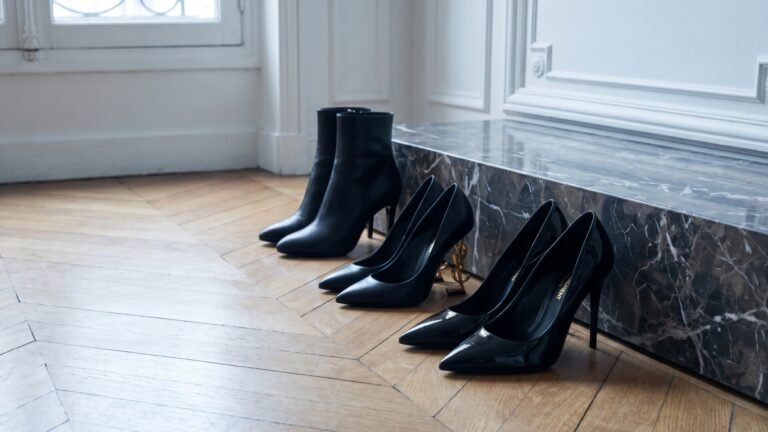
For evening, Saint Laurent delivers. The minaudiere, the clutch, the strappy heels—these are designed for the nightlife the brand romanticizes. A black Saint Laurent dress with minimal jewelry and a bold lip is a complete look.
Chanel: The Art of Effortless Elegance
Chanel requires a different approach. The pieces are often the starting point of an outfit rather than an addition. A Chanel tweed jacket demands consideration of what goes underneath (a simple silk blouse or cashmere shell) and what goes with it (trousers, a midi skirt, or jeans).
The Classic Flap Bag is versatile but reads as formal. It elevates casual looks—jeans, a t-shirt, a blazer—but can feel overdressed with athletic wear or very relaxed silhouettes. The Boy Bag, with its more masculine chain and edgier silhouette, offers more flexibility for casual styling.
Chanel jewelry—the CC earrings, the pearl necklaces—provides an entry point for those who want the brand’s aesthetic without the investment of a bag or jacket. These pieces add polish to any outfit and are less demanding to style.
Winner: Saint Laurent for ease of integration; Chanel for those who enjoy the art of dressing.
Material Selection
Saint Laurent: Innovation and Durability
Saint Laurent experiments with materials to achieve specific aesthetic effects. The brand uses metallic leathers, patent finishes, and mixed textures to create visual interest. The hardware is often aged or ruthenium-finished for a vintage feel.
The leathers are treated for durability. Saint Laurent’s calfskin resists scratches and water damage better than many competitors. The brand also uses coated canvas for some bags, offering a lighter, more weather-resistant option.
This material strategy prioritizes function and longevity over tradition. Saint Laurent does not use tweed or other heritage textiles in significant quantities. The focus is on leather, metal, and modern synthetics that perform well in daily use.
Chanel: Tradition and Prestige
Chanel’s material selection is rooted in the brand’s history. Tweed, invented by Gabrielle Chanel, remains a signature material. Lambskin and caviar leather (a pebbled calfskin) are the primary leathers for bags. The brand also uses jersey, silk, and other traditional luxury textiles.
The materials are selected for their beauty and prestige, not necessarily their practicality. Lambskin is soft and luxurious but scratches easily. Tweed is beautiful but delicate. Chanel expects its customers to care for their pieces with the attention they deserve.
This material philosophy reinforces the brand’s positioning as a purveyor of heirloom-quality goods. You are not buying a bag to use casually; you are buying a piece of fashion history that requires respect.
Winner: Chanel for prestige; Saint Laurent for practicality.
Investment Value
Saint Laurent: Moderate Appreciation
Saint Laurent bags generally retain 50-70% of their retail value in the resale market, depending on the model and condition. The Sac de Jour and Le 5 a 7 perform best, while seasonal styles depreciate more quickly.
The brand does not have the same collector cachet as Chanel or Hermes. There is no waiting list for Saint Laurent bags, no scarcity-driven demand. This means you can buy a Saint Laurent piece without playing the luxury game, but it also means you should not expect significant appreciation.
Saint Laurent’s ready-to-wear and shoes depreciate more rapidly than bags. A tuxedo blazer might retain 30-40% of its value in excellent condition. Shoes are even worse, often selling for 20-30% of retail.
Chanel: Strong Investment Potential
Chanel bags are among the best-performing luxury investments. The Classic Flap Bag and Boy Bag retain 80-90% of their retail value in excellent condition, and some limited editions appreciate above retail. Chanel has implemented significant price increases in recent years, further boosting the value of existing pieces.
The investment case for Chanel rests on three pillars: scarcity (the brand does not sell online and limits production), heritage (the designs are timeless), and demand (there is a global pool of buyers willing to pay premium prices).
However, Chanel’s price increases have made new pieces prohibitively expensive for many buyers. A Classic Flap Bag now costs over $10,000, compared to $5,000 a decade ago. This has pushed more buyers into the pre-owned market, further supporting resale values.
Winner: Chanel, decisively. For investment purposes, Chanel is one of the safest bets in luxury fashion.
Resale Value Analysis
Saint Laurent: Stable but Modest
- Sac de Jour: Retains 60-70% of retail in excellent condition
- Le 5 a 7: Retains 55-65% of retail
- College Bag: Retains 50-60% of retail
- Seasonal styles: Retain 40-50% of retail
- Ready-to-wear: Retains 30-40% of retail
- Shoes: Retain 20-30% of retail
Saint Laurent’s resale market is stable but unexciting. You will not lose money if you buy wisely, but you will not make money either. The best strategy is to buy classic styles in neutral colors and maintain them well.
Chanel: Strong and Growing
- Classic Flap Bag: Retains 80-90% of retail; some colors and limited editions exceed retail
- Boy Bag: Retains 75-85% of retail
- 2.55 Reissue: Retains 80-90% of retail
- Seasonal styles: Retain 60-75% of retail
- Tweed jackets: Retain 40-50% of retail
- Shoes: Retain 30-40% of retail
Chanel’s resale value is driven by brand strength, scarcity, and price inflation. The best investments are classic styles in neutral colors (black, beige, navy). Limited editions and rare colors can command premiums, but they also carry more risk.
Winner: Chanel, with significantly better resale performance across all categories.
Durability and Longevity
Saint Laurent: Built for Daily Use
Saint Laurent bags are engineered for durability. The leathers are treated to resist scratches, the hardware is sturdy, and the construction is solid. A Sac de Jour used daily for commuting and travel will show wear after 2-3 years but will remain functional for much longer.
The brand’s ready-to-wear is similarly durable. Wool trousers, cotton shirts, and leather jackets hold up well with proper care. The main issue is that Saint Laurent’s aesthetic can date more quickly than Chanel’s. A sharp-shouldered blazer from 2020 may look dated in 2030, while a Chanel tweed jacket from 1980 still looks current.
Chanel: Delicate but Repairable
Chanel bags require more care. Lambskin scratches easily, and the quilting can flatten over time. However, Chanel’s repair services are excellent. The brand will refurbish bags for a fee, restoring them to near-original condition.
The durability of Chanel’s ready-to-wear is mixed. Tweed jackets can snag and pill. Silk blouses are delicate. But the construction quality is high, and pieces can be repaired by skilled tailors.
The real durability advantage of Chanel is timelessness. A Chanel bag or jacket will never look out of style, so you will want to keep it for decades. The same cannot be said for many Saint Laurent pieces.
Winner: Saint Laurent for physical durability; Chanel for stylistic longevity.
Heritage and Brand History
Saint Laurent: The Revolutionary
Yves Saint Laurent founded his house in 1961 after leaving Christian Dior. His first collection introduced the trapeze dress, but his most significant contribution came in 1966 with Le Smoking, the tuxedo suit for women. This was a radical statement at a time when women were still expected to wear dresses.
Saint Laurent continued to challenge conventions throughout his career. He introduced safari jackets, peasant blouses, and see-through blouses. He was the first major designer to use ethnic influences and to feature Black models in his shows.
The brand’s modern identity under Vaccarello continues this rebellious tradition. Saint Laurent is not about preserving history; it is about challenging it.
Chanel: The Icon
Gabrielle Chanel opened her first boutique in 1910. She revolutionized women’s fashion by introducing jersey fabric, the little black dress, and costume jewelry. Her designs freed women from corsets and restrictive clothing.
The Chanel suit—cardigan jacket with braid trim and a slim skirt—became the uniform of sophisticated women worldwide. The 2.55 bag, introduced in 1955, solved the problem of carrying a handbag while keeping hands free. The quilted pattern was inspired by the jackets of jockeys.
Chanel’s heritage is about creating classics, not breaking rules. The brand’s power comes from consistency and recognition. A Chanel piece connects you to a century of fashion history.
Winner: Chanel for heritage depth; Saint Laurent for cultural relevance.
Who Should Buy Saint Laurent
Saint Laurent is for the woman who values modernity, edge, and versatility. She is likely under 45, urban, and engaged with contemporary culture. She wants her luxury to feel current, not museum-worthy.
She appreciates that Saint Laurent offers accessible entry points to luxury—bags under $2,000, shoes under $800, ready-to-wear under $1,500. She does not want to wait on a list or play games to buy a bag. She wants to walk into a store, choose a piece, and wear it that night.
She is not primarily concerned with resale value. She buys what she loves and wears it until it wears out. If she sells it later, that is a bonus, not a consideration.
Buy Saint Laurent if: You want modern design, practical pieces, and accessible luxury without the game-playing.
Who Should Buy Chanel
Chanel is for the woman who values heritage, craftsmanship, and investment potential. She is likely over 35, established in her career, and building a serious luxury wardrobe. She understands that a Chanel bag is not just an accessory; it is an asset.
She is willing to pay a premium for the brand’s cachet and resale value. She understands that a $10,000 bag is not just a purchase but an investment that may appreciate. She is patient enough to wait for the right piece or to navigate the brand’s distribution system.
She appreciates that Chanel pieces require care and intentional styling. She enjoys the ritual of dressing and the status that comes with wearing iconic designs.
Buy Chanel if: You want a timeless investment piece, strong resale value, and the prestige of owning a true luxury icon.
Strategic Role of This Page
This article serves as a cornerstone for readers navigating the complex decision between two of luxury fashion’s most influential brands. By linking to our broader [Luxury Fashion Hub] and related [Brand Comparison Guides], we establish authority on luxury investments and style choices. Internal links to specific product pages, such as our [Saint Laurent Bag Guide] and [Chanel Investment Analysis], provide readers with curated shopping options that facilitate informed purchases.
This content also creates a foundation for future articles exploring other brand comparisons, investment strategies, and styling guides. The framework established here—comparing design philosophy, craftsmanship, practicality, and investment value—can be applied to other luxury houses, enriching our content ecosystem and serving our readers with consistent, valuable insights.
Frequently Asked Questions About Saint Laurent Vs Chanel
What are the main differences between Saint Laurent and Chanel?
Saint Laurent focuses on modern, edgy designs that appeal to contemporary tastes. Chanel emphasizes timeless elegance, heritage craftsmanship, and investment value. Saint Laurent is more accessible in price and availability; Chanel commands higher prices and stronger resale performance.
Which brand offers better investment value?
Chanel is the superior investment. Classic Flap Bags retain 80-90% of retail value and often appreciate. Saint Laurent bags retain 50-70% of retail value. For pure investment potential, Chanel is the clear winner.
Are Saint Laurent bags practical for everyday use?
Yes. The Sac de Jour and Le 5 a 7 are designed for daily wear. The leather is durable, the hardware is sturdy, and the silhouettes are functional. Saint Laurent bags require less care than Chanel pieces.
How do the resale values of Saint Laurent and Chanel compare?
Chanel resale values are significantly higher. Chanel bags retain 75-90% of retail; Saint Laurent bags retain 50-70%. Chanel’s limited distribution and price increases support stronger resale performance.
What should I consider when choosing between modern and timeless luxury?
Consider your lifestyle, budget, and priorities. If you want a bag to wear daily without worry, Saint Laurent is practical. If you want a piece that will hold value and remain stylish for decades, Chanel is the better choice. There is no wrong answer—only what fits your needs.
Is it worth investing in a Chanel item over a Saint Laurent piece?
For financial investment, yes. Chanel bags have a proven track record of holding and increasing in value. However, if you plan to use the piece heavily and do not care about resale, Saint Laurent offers better value for daily wear.
How can I style pieces from both brands effectively?
Keep the rest of your outfit simple. A Chanel tweed jacket works with jeans and a white t-shirt. A Saint Laurent blazer pairs well with trousers or a slip dress. Let the statement piece be the focus and build around it with neutral basics. —