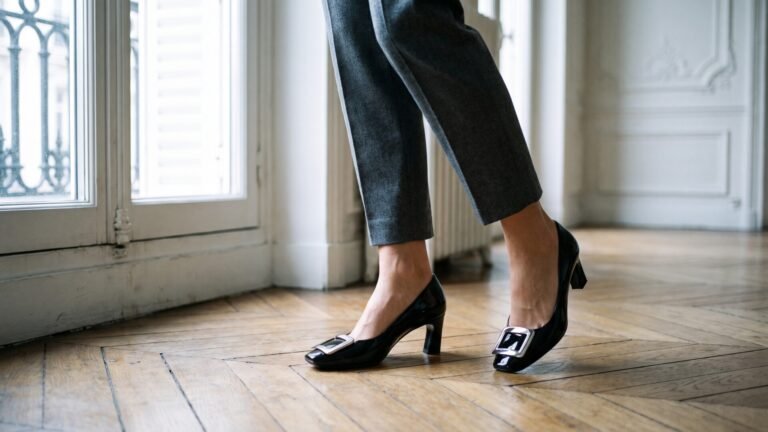
Roger Vivier Belle Vivier vs Gommette: Which Flat Is More Versatile?
The shoe is on the table, and the guest is holding it at eye level, turning it over. She has asked the same question in four different ways in ten minutes. The buckle catches the light. The leather is soft. The price is not. What she wants to know is whether this one pair will do everything, and the honest answer is that the Belle Vivier and the Gommette are built for different kinds of versatility, and she is standing in front of the wrong one for her wardrobe.
The Belle Vivier is the more immediately recognizable Roger Vivier flat, the one with the square buckle that announces the house from across a room. The Gommette is the quieter shoe, and for most people with one pair to buy, it is the easier one to wear. Versatility is not a matter of whether both work with jeans and dresses. Both do. The real decision is about the scale of the buckle, the formality of the silhouette, how loudly the shoe signals the brand, and whether the buyer wants a collectible fashion statement or a daily flat that disappears into the outfit.
This is a comparison for people choosing one significant pair, not building a collection. The answer depends on what "versatile" means to the person buying: maximum outfit compatibility, maximum occasion range, or maximum recognizability.
Quick Verdict Summary
The Gommette is the more versatile everyday flat. The Belle Vivier is the stronger choice for buyers who want Roger Vivier’s most recognizable design language and a dressier presence. That is the whole comparison in two sentences, but the reasoning behind it matters, because the two shoes are not interchangeable and the difference shows up in daily wear.
Belle Vivier strengths
- Stronger heritage identity through the signature square buckle and structured silhouette.
- More polished and visually distinctive with tailored clothing, cocktail dressing, and evening separates.
- Better choice for buyers who want a recognizable Roger Vivier signature rather than an understated flat.
- Particularly compelling in classic black, patent leather, satin, or embellished versions.
Gommette strengths
- Lower-profile branding and a simpler shape make it easier to wear with workwear, denim, knitwear, and relaxed tailoring.
- More naturally suited to repeated everyday wear and quiet luxury wardrobes.
- Easier to style when the outfit already contains strong details, prints, texture, or visible accessories.
- Better choice for buyers prioritizing wardrobe flexibility over immediate brand recognition.
The Belle Vivier wins on identity. The Gommette wins on the number of outfits and settings it can serve without competing with the rest of the wardrobe. If the reader takes one thing from this comparison, it should be that distinction.
Product Positioning: What These Flats Are Actually Designed to Do
The Belle Vivier is the house’s signature buckle-led flat. The buckle is not decoration applied to a basic shoe; it is the reason the shoe exists, and it gives the flat a more structured, architectural character than most ballet flats manage. It can anchor an outfit rather than simply complete it. That is a useful thing when the outfit needs a focal point, and a liability when it does not.
The Gommette sits at the quieter end of the Roger Vivier range. It is still distinctly Roger Vivier, but the upper and branding read with less visual force, which makes it easier to treat as a wardrobe basic. The shoe supports the outfit instead of defining it.
Both styles appear in different materials, colors, heel heights, and embellishment levels across seasons. The comparison here focuses on the core silhouettes rather than treating every seasonal variation as identical, because a satin Belle Vivier and a smooth-leather one behave differently enough to matter. For readers who want to place Roger Vivier within the wider landscape of French footwear before deciding, the guide to French shoes from iconic heels to luxury sneakers is the place to start.
The decision framework used throughout this article is practical: outfit compatibility, formality, comfort in real settings, maintenance, cost per wear, and long-term relevance. Those six factors decide more purchases than any single photograph of a shoe on a shelf.
Design and Brand Identity
The Belle Vivier’s signature presence
The Belle Vivier’s buckle matters beyond decoration. It provides immediate recognition, creates a horizontal focal point across the foot, and gives the flat a more formal, architectural character than a plain ballet flat. The pointed or structured toe and deliberate proportions push the shoe closer to a polished pump than to a basic flat. It is a flat that behaves like a heel in the way it finishes an outfit.
The buyer psychology here is straightforward. The Belle Vivier satisfies shoppers who want a visible luxury signal without relying on an all-over logo or monogram. The buckle does the work a monogram would do, but with more restraint and more design credibility. For readers who want a deeper product and styling reference, the Belle Vivier style guide for the iconic buckle pump covers the model in detail.
The Gommette’s quieter appeal
The Gommette’s comparatively restrained design works within a quiet luxury wardrobe, particularly when the buyer wants refinement without a prominent signature element. A lower-profile design is more versatile with wide-leg trousers, casual denim, soft tailoring, and minimalist dresses, because the shoe is not asking the outfit to keep up with it.
Understated does not mean anonymous. The Roger Vivier finish and construction still give the Gommette a luxury presence, but the shoe is less likely to dictate the tone of an outfit. That is the point of it. For context on where Roger Vivier sits among the wider field of French houses, the guide to French luxury fashion houses is useful background.
Which one looks more timeless?
Both silhouettes are durable wardrobe ideas, but they age differently. The Belle Vivier remains tied to a recognizable house code, which means it will always read as Roger Vivier and will always carry the associations that come with that. The Gommette is less dependent on seasonal styling, which makes it the safer long-term choice for someone who does not want their shoes to date.
The Belle Vivier is the better choice for a collector building a Roger Vivier-focused wardrobe. The Gommette is the safer first purchase for someone seeking one luxury flat to wear across many settings. Neither is more timeless in the abstract. They are timeless in different ways, and the buyer has to decide which way suits them.
Materials, Construction, and Comfort Considerations
Material choice changes everything about how a flat wears, and both models appear in a range of finishes. Smooth leather is the most forgiving and the easiest to maintain. Patent leather holds its shape and looks polished but shows scuffs and creases more readily. Suede is soft and quiet but vulnerable to weather and transfer. Satin and embellished finishes are the most occasion-specific and the most demanding to care for. The material matters more than the model name for daily wear.
The Belle Vivier’s more structured appearance can feel polished but may be less forgiving if the toe shape or fit does not suit the wearer’s foot. Assess width, toe pressure, and heel security rather than choosing by appearance alone. A shoe that pinches at the toe will not be worn, whatever the buckle looks like. The Gommette’s simpler construction and softer visual profile can make it feel more adaptable, but actual comfort depends on the specific material, lining, sole, and fit of the version purchased.
Sizing guidance should be treated as product-specific. Luxury flats vary by material and seasonal construction, and Roger Vivier is no exception. Check the exact product’s current fit notes and try both feet with the intended hosiery. Do not assume one model is universally true to size, and do not buy a final sale pair without confirming the fit policy. A flat that runs narrow will not stretch into comfort, and a flat that runs long will slip at the heel no matter how good the leather is.
Head-to-Head Comparison Table
| Factor | Belle Vivier | Gommette | Better choice |
|---|---|---|---|
| Visual identity | Signature buckle and more recognizable presence | Quieter and less directive | Belle Vivier for brand recognition |
| Everyday styling | Works best when the outfit benefits from polish and structure | Blends more easily with casual and tailored wardrobes | Gommette |
| Formality | More naturally dressy | More relaxed and adaptable | Belle Vivier for occasions |
| Comfort potential | Depends heavily on toe shape, structure, and material | Often easier to style as a repeated daily flat | Gommette, subject to fit |
| Quiet luxury appeal | Refined but visibly branded through the buckle | More understated and discreet | Gommette |
| Investment logic | Stronger collectible and heritage appeal | Stronger cost-per-wear potential for frequent use | Depends on the buyer |
The table resolves into a simple pattern. The Belle Vivier wins on identity and occasion dressing. The Gommette wins on the number of outfits and settings it can serve without competing with the rest of the wardrobe. A buyer who wants one shoe to do both jobs will have to decide which job matters more.
Practicality Test: Which Flat Works Harder in a Real Wardrobe?
Workwear and polished daytime dressing
With cigarette trousers, midi skirts, tailored pantsuits, sheath dresses, and understated knit dresses, both flats work, but they do different things. The Belle Vivier adds authority and visual finish, which makes it especially useful when the outfit is otherwise simple. A plain navy sheath dress and a Belle Vivier is a complete look. The same dress and a Gommette is a quieter one.
The Gommette is more forgiving with softer office dressing, relaxed tailoring, and wardrobes that avoid conspicuous accessories. It does not demand that the rest of the outfit rise to its level. In an office where visible branding is read as slightly try-hard, that matters.
Denim, travel, and everyday errands
The Gommette is usually the easier companion for straight-leg denim, cropped jeans, cardigans, casual trousers, and travel separates. The Belle Vivier can work with denim, but its structure and buckle may make the outfit feel intentionally styled rather than effortless. Some people want exactly that. Most people running errands do not.
Travel practicality deserves a caveat. Neither shoe should be treated as a carefree walking shoe without checking sole construction, foot support, and fit. A flat has no heel, which does not make it a walking shoe. Choose based on realistic walking needs rather than the visual promise of a flat, and if the trip involves long days on foot, neither of these is the right purchase.
Evening and occasion dressing
The Belle Vivier has the advantage with cocktail dresses, black trousers, satin skirts, evening tailoring, and occasions where the shoe should read as jewelry for the foot. The buckle supplies the focal point that a plain flat cannot. A refined Gommette can still work for dinners and events, especially in black or a dressier fabric, but it is less likely to provide the same effect.
The hidden tradeoff is worth stating plainly. The Belle Vivier may be more versatile across levels of formality, while the Gommette may be more versatile across casual wardrobe categories. Both are versatile. They are versatile in opposite directions.
Styling Comparison: How Each Flat Changes an Outfit
Best ways to style the Belle Vivier
Pair it with cropped tailored trousers to expose the buckle and create a clean line at the ankle. Use it with simple black, navy, cream, or camel outfits where the shoe can supply the primary point of interest. Style it with midi skirts and dresses when a polished, ladylike finish is wanted without moving into a high-heel silhouette.
Over-accessorizing is the common mistake. The buckle already supplies a strong decorative element, and adding a statement necklace, a printed scarf, and a bold bag on top of it makes the outfit feel busy. Let the shoe be the one thing. The Belle Vivier rewards restraint everywhere else.
Best ways to style the Gommette
Pair it with straight-leg denim, relaxed trousers, fine-gauge knitwear, and minimalist dresses for an understated French effect. Use it with textured outfits, prints, or statement jewelry because the shoe is less likely to compete with those elements. It is especially useful for capsule wardrobes, since it can repeat across more outfits without making each look feel built around the shoe.
A pointed or refined flat can still sharpen casual clothing, so the Gommette should not be treated as purely informal. It is a quiet shoe, not a sloppy one, and it holds its own with tailoring when the tailoring is soft rather than sharp.
Which one is easier to dress up or down?
The Gommette takes the dress-down advantage because its quieter design integrates more naturally into casual outfits. The Belle Vivier takes the dress-up advantage because the buckle and structure create more immediate occasion presence.
If versatility means the widest range from jeans to a formal dinner, the answer depends on which end of that range matters most. For most single-pair wardrobes, the Gommette is the stronger all-rounder. For wardrobes that skew formal, the Belle Vivier covers more ground. The mistake is buying the more recognizable shoe and then discovering that most of the wardrobe is denim and knitwear.
What Most Buyers Get Wrong About Versatility
The first assumption to challenge is that a more recognizable luxury design is automatically more versatile. It is not. Visual signature increases outfit impact while reducing neutrality. A shoe that makes a statement cannot also disappear, and disappearing is what most outfits actually need from a shoe.
The second is that the basic black flat is always the safest purchase. Material, toe shape, hardware scale, and structure matter more than color. A black patent Belle Vivier and a black smooth-leather Gommette are not the same proposition, even though both are black flats.
The third, and the one that costs the most money, is the gap between theoretical versatility and actual wear frequency. A Belle Vivier may match many outfits on paper, but the Gommette may be reached for more often because it asks less of the rest of the look. The shoe that gets worn is the one that gets its money back. The shoe that stays in the box is expensive regardless of what it cost.
A repeatable buyer test helps:
- Choose the Belle Vivier if at least half of the intended outfits are tailored, polished, or occasion-focused.
- Choose the Gommette if most outfits involve denim, knitwear, relaxed trousers, travel, or understated workwear.
- Avoid either as a first luxury flat if the primary need is extensive walking or foot support rather than style.
Investment Analysis: Cost per Wear, Durability, and Resale
Which flat is more likely to earn its price?
Cost per wear is the only honest measure of value here. A Gommette worn several times a week will outperform a more collectible Belle Vivier that stays reserved for special occasions, even if the Belle Vivier cost the same. The opposite is also true: a buyer who values formal dressing and wants one statement flat may get better satisfaction from the Belle Vivier despite lower weekly use, because the occasions it serves are the ones that matter to them.
Hidden ownership costs belong in the calculation. Specialist cleaning, care for delicate satin or embellishment, sole protection, and the likelihood of replacing heel tips or repairing wear all add up. A satin flat is not a daily shoe, and treating it as one is how a $900 purchase becomes a $900 regret.
Durability and maintenance
Smooth leather is generally easier to maintain than satin, delicate embellishment, or highly reflective patent finishes, but care should follow Roger Vivier’s instructions for the exact material. Light colors show scuffs and transfer more readily, while black and darker neutrals are more forgiving for frequent wear.
Inspect the likely wear points before purchase: toe scuffing, creasing across the vamp, edge wear, sole abrasion, and buckle or embellishment damage. The buckle on the Belle Vivier is the part that will show its age first if it is knocked against a stair or a car door. That is not a reason to avoid the shoe, but it is a reason to know what is being bought.
Resale and long-term relevance
The Belle Vivier may appeal more to resale buyers who specifically want the recognizable buckle design, particularly in classic colors and excellent condition. The Gommette’s quieter profile can support long-term relevance but may not command the same immediate recognition in secondhand listings.
Resale value depends on condition, material, color, size demand, packaging, season, and marketplace timing. No flat should be bought as a guaranteed financial investment, and anyone who tells you otherwise is selling something. The practical conclusion is the useful one: buy the Belle Vivier for collectible identity, but buy the Gommette for the stronger chance of regular use and cost-per-wear value.
Who Should Buy Each Flat?
Who should buy the Belle Vivier
Buyers who want Roger Vivier’s signature buckle and prefer their accessories to make a controlled visual statement. Wardrobes centered on tailoring, polished dresses, evening separates, and classic French-inspired dressing. Collectors who already own understated flats and want a more identifiable house piece. Shoppers who view a luxury flat partly as a collectible design object rather than only as a daily basic.
Who should buy the Gommette
Buyers seeking one refined flat for work, travel, denim, knitwear, and frequent daytime use. Quiet luxury shoppers who prefer discreet branding and a shoe that supports the outfit rather than defines it. Capsule wardrobe owners who need maximum outfit compatibility from one pair. Buyers who expect high repeat wear and care more about practical versatility than immediate recognition.
Who should avoid each one?
Avoid the Belle Vivier if prominent hardware feels too decorative, if most of the wardrobe is very casual, or if the buyer wants a shoe that disappears into an outfit. Avoid the Gommette if the buyer specifically wants a dramatic Roger Vivier signature, a more formal focal point, or a design with stronger collector appeal. Avoid both if the intended use involves extensive walking and the shopper has not confirmed fit, cushioning, sole construction, and support for their feet.
Final Verdict
Why the Belle Vivier wins
It is the stronger choice for unmistakable Roger Vivier identity, dressier styling, and occasions where a flat needs to provide the visual impact of a pump. It makes the most sense for a buyer with a tailored, polished wardrobe or an existing collection of quieter everyday shoes. Its buckle gives it more collectible character and a clearer connection to Roger Vivier’s heritage design language.
Why the Gommette wins
It is the better choice for most shoppers asking which flat is more versatile in practical wardrobe terms. Its quieter styling works across more casual and professional combinations without making the outfit feel overly coordinated. It offers the stronger likelihood of frequent wear, which can make it the better long-term luxury purchase even if the Belle Vivier is more immediately iconic.
Choose the Gommette if versatility means one elegant flat for the broadest range of everyday outfits. Choose the Belle Vivier if versatility means moving from tailored daytime dressing to polished evening occasions while keeping Roger Vivier’s signature buckle at the center of the look. For a first and only Roger Vivier flat, the Gommette is the decisive practical winner. For a collector’s statement pair, the Belle Vivier is the more compelling purchase. [Affiliate: Explore the current Belle Vivier and Gommette collections] before choosing the material and color with the best long-term wardrobe fit.
Frequently Asked Questions About Roger Vivier Belle Vivier Vs Gommette
Is the Roger Vivier Belle Vivier more comfortable than the Gommette?
Comfort depends on the exact material, fit, toe shape, lining, and sole construction. The Gommette may be easier to wear repeatedly because its quieter, less structured appearance often suits everyday styling, but shoppers should try both styles with their intended hosiery and assess toe pressure and heel security. Neither is universally more comfortable.
Which Roger Vivier flat is better for work?
The Gommette is generally the more adaptable office choice because it works with both tailored and relaxed workwear. The Belle Vivier is better if the workplace wardrobe is formal and the buyer wants a recognizable, polished accessory.
Can you wear the Belle Vivier with jeans?
Yes. The best pairings are clean straight-leg or cropped jeans, a refined knit, and tailored outerwear. The buckle makes the outfit feel intentionally polished, so the Belle Vivier is less suitable for buyers seeking a completely understated casual look.
Which style is better for a capsule wardrobe?
The Gommette is usually better for a capsule wardrobe because it blends with more outfit categories and is less likely to compete with jewelry, prints, texture, or statement clothing.
Does the Belle Vivier hold its value better than the Gommette?
The Belle Vivier may have stronger recognition among buyers seeking Roger Vivier’s signature buckle, but resale depends heavily on condition, color, material, size, season, and market demand. Neither style should be purchased solely as a guaranteed financial investment.
Which color is the most versatile?
Black is typically the safest choice for maximum formality and easy coordination, while neutral shades such as beige, taupe, or navy may offer a softer everyday effect. The most versatile color also depends on the buyer’s existing wardrobe and whether the chosen material is practical for frequent wear.
Should either flat be used for extensive walking?
Do not assume that a luxury flat is a walking shoe simply because it has no heel. Check the specific sole, footbed, flexibility, and fit, and choose a different category if extensive daily walking is the primary requirement.
Should the first Roger Vivier flat be bought in patent leather?
Patent is the more durable-looking finish and the easier one to wipe clean, but it shows creasing and scuffs more sharply than smooth leather. Smooth leather is the safer first purchase for daily wear. Patent is better for a shoe that will be worn less often and kept in good condition.
The Long View
Five years from now, the Gommette will likely look like a shoe that was bought well. It will have been worn hard, resoled once, and kept in rotation because it never asked too much of anything. The Belle Vivier will likely still be in the box more often, taken out for the dinners and the weddings and the days when the outfit needed a point of view. Neither outcome is a failure. They are just different returns on the same money.
The buyer who understands that before purchase tends to be happier with the decision than the one who buys the more recognizable shoe and then wonders why it stays on the shelf. Versatility, in the end, is not a property of the shoe. It is a property of the life the shoe is bought into.