French Designer Shoes That Run True to Size: A Brand-by-Brand Guide
If you want a pair of French designer shoes for daily commuting, pointed pumps are the wrong purchase, and no amount of sizing up will fix it. The good news is that a large part of the category is more predictable than its reputation suggests. Structured sneakers, adjustable sandals, and traditional loafers generally run close to the size on the box. Pointed heels and low-cut ballet flats are where the trouble lives.
The distinction matters because "true to size" is a length claim, not a comfort claim. A shoe can match your usual length exactly and still pinch across the toes, slip at the heel, or sit too low over the instep. This guide judges each brand by style, last, toe shape, material, and intended wear rather than treating a label as a single sizing system. The answer to which French designer shoes run true to size is not one brand. It is a short list of constructions, and a longer list of exceptions.
Quick Verdict Summary
The safest purchases in French footwear share a common trait: they tolerate small variations in foot volume. A sneaker with a padded collar, a sandal with an adjustable strap, a loafer with a rounded toe. The riskiest purchases are the ones whose appeal depends on a close, sculpted silhouette. A pointed pump that looks elegant because it hugs the foot will not forgive a wide forefoot.
Best French designer brands for predictable sizing
- Veja: Usually the easiest starting point for shoppers seeking a familiar sneaker fit, though individual models and foot width still matter.
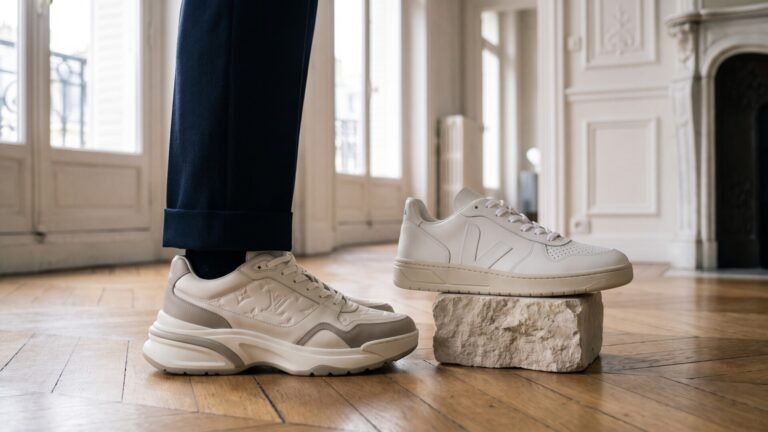
- Louis Vuitton: Sneakers such as the LV Trainer and LV Skate are more forgiving than pointed heels, but their substantial construction feels different from a standard athletic shoe.
- Hermes: The Oran and Oasis sandals use open or adjustable construction, which makes fit easier to manage than a closed pointed shoe.
- Repetto: Elegant but less forgiving. The Cendrillon can feel short or narrow, particularly on high-volume feet.
Highest sizing risk
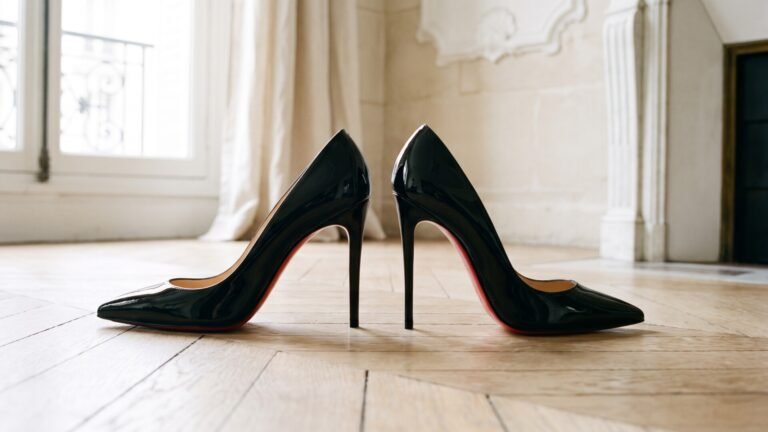
- Christian Louboutin: Pointed-toe pumps such as the Kate, So Kate, and Pigalle demand close attention to toe shape, width, and whether the shoe will be worn with hosiery.
- Roger Vivier: Belle Vivier pumps and flats can feel narrow through the toe box even when the length is right.
- Saint Laurent: Sleek pointed styles prioritize line and silhouette over generous comfort.
Key takeaway: for the lowest-risk purchase, start with a French designer sneaker, an adjustable sandal, or a rounded-toe loafer in your usual size. Treat pointed pumps and ballet flats as style-specific sizing decisions, not automatic true-to-size buys.
What "True to Size" Actually Means in French Designer Shoes
True to size refers to length. That is all it refers to. It says nothing about width, instep height, heel security, or how much room your toes have to spread. A shoe can measure correctly from heel to toe and still be unwearable because the last is narrow or the toe box is shallow.
The variables that decide whether a shoe actually fits are specific. The last is the foot-shaped form the shoe is built around, and it determines width and toe shape before any sizing number is applied. The toe profile matters more than most buyers realize: a pointed toe compresses the forefoot in a way a round or square toe does not. Upper stiffness decides how much the leather will give. Foot volume – how tall and wide your foot sits – determines whether a low-cut flat will press on the instep. The heel counter controls whether the shoe stays on. Adjustable straps can rescue a fit that would otherwise fail.
A practical framework helps. Buy your regular size when the shoe has moderate room through the forefoot and a stable heel. Consider sizing up only when the shoe is genuinely short in length – when your longest toe touches the front. Do not size up to solve width. A longer shoe does not become wider; it becomes a shoe that slips at the heel while still pinching at the sides.
Evaluate fit at home before the shoes go outside. Try them late in the day, when feet are at their largest. Test both feet, since most people are slightly asymmetrical. Check where the longest toe sits, walk on a clean carpeted surface, and keep every piece of packaging intact. Return eligibility is the only real insurance in this category.
Brand-by-Brand Sizing Guide
Veja: the easiest entry point for a familiar fit
Veja is the lowest-risk French shoe purchase for most people, and the reason is structural rather than fashionable. The brand builds casual sneakers on lasts that sit close to standard European casual sizing, so a shopper coming from a conventional sneaker will usually recognize the fit. The Campo, V-10, and Esplar are the models most buyers start with.
They do not fit identically. The Campo uses a relatively clean leather upper and tends to feel roomier through the forefoot than the V-10, which has more layered panels and a firmer structure. The Esplar sits lower and lighter. Leather stiffness varies by colorway and material, and the lining changes how much room the shoe actually provides. A suede V-10 and a leather V-10 can feel like different sizes on the same foot.
The caution is simple. Leather sneakers feel firm at first, and some of that firmness relaxes. Pressure at the toes or across the sides does not. If the shoe is squeezing the widest part of your foot before you have left the house, it will keep squeezing. For readers whose main problem is width rather than length, the wide-foot guide: French designer shoes that actually fit is the more useful page.
Verdict: best for shoppers who want a quiet, understated sneaker and a comparatively straightforward starting size. Buy your usual sneaker size. If you are between sizes and have a high instep, take the larger.
Louis Vuitton: true to size depends heavily on the sneaker model
Louis Vuitton sneakers are not one fit. The LV Trainer, the LV Skate, and the Run Away are built differently enough that treating them as interchangeable is how people end up with the wrong size. The LV Trainer has a substantial sole, a padded collar, and layered upper panels. The LV Skate is flatter and closer to a skate silhouette. The Run Away is lighter and more streamlined.
What confuses buyers is volume. A thick sole and a structured upper make the shoe feel bigger and heavier than a standard sneaker even when the length is correct. People respond by sizing down, which is usually a mistake. The length was never the problem; the bulk was.
Check four things: toe clearance with your usual sock, heel movement when you walk, whether a thicker sock changes the fit, and whether the forefoot feels restrictive rather than merely supported. If length and heel security are right, take your usual size. The Louis Vuitton sneaker comparison: LV Trainer vs Skate vs Run Away covers the model differences in more detail, and the broader best French designer sneakers guide is worth reading before committing to a first pair.
Verdict: choose your usual luxury sneaker size when length and heel hold are correct. Do not size down because the shoe feels bulky.
Hermès: sandals are easier to adjust than closed shoes
Open construction is forgiving in a way closed shoes are not. A sandal exposes the foot, so strap placement and footbed alignment are visible before purchase, and the toe box cannot compress what it does not cover. The Oran, the Oasis, and the Chypre are three different fit cases despite sharing a nominal size.
The Oran is a flat slide with a wide H-cut strap. Fit depends almost entirely on where that strap crosses the foot and whether the footbed is long enough at the heel and toe. The Oasis adds a heel and a slightly different strap arrangement, which changes how the foot sits and how much it slides forward. The Chypre is more substantial, with a molded footbed and a heavier construction that feels closer to a shoe than a slide.
Start with your usual sandal size, then ignore the number and judge placement. The heel should sit within the footbed, not on the edge. The toes should not overhang. If the strap cuts across the widest part of the foot, the size is wrong regardless of what the label says. The Hermes Oran vs Chypre comparison and the Oran vs Oasis fit and comfort guide both help sort out which silhouette suits your foot.
Verdict: a strong warm-weather choice when strap placement and footbed alignment are correct. Judge the fit by where your foot sits, not by the printed size.
Repetto: elegant, low-profile, and often less forgiving
Repetto builds ballet flats the way ballet flats were originally built: low vamp, slim silhouette, minimal structure. That is the source of their appeal and the source of their sizing difficulty. The Cendrillon and the Camille both expose length and width problems immediately, because there is nowhere for the foot to hide.
A low vamp means the top of the shoe cuts across the foot closer to the toes, which makes the shoe feel shorter than it is. A slim last means a wider forefoot is compressed rather than accommodated. Many buyers find the Cendrillon feels short or narrow even when the nominal length is close to standard.
Distinguish between two kinds of snugness. Mild tension across the upper may relax as the leather softens. Compressed toes, pressure along the heel edge, or the foot visibly overhanging the sole will not improve with wear. Those are structural problems, and the answer is a different size or a different shoe. The Repetto Cendrillon sizing guide covers the model in detail, and the Cendrillon vs Camille comparison helps if you are choosing between the two.
Verdict: approach cautiously if you are between sizes or have wider feet. Buyers with narrow, low-volume feet will find the fit more predictable.
Roger Vivier: check the toe box before trusting the length
Roger Vivier’s signature is the buckle, and the buckle sits on a shoe built to look polished and close to the foot. The Belle Vivier and the Gommette both demonstrate the same pattern: the length can be correct while the forefoot feels restrictive. The square or pointed toe profile, the buckle placement, and the low-cut upper all affect how the shoe sits and how stable it feels.
The distinction between a flat and a pump matters here. A Belle Vivier flat holds the foot in place with relatively little forward slide. A pump with the same toe shape lets the foot move forward as you walk, which concentrates pressure at the front. A shoe that feels secure standing still can become uncomfortable after twenty minutes of walking.
This is a strong brand for shoppers with average or narrow feet who want polished, understated status signaling rather than a visible logo. It is less suitable for broad forefeet unless the specific model provides room. The Belle Vivier vs Gommette comparison is the place to start if you are choosing between the flat and the pump.
Verdict: buy your usual size only after checking the toe box underfoot and walking a few paces. If the forefoot is compressed standing still, it will not improve.
Christian Louboutin: the greatest risk comes from pointed pumps
The Kate, the So Kate, and the Pigalle are the shoes most often bought in the wrong size, and the reason is that buyers treat them as one shoe. They are three different lasts with three different heel geometries. The So Kate has the steepest pitch and the most aggressive pointed toe. The Kate is slightly more forgiving. The Pigalle sits differently again.
The central problem is that sizing up does not solve a pointed toe. A longer shoe gives the toes more length but does not give them more width, so the front of the foot still compresses against the same narrow last. Meanwhile the extra length creates heel slip, which makes the shoe less stable and more tiring to walk in. Buyers often end up with a shoe that is both too long and still too tight.
Choose Louboutin for a specific formal silhouette, not as an all-day walking shoe. The Kate vs So Kate walkability comparison and the Kate vs Pigalle fit comparison both address which pump is easier to wear, and the answer is not the same for every foot.
Verdict: do not assume your usual pump size. Judge by toe pressure and heel security together, and accept that this brand rewards narrow feet.
Saint Laurent: sleek profiles can run standard in length but narrow in feel
Saint Laurent shoes are built to elongate the line of the foot. That is the design intent, and it produces a consistent pattern: the length is often close to standard while the shoe feels narrow. The Kate pump, the Opyum heel, and the brand’s boots are separate categories and should be evaluated separately.
The narrow toe and close-fitting upper create the impression that the shoe runs small. It may not. If your longest toe has room and the heel is secure, the shoe is the right length, and the tightness you feel is width. Sizing up will not fix width; it will add length you do not need.
Intended wear changes the answer more than most buyers expect. A shoe worn barefoot to a two-hour event fits differently from the same shoe worn over thick tights through a long evening. Decide which scenario you are buying for before you choose a size. The best Saint Laurent shoes guide and the Saint Laurent Kate pump review both help with model-level decisions.
Verdict: best for shoppers who prioritize a sharp, elongated silhouette and have relatively narrow feet. Verify width and heel security rather than assuming the length tells the whole story.
J.M. Weston and Paraboot: traditional construction needs a different fit expectation
Not every French shoe is delicate. J.M. Weston loafers and the Paraboot Michael belong to a heritage tradition of substantial leather uppers, firm soles, and construction meant to last decades. They feel different from sneakers on day one, and that difference is not a sizing error.
A firm sole and a structured upper hold the foot more rigidly at first. That can read as uncomfortable to a buyer used to cushioned athletic shoes. The correct standard is different: the shoe should hold the foot securely without forcing the toes together, and the heel should not lift as you walk. Some break-in is normal. Pain is not.
Judge these shoes by width, instep, and heel hold as much as by length. A loafer that is the right length but too narrow across the instep will never be comfortable. For readers building a quieter, more traditional wardrobe, the best French loafers for men guide covers the J.M. Weston and Paraboot options in depth.
Verdict: strong long-term choices for buyers who accept a structured break-in period. Size by width and heel hold, not length alone.
Which French Designer Shoes Are Most Likely to Fit True to Size?
Rank the category by construction, and a clear order emerges. Sneakers come first because they have room, cushioning, and forgiving uppers. Adjustable sandals come second because the fit is visible and can be corrected. Rounded-toe loafers come third, since a structured shoe with a generous toe still accommodates the foot. Ballet flats and sleek boots sit next, and pointed pumps come last.
The contrarian point is worth stating plainly. The most expensive shoe is not the most predictable fit. Precision construction preserves a sharp silhouette, and a sharp silhouette has less tolerance for foot variation. A $900 pointed pump built to hug the foot is less forgiving than a $150 sneaker built to accommodate it. Price buys materials, finishing, and design; it does not buy fit tolerance.
| Brand or style | Usual starting point | Main fit risk | Best for |
|---|---|---|---|
| Veja Campo or V-10 | Usual sneaker size | Leather stiffness or width | Everyday casual wear |
| Louis Vuitton LV Trainer or LV Skate | Usual luxury sneaker size | Bulky construction and model variation | Statement sneakers |
| Hermes Oran or Oasis | Usual sandal size | Strap placement and foot overhang | Adjustable warm-weather dressing |
| Repetto Cendrillon | Check length and width carefully | Low toe box and narrow profile | Narrow-foot ballet-flat buyers |
| Roger Vivier Belle Vivier | Usual size only after toe-box check | Forefoot pressure | Polished office and occasion dressing |
| Christian Louboutin Kate or So Kate | Do not assume usual pump size | Pointed toe and heel slip | Formal, narrow-foot wearers |
| Saint Laurent Kate or Opyum | Verify width and heel security | Sleek, narrow silhouette | High-impact evening dressing |
Match the shoe to your foot profile. An average-width sneaker wearer can buy Veja or Louis Vuitton with reasonable confidence. A wide forefoot should start with the wide-foot guide and avoid pointed lasts entirely. A narrow foot has the widest choice, including Roger Vivier and Saint Laurent. A high instep should avoid low-vamp flats like the Cendrillon and favor adjustable sandals or loafers. Anyone who needs to stand all day should be looking at sneakers and structured loafers, not pumps.
For broader context on how these brands sit within the category, the ultimate guide to French shoes covers the full landscape from heels to sneakers.
What Most Buyers Get Wrong About French Shoe Sizing
The first mistake is treating sizing up as a universal solution. It helps when a shoe is genuinely short in length. It does not help when the problem is width, and it creates a new problem – heel slip – that makes the shoe less stable and more tiring to walk in. A shoe that slides at the heel is not a comfortable shoe, however much room the toes have.
The second mistake is the phrase "leather stretches." Leather softens across pressure points. It relaxes slightly where it flexes. It does not reliably add length, and it does not correct a narrow last. A shoe that compresses the toes on day one will still compress them in month three, just with more creasing.
The third mistake is comparing French designer sizing only with American athletic shoes. A running shoe is built with volume and cushioning; a pump is built with neither. A sneaker, a pump, a sandal, and a loafer can each use a different fit standard within the same brand, so a single conversion number is close to useless.
The fourth is misreading online reviews. A shopper wearing sheer hosiery to a gala reports a different size than one wearing thick socks for a winter commute, and both are describing the same shoe. Read reviews for foot shape and use case, not just the verdict. Someone with a narrow foot saying a shoe runs true to size tells a wide-footed reader very little.
The Hidden Cost of Choosing the Wrong Size
A wrong size is not a neutral mistake. It costs money in ways that are easy to overlook. Return shipping is rarely free on luxury footwear. Miss the return window and the loss is total. Professional stretching, protective soles, and heel grips all add expense, and none of them fix a fundamentally wrong last.
The bigger cost is cost per wear. A $700 pump worn four times a year costs more per wear than a $200 pair of sneakers worn three times a week. Fit decides which shoe leaves the closet. A beautiful shoe that hurts is a shoe that stays home, and the price per wear climbs every season it does.
Fit problems also show up physically. Creasing appears in the wrong place when a shoe is too long. Heel friction wears through the lining. Counters collapse when the heel never sits properly. Straps stretch when they are asked to hold a foot the shoe was not built for. Soles wear unevenly when the wearer compensates for instability. None of this is visible in the first week, and all of it affects resale value. A shoe worn outdoors is a shoe that has lost most of its resale appeal.
The pre-purchase checklist is short. Confirm the retailer’s return policy and the window. Compare your measured foot length against the brand’s chart rather than your remembered size. Look at the last shape and the toe profile. Decide whether you are buying for hosiery or socks. And do not wear the shoes outdoors until the fit is confirmed. If comfort over long wear is the priority, the most comfortable French designer heels for walking all day is the relevant guide.
Which French Designer Shoes Still Make Sense in Three Years?
Long-term value in footwear comes from five things: fit reliability, durability, style longevity, repairability, and resale demand. Brand prestige is not on the list, because prestige does not keep a shoe on your foot. A shoe that fits will be worn, maintained, and resoled. A shoe that does not will sit in the closet and lose value.
The categories that hold up are consistent. Understated leather sneakers stay relevant because they are worn constantly. Well-constructed loafers last decades and can be resoled. Classic sandals in neutral colors survive seasonal shifts. Restrained pumps in versatile colors remain wearable for formal occasions. Loud, seasonal silhouettes are the ones that date.
Resale rewards condition above all. A pair that fits is a pair that gets worn carefully, kept on shoe trees, and resoled when needed. A pair that does not fit is either returned, sold at a loss, or worn badly and sold for less. Fit is an investment factor, and most buyers never think of it that way.
The buyer-specific recommendations follow from all of this:
- Best overall for predictable everyday wear: a suitable Veja sneaker.
- Best luxury sneaker choice: Louis Vuitton LV Trainer or LV Skate after model-specific fit checks.
- Best sandal choice: Hermes Oran or Oasis, depending on the silhouette and adjustability you want.
- Best formal investment for narrow feet: Christian Louboutin Kate or Saint Laurent Kate.
- Best heritage wardrobe choice: J.M. Weston loafers or Paraboot Michael, if you accept a structured break-in.
Frequently Asked Questions About French Designer Shoes True To Size
Do French designer shoes usually run true to size?
Many are close to standard length. Width, toe shape, heel height, and construction are what make them feel smaller. Sneakers and sandals are generally more forgiving than pointed pumps and ballet flats.
Should I size up in French designer shoes?
Only when the shoe is genuinely short in length. Sizing up is not a reliable fix for width, because it adds length and creates heel slip without giving the forefoot more room.
Do Christian Louboutin shoes run small?
The Kate, So Kate, and Pigalle often feel narrow because of their pointed lasts and heel geometry. The right choice depends on foot shape and toe pressure, not simply on going up a size.
Do Repetto ballet flats run small?
The Cendrillon can feel short or narrow because of its low-profile construction. Check both length and forefoot pressure rather than relying on your usual ballet-flat size.
Which French designer shoes are best for wide feet?
Start with roomier sneakers, adjustable sandals, and selected structured loafers. The dedicated [wide-foot guide](3838) covers brand and model options in detail.
Do French designer shoes stretch with wear?
Leather may soften and relax modestly across the upper. It will not reliably add length or correct a narrow last. Painful toe compression is a fit warning, not a normal break-in phase.
Are French designer sneakers easier to size than French heels?
Generally yes. Sneakers offer more room, cushioning, and forgiving construction. Padded collars and layered uppers can still change the fit, so model-specific checks remain necessary.
How do I check fit without wearing the shoes outside?
Try them late in the day, test both feet, check where the longest toe sits, and walk on a clean carpeted surface. Keep the packaging and confirm the return window before you commit.
Final Buying Recommendation
The most predictable options win because they tolerate variation. French designer sneakers, adjustable sandals, and traditional loafers all allow for small differences in foot volume without failing. Veja is the most approachable starting point for everyday wear, Louis Vuitton is the premium statement-sneaker choice once the model is checked, and Hermes Oran and Oasis are strong warm-weather options when strap placement and footbed alignment are right.
The most beautiful options ask for more. Repetto, Roger Vivier, Christian Louboutin, and Saint Laurent build their appeal through close, sculpted silhouettes, and those silhouettes do not forgive a mismatched last. These are not poor choices. They reward shoppers who match the shoe to their foot shape instead of assuming a universal fit. Pointed pumps make sense for formal or limited-duration wear unless you already know the exact model works for you.
The caveat is this: every recommendation here assumes you can return the shoes. Buy from a retailer with a clear return window, try them indoors, and keep the packaging until you are certain. If you cannot return them, buy the brand and construction you have worn before rather than gambling on a new last. The best French designer shoes that run true to size are not one universal winner. They are the ones that stay secure and wearable after the novelty has faded – and that is a decision you can only confirm on your own feet.