Hermès Oran vs. Chypre: Which Iconic French Sandal Is Worth the Price?
Hermès sandals sit at the entry end of the house’s luxury range: far less expensive than a Birkin, but still an unmistakable status purchase. Two models dominate the conversation, the Oran and the Chypre. Both use Hermès’s H cutout strap, but they are built and priced quite differently. This guide compares them so you can decide which is worth the money.
A correction first: the headline of this article used to say “$800”. Current 2026 pricing for a calfskin Oran is about $900 and for a calfskin Chypre about $1,125, according to one resale guide, so we have changed the headline. Prices vary by leather, country and season, and you should confirm them on Hermès’s site. This is an editorial comparison based on published sources, not a hands-on test. [Affiliate: Explore the Hermès Oran collection] or [Affiliate: Browse the Hermès Chypre collection] to see current availability and pricing.
For context on the house, see our Hermès guide, and for a take on whether the Oran is still current, read Are Hermès Oran Sandals Still Trending in 2026?
Quick Verdict
Hermès Oran strengths
- Icon status. The Oran dates to 1997 and is among the most recognized luxury sandals in the world.
- Minimal design. A flat leather sole with an H cutout strap, “a flat leather sole and nothing else”.
- Lower price. Roughly $900 in calfskin, about $225 less than the Chypre.
Chypre strengths
- Comfort-led design. The Chypre adds a moulded footbed and a chunky anatomical rubber sole.
- Adjustable fit. An adjustable velcro strap across the midfoot sits alongside the H cutout.
- More material choices. Calfskin, Epsom, suede goatskin and woolskin (shearling) versions exist.
Key takeaway: Choose the Oran for the iconic, dressy, minimal flat; choose the Chypre if comfort, adjustability and a sporty-chunky look matter more and you accept the higher price.
Oran vs Chypre: Specs at a Glance
| Detail | Hermès Oran | Hermès Chypre |
|---|---|---|
| Introduced | 1997 | 2020 |
| Designer | Pierre Hardy (per several sources) | Hermès; no individual designer is credited in the sources we checked |
| Strap | Fixed H cutout strap | H cutout plus adjustable velcro strap across the midfoot |
| Sole | Flat leather sole | Chunky anatomical rubber sole with moulded footbed |
| Materials | Calfskin, box calf, Epsom, suede, canvas, shearling and exotics | Calfskin, Epsom, suede goatskin, woolskin |
| Approx. price (USD, calfskin) | About $900 | About $1,125 |
| Made in | Italy (per one UK listing) | Check the product page |
The prices above come from a single 2026 resale guide and vary by market; shearling Chypre versions are listed at about $1,750 and exotic leathers cost considerably more. The Oran has been issued in dozens of colorways (one UK source counts 28).
Design
Hermès Oran Design
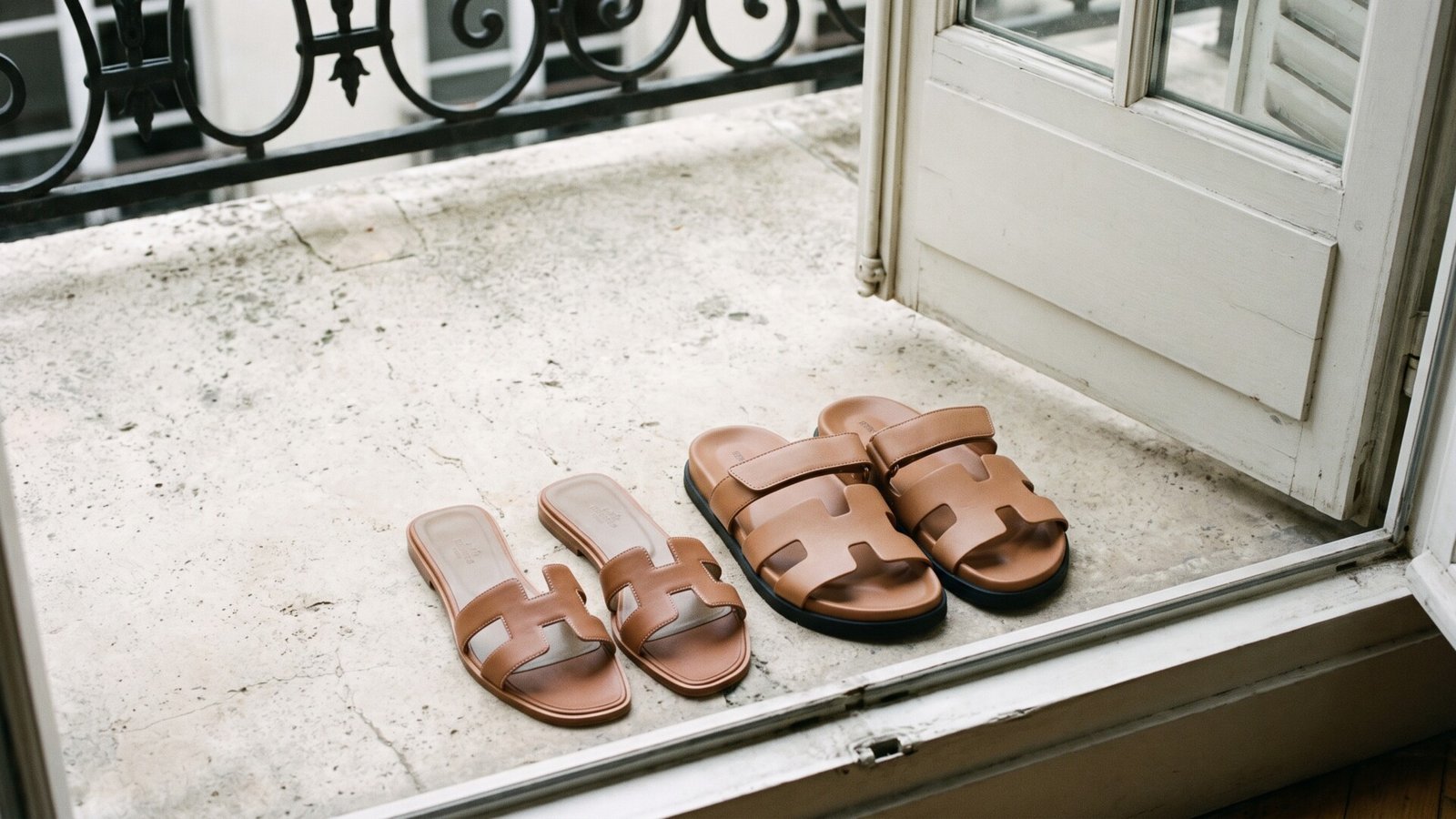
The Oran is a flat sandal with a wide strap that crosses the foot and an H-shaped cutout at the center. The sole is leather and flat. It is reductive: no buckles, no hardware, no logo beyond the shape of the strap. That is a large part of why it reads as quiet luxury.
Colors run from neutrals such as black, gold and tan to seasonal shades. Earlier text on this page credited the sandal to Martin Margiela; the sources we checked attribute it to Pierre Hardy, so we have corrected that.
Chypre Design
The Chypre keeps the H cutout strap but changes almost everything under it. It has a thick anatomical rubber sole with a moulded footbed and an adjustable velcro strap across the midfoot. It is an open sandal, not the closed-toe slide described in earlier text, and the name refers to the island of Cyprus. The overall look is chunkier and sportier than the Oran.
Design verdict: The Oran is the more minimal and dressy icon; the Chypre is the more modern and casual interpretation.
Quality and Construction
Both are Hermès products in leather, and both are priced as luxury goods. The Oran’s quality is in the leather and the precise cut of a very simple form; its natural leather sole is meant to last, though it is a sole that wears with use. The Chypre’s quality lies in the construction of a moulded footbed and rubber sole, which is more complex.
We have not worn or tested either sandal. Earlier statements here about specific sole composites (cork and rubber), leather linings and “full-grain” leather could not be verified and have been removed. For repair and resoling, ask Hermès or a specialist cobbler about options for your specific model.
Practicality and Comfort
Hermès Oran
- Comfort: A flat leather sole is described as comfortable once broken in, but it has no moulded cushioning.
- Occasions: Brunch, the office, travel dinners, summer events.
- Travel: Flat and light, so easy to pack.
Hermès Chypre
- Comfort: Described as the more comfortable of the two thanks to its moulded footbed.
- Fit: The adjustable velcro strap helps with a secure fit.
- Travel: Bulkier because of the thick sole.
Practicality verdict: The Chypre is the more comfortable for longer walking days; the Oran is the neater, lighter choice for dressier days. Neither is a rain or beach sandal, since leather and water do not mix.
Styling
- Oran, casual: White jeans, a linen shirt, a simple sundress.
- Oran, tailored: Slim trousers and a blazer for a relaxed finish.
- Chypre, casual: Wide-leg or cropped trousers and maxi dresses; the chunkier sole suits relaxed looks.
- Chypre, tailored: Straight-leg trousers and an oversized blazer, where its volume reads as intentional.
The celebrity name-drops in earlier text (named people said to wear each model) were unsourced and have been removed.
Value and Resale
The Oran is the better-known model with a long-running secondary market, and colors in good condition tend to be easier to resell. The Chypre is newer, so there is less history to rely on. Earlier retention percentages (70–80% and 60–70%) were unsourced and have been removed; resale prices depend on condition, size, color and platform, and no sandal is a guaranteed investment.
On cost per wear, a $900 sandal worn 40 times a summer for five summers costs about $4.50 per wear; a $1,125 sandal worn the same amount costs about $5.60. If you walk a lot and the Chypre would see more wear, it can be the better value despite the higher price.
Durability and Care
A flat leather sole wears faster than a rubber one, so the Oran’s sole is the more likely item to need attention if you walk on rough surfaces. Some owners add a protective rubber layer through a cobbler; discuss options with a specialist rather than relying on a general rule. The Chypre’s rubber sole is likely to resist abrasion better, but we have no tested wear data.
For both: avoid rain and standing water, keep them in the dust bag, wipe with a soft dry cloth and condition the leather sparingly according to Hermès guidance.
Heritage and Brand History
Hermès was founded in 1837 as a harness workshop and is known for its leather work and its equestrian roots. The Oran was introduced in 1997 and is credited to Pierre Hardy in several sources; the Chypre followed in 2020 as a more comfort-focused interpretation of the same H motif. This makes the Oran a long-standing house classic and the Chypre a recent addition. For more on the house, see our Hermès guide and our overview of French luxury fashion houses.
Who Should Buy It
Choose the Oran if:
- You want the classic, minimal Hermès sandal and its dressier look.
- You prefer a flat, light sandal for dinners, travel and the office.
- You prefer the lower price of the two.
Choose the Chypre if:
- Comfort and cushioning matter more than a flat profile.
- You want an adjustable strap and a chunkier, sportier look.
- You will wear them for long walking days.
Head-to-Head Comparison Table
| Feature | Hermès Oran | Hermès Chypre |
|---|---|---|
| Design | Iconic, minimal, dressy | Modern, chunky, casual |
| Comfort | Good once broken in, little cushioning | Better cushioning and adjustability |
| Sole | Flat leather | Anatomical rubber |
| Packability | Better | Bulkier |
| Price (calfskin) | About $900 | About $1,125 |
| Track record | Since 1997 | Since 2020 |
Final Verdict
The Oran is the better choice if you want the icon: slim, minimal and easier to pack, and about $225 cheaper in calfskin. The Chypre is the better choice if you will wear the sandals a lot and want cushioning and an adjustable strap. For a purely practical buyer who walks a lot, the Chypre is the more comfortable pick; for a buyer who wants a dressier, classic piece, the Oran is.
If you are weighing other French shoe options, browse our list of French alternatives to the Oran.
Frequently Asked Questions About Hermès Oran Vs Chypre
How much do Hermès Oran and Chypre sandals cost?
One 2026 guide lists about $900 for a calfskin Oran and about $1,125 for a calfskin Chypre. Shearling and exotic versions cost more. Confirm current pricing on Hermès’s site.
What is the difference between the Oran and Chypre?
Both use the H cutout strap. The Oran has a flat leather sole and a fixed strap; the Chypre adds a moulded footbed, a chunky anatomical rubber sole and an adjustable velcro strap.
Which sandal is more comfortable?
The Chypre is described as the more comfortable because of its moulded footbed and rubber sole. The Oran is comfortable after break-in but has less cushioning.
When were the Oran and Chypre launched?
The Oran was introduced in 1997 and the Chypre in 2020.
Can I wear these sandals in the rain?
It is best to avoid it. Water can mark and damage leather, and the Oran’s leather sole in particular is not meant for wet pavements.
Do Hermès sandals hold their value?
They have an active resale market, but prices depend on condition, color and size, and no sandal is a guaranteed investment. Compare live listings before expecting resale value.