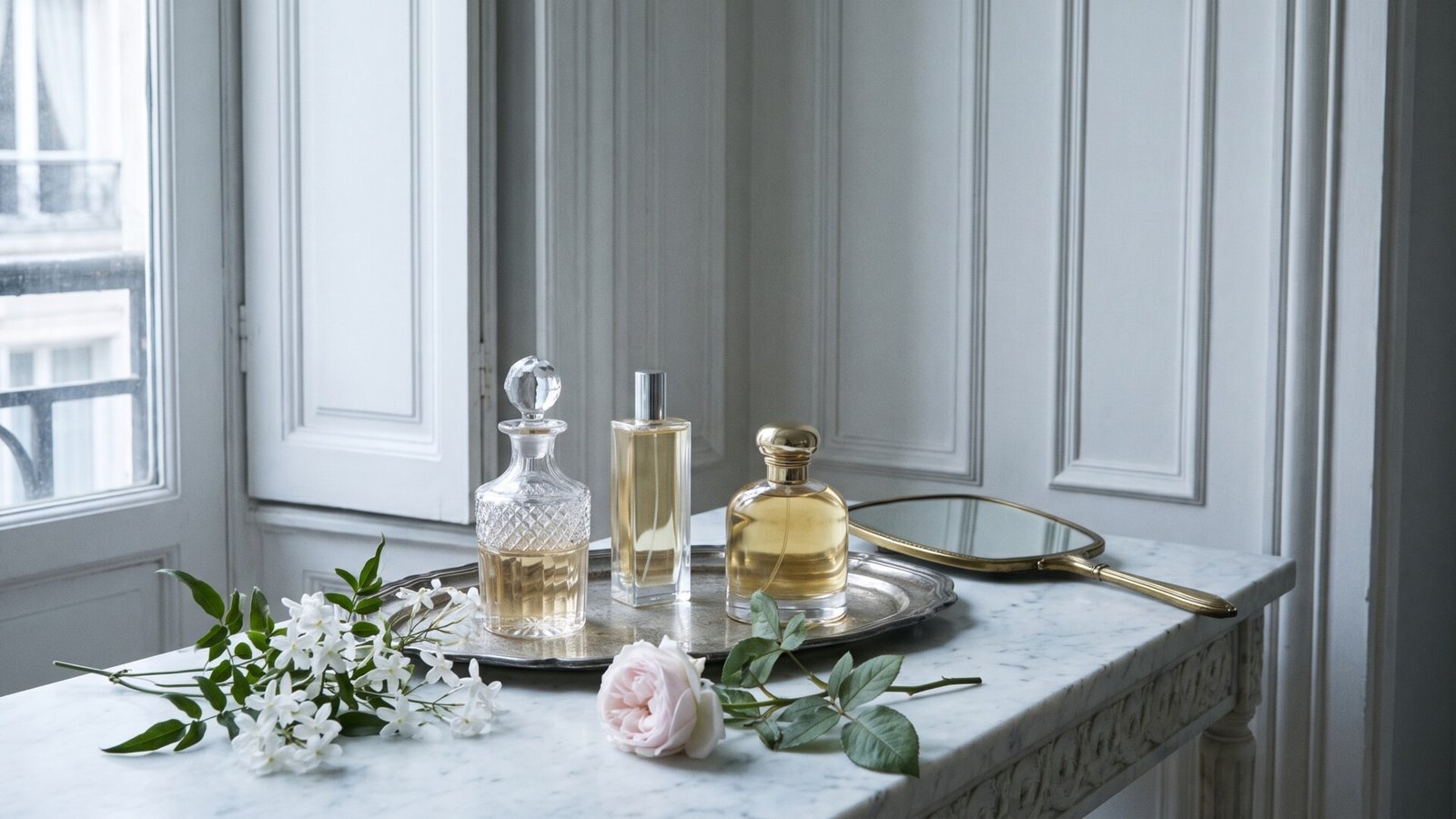
The Ultimate Guide to French Perfume & Beauty: From Icons to Hidden Treasures
Fragrance gets less attention than it deserves in the fashion conversation. We obsess over bags, argue about shoes and study the history of couture houses, yet scent is the part of a look that people notice first and remember longest.
French perfume is more than a product category; it is a craft with its own geography and schools. Grasse, in the south of France, is the historic center of perfume-making, and its know-how around perfume plants, extraction and composition was added to UNESCO’s list of intangible cultural heritage in 2018. Paris is where most of the big houses and many of the new independents are based.
What makes French perfumery distinctive is the chain of skills behind it: growers and distillers, perfumers (the “noses”) who train for years, schools such as ISIPCA, founded in 1970 at the initiative of Jean-Jacques Guerlain, and houses that range from centuries-old to a few years old.
This is the French Perfume & Beauty hub at FrenchDesignerVault.com. It maps the landmark fragrances, the niche houses worth knowing, how concentrations and notes work, how to shop, and where fragrance sits within French luxury. Use it alongside our guides to French luxury fashion houses, French handbags, French jewelry and watches and French shoes.
Iconic Fragrances: The Scents That Built an Industry
Every culture has its monuments. In French perfumery, these three fragrances are among the most influential, and each one belongs to a house with a longer story of its own.
Chanel No. 5: The Abstract Classic
Chanel No. 5 has been on sale since 1921 and is the best-known perfume in the world. It was composed by perfumer Ernest Beaux for Gabrielle “Coco” Chanel. At the time many perfumes were either single-flower scents or heavier, animalic compositions; Chanel asked for something modern.
The commonly told story is that Beaux presented numbered samples and Chanel chose the fifth, a number she considered lucky. That anecdote is part of the house’s lore and has not been independently documented, so read it as storytelling rather than history. What is well documented is the technique: Beaux used aldehydes, synthetic molecules that lift and amplify natural materials, to create a scent that did not smell like one flower. The bottle was also a break with the ornate crystal flacons of the time: a rectangular, beveled glass design that is still recognizable.
On the business side, Chanel partnered in 1924 with the Wertheimer family, owners of the Bourjois cosmetics business, to form Parfums Chanel, and she spent years in dispute with them over control. A settlement after the war is widely reported to have given her a royalty on No. 5 sales. Today No. 5 is sold in several forms. At the time of writing, US retail prices for the Eau de Parfum ran from about $118 for 1.2 fl oz to about $277 for 6.8 fl oz, with the 1.7 fl oz at around $158, according to one price tracker; check Chanel and your retailer for current prices. You can read more about the house in our Chanel guide.
What you need to know: No. 5 is the reference point for abstract, aldehydic perfumery. Even if you do not wear it, it explains a great deal about the modern perfume bottle and the modern fragrance business.
Dior Sauvage: The Modern Phenomenon
If No. 5 is the classic feminine reference, Dior Sauvage is its modern masculine counterpart. Launched in 2015 and composed by Dior’s then in-house perfumer François Demachy, it became one of the best-selling men’s fragrances in the world. The original Eau de Toilette opens with Calabrian bergamot and pepper over a base that includes ambroxan, which gives it much of its fresh, clean-woody character.
The line has grown into several versions that differ in strength and character:
- Eau de Toilette (2015): Fresh and versatile; the lightest and most daytime-friendly.
- Eau de Parfum (2018): Deeper and warmer, with a richer base.
- Parfum and Elixir: More concentrated versions with a heavier, spicier profile, designed for cooler weather or evenings.
- Eau Forte: A newer version that Dior describes as an alcohol-free, water-based eau with a milky texture, created by Dior perfume creative director Francis Kurkdjian, with notes of spices, bleached lavender and musky woods. It is sold in 60 ml and 100 ml sizes.
Longevity varies by skin, climate and application, so the rule of thumb that higher concentrations last longer is useful, but exact hours are not guaranteed. For the wider house, see our Dior guide.
What you need to know: Sauvage is a gateway to understanding where mainstream masculine perfumery sits today. If you like it, you can move up or down the range by concentration.
Shalimar: The First Amber
Shalimar was created by Jacques Guerlain in 1921 and officially launched in 1925. It is widely regarded as the first “oriental” or amber perfume and the ancestor of a whole fragrance family. According to the story the house tells, Guerlain added ethylvanillin, a newly available synthetic vanilla compound, to his earlier fragrance Jicky (1889), producing a rich, powdery, vanillic scent with smoky undertones. The name and the romance are linked to the Shalimar Gardens in Lahore, built for Mumtaz Mahal by Emperor Shah Jahan, though this is the house’s account.
The fan-shaped bottle was designed by Raymond Guerlain and produced by Baccarat. To mark Shalimar’s centenary in 2025, Guerlain released Shalimar L’Essence, a limited-edition Eau de Parfum by Guerlain perfume creation director Delphine Jelk, which pairs Madagascan vanilla tincture with ethylvanillin, with bergamot, iris, leather and wood nuances. If you love vanilla, amber or oriental scents, you are smelling descendants of Shalimar.
What you need to know: Shalimar helped define an entire category. It is a good test: if you enjoy it, the amber and vanilla families will suit you.
Fashion Houses That Make Fragrance
Many of the houses we cover for bags and shoes also have serious fragrance businesses. A perfume is often the most accessible entry point to a heritage name, which is one reason buyers who cannot yet afford a handbag start here.
- Chanel: No. 5 and the wider range, plus the Les Exclusifs collection.
- Dior: Sauvage, J’adore and the La Collection Privée line.
- Hermès: A perfume house in its own right, with the Hermessence collection created by in-house perfumers.
- Louis Vuitton: Launched Les Parfums Louis Vuitton in September 2016, its first perfume range in around 70 years, with in-house perfumer Jacques Cavallier-Belletrud and seven fragrances at launch.
- Saint Laurent: Known for Opium, launched in 1977 alongside Yves Saint Laurent’s China-inspired Autumn-Winter collection and built around patchouli, myrrh and vanilla, plus more recent releases.
Niche French Perfume Houses: The Hidden Gems
Beyond the big names lies a world of smaller, more artisanal perfumers. Paris is a global capital of niche perfumery, and department-store fragrance floors and independent perfume shops are good places to discover them. Niche releases change quickly, so confirm availability and notes on each house’s website.
Hellenist Paris
Founded in Paris in 2024 by Jean-David Jacoby, Hellenist translates Greek mythology and Mediterranean memories into French perfumery. Its Mythology Collection has five fragrances; Les Bras de Morphée is built around iris, described by the house as a soft iris world, and is commonly reviewed as powdery with a green opening and a warm vanilla-tonka finish.
Chambre52
Another 2024 Paris launch, founded by Nicolas Dewitte. Its Tobacco Memories, composed by Dewitte and Domitille Michalon Berti, combines saffron, iris and tobacco with a cherry facet, and the house says it was named Best Niche Perfume 2025 by the Fragrance Foundation France in the Young Independent Brand category.
Other Houses to Know
The French niche scene is deep. These houses are worth exploring on their own terms:
- Matière Première: Founded by Aurélien Guichard and built around one hero ingredient per fragrance.
- Ormaie Paris: Known for sculptural bottles with colorful geometric caps.
- Les Eaux Primordiales: Created by Arnaud Poulain, with fragrances inspired by visual memories.
- D’Orsay Parfums: A historic Paris name revived in modern form.
- Akro: Founded by Anaïs and Olivier Cresp; Olivier Cresp is a perfumer known for co-creating Mugler’s Angel.
More Modern French Classics Worth Knowing
Beyond the big three above, a handful of other French fragrances shaped how people shop for scent today. The details below are limited to what the houses and reference sources document.
- Dior J’adore (1999): Created by perfumer Calice Becker, with a tear-drop bottle designed by Hervé Van der Straeten. The scent has been reworked several times since, including a version by François Demachy and a 2023 reformulation by Francis Kurkdjian, so the bottle you buy today is not identical to the original. A good starting point for floral lovers; see our Dior guide for the wider house.
- Terre d’Hermès (2006): Composed by Jean-Claude Ellena, then Hermès’ in-house perfumer, and classed as fruity-spicy-woody, with orange and grapefruit at the top, pepper and pelargonium in the heart, and patchouli, cedar, vetiver and benzoin in the base. It is a useful example of how a leather-goods house approaches fragrance, which you can explore further in our Hermès guide.
- Yves Saint Laurent Opium (1977): A spicy, resinous oriental that debuted with the house’s China-inspired collection. Its name caused controversy at launch, particularly in the United States, and it remains a landmark of 1970s perfumery. More on the house in our Saint Laurent guide.
- Les Parfums Louis Vuitton (2016): A modern example of a fashion house building a perfumery from scratch, with an in-house perfumer and a small, curated launch range. See our Louis Vuitton guide for the brand’s other categories.
Grasse and the Making of a Perfume
Grasse’s traditional skills, from growing and processing perfume plants to extraction and composing a scent, were inscribed on UNESCO’s list of intangible cultural heritage in 2018. In simple terms, a perfume moves through four stages. Raw materials, natural or synthetic, are selected. A perfumer composes the formula in layers of top, heart and base notes. The concentrate is then blended with alcohol (or, in newer products like Sauvage Eau Forte, a water-based carrier) and left to mature. Finally it is filtered, bottled and packaged. Knowing these steps helps explain why two bottles with the same name in different concentrations can smell noticeably different.
A Short Perfume Glossary
- Top notes: The first impression, usually citrus or herbs, which fade within minutes to an hour.
- Heart notes: The body of the scent, typically florals or spices, that appear as the top fades.
- Base notes: Woods, resins, musks and vanilla that remain longest on skin.
- Sillage: The trail a fragrance leaves in the air around you.
- Accord: A blend of notes that creates a single impression, such as a leather or amber accord.
- Flanker: A later variation of an existing fragrance, such as the different Sauvage versions.
Choosing a Fragrance as a Gift
Fragrance is one of the most common luxury gifts, and also one of the easiest to get wrong because scent is personal. A few guidelines help. If you know the recipient already wears a scent, buy a different size or concentration of that fragrance, or a flanker from the same family. If you do not, a discovery set from a niche house lets them choose. For a first fragrance, fresh, citrus or light floral profiles are generally safer than heavy ambers or tobacco. Keep the receipt and buy from an authorized retailer so the gift can be returned or exchanged.
For specific bottles, our guide to the best French luxury perfumes to gift matches ten fragrances, from No. 5 and J’adore to Philosykos and Aqua Universalis, to the kind of recipient each suits. If you are still deciding between scent and something she can keep, our French designer gifts for her compares fragrance with silk, leather and jewelry by budget.
How to Wear Perfume Well
- Apply to clean, moisturized skin at pulse points such as the wrists and neck; unscented lotion can help hold a scent.
- Avoid rubbing your wrists together, which can disturb the top notes.
- Use fewer sprays of concentrated Parfum or Extrait than of an Eau de Toilette.
- Spray fragrance before dressing, and keep it away from silk, pearls and delicate leather where alcohol could leave marks.
Pairing a Signature Scent With Your Wardrobe
Many readers of this site build a wardrobe around a few investment pieces. A signature fragrance works the same way: one or two scents that you reach for repeatedly. A fresh, light scent suits the clean lines of minimalist leather goods, which you can explore in our French handbags guide. A richer amber or vanilla scent suits evening and the statement pieces in our French jewelry and watches guide. Our French shoes guide and the French luxury fashion houses hub round out the rest of the wardrobe.
Understanding Concentration, Notes and Families
Before buying, it helps to understand the two things that differ most between bottles: how concentrated the fragrance is, and which family it belongs to.
| Type | Typical fragrance oil | What to expect |
|---|---|---|
| Eau de Cologne | About 2–5% | Light and quick to fade; good for hot weather |
| Eau de Toilette | About 5–15% | Fresh and daytime-friendly; usually the cheaper option |
| Eau de Parfum | About 15–20% | Fuller and longer lasting; the most common choice |
| Parfum / Extrait | About 20–30% | The most concentrated and often the most intimate |
These percentages are industry rules of thumb and are not fixed by law, so they vary by house. Longevity depends on skin chemistry, climate and where you apply it.
- Floral and aldehydic: Abstract floral compositions such as No. 5.
- Fresh and aromatic: Bergamot, lavender and woody-ambery compositions such as Sauvage.
- Amber and vanilla (oriental): Shalimar and its descendants.
- Gourmand and tobacco: Warm, sweet or smoky compositions, a common niche theme.
How to Choose and Shop for a French Fragrance
- Test on skin: A scent changes over hours as the top notes fade. Wear it for a few hours before deciding.
- Start with samples: Many niche houses sell discovery sets, which is cheaper than committing to a full bottle.
- Match the season: Citrus and aromatic scents wear well in heat; ambers and tobacco wear better in cold weather.
- Check the retailer: Buy from the brand or an authorized retailer, because counterfeit and diluted perfume exists.
- Store it well: Keep bottles away from heat, light and humidity to preserve the scent.
French Beauty Beyond Perfume
French beauty spans pharmacy skincare, luxury cosmetics and makeup from the fashion houses. Names worth knowing include Guerlain, Lancôme, Clarins, Sisley, Caudalie, La Roche-Posay, and the beauty lines of Chanel and Dior. Rather than list claims about specific products here, we recommend reading ingredient lists and the brand’s own information and consulting a dermatologist for skin concerns. Our site focuses on design and craft, so we do not make skin-health promises for any product.
Where Fragrance Fits in French Luxury
For many buyers, a fragrance from a heritage house is the first purchase before a bag or a pair of shoes, because the entry price is much lower. If you are building a wardrobe slowly, you can pair a signature scent with one investment piece from our Heritage Investment guides. If you are comparing French and Italian approaches to luxury more broadly, our French vs. Italian designer comparisons explain the differences, and for couture, see French haute couture. For accessible Parisian minimalism in leather goods, see A.P.C. bags.
The Bottom Line on French Perfume & Beauty
French perfume is a tradition that runs from Grasse’s growers to Paris’s newest independents. From the iconic, with No. 5’s aldehydes, Sauvage’s modern freshness and Shalimar’s amber, to newer houses such as Hellenist and Chambre52, there is a French fragrance for almost every taste.
The key is to explore. Do not only buy what is advertised: try samples, wear a scent for a full day and let your own nose decide.
Frequently Asked Questions About French Perfume & Beauty
What is the most famous French perfume?
Chanel No. 5, on sale since 1921, is the best-known. Shalimar (1925 launch) and Dior Sauvage (2015) are also among the most influential.
What is the difference between eau de toilette and eau de parfum?
Eau de parfum contains a higher concentration of fragrance oil and usually lasts longer and smells fuller; eau de toilette is lighter and often cheaper. Exact percentages vary by house.
Where does French perfume come from?
Grasse is the historic center of French perfume raw materials and craft, while Paris is the base for most major houses and many niche brands.
How much does Chanel No. 5 cost?
In US listings checked in 2026, Eau de Parfum ranged from about $118 (1.2 fl oz) to about $277 (6.8 fl oz). Prices vary by size, retailer and concentration.
What is Dior Sauvage Eau Forte?
An alcohol-free, water-based Sauvage version described by Dior as a highly concentrated eau, created by Francis Kurkdjian.
What is a good French niche perfume to try?
Hellenist and Chambre52 are recent Paris houses with distinct styles; try samples of a few houses before committing to a full bottle.