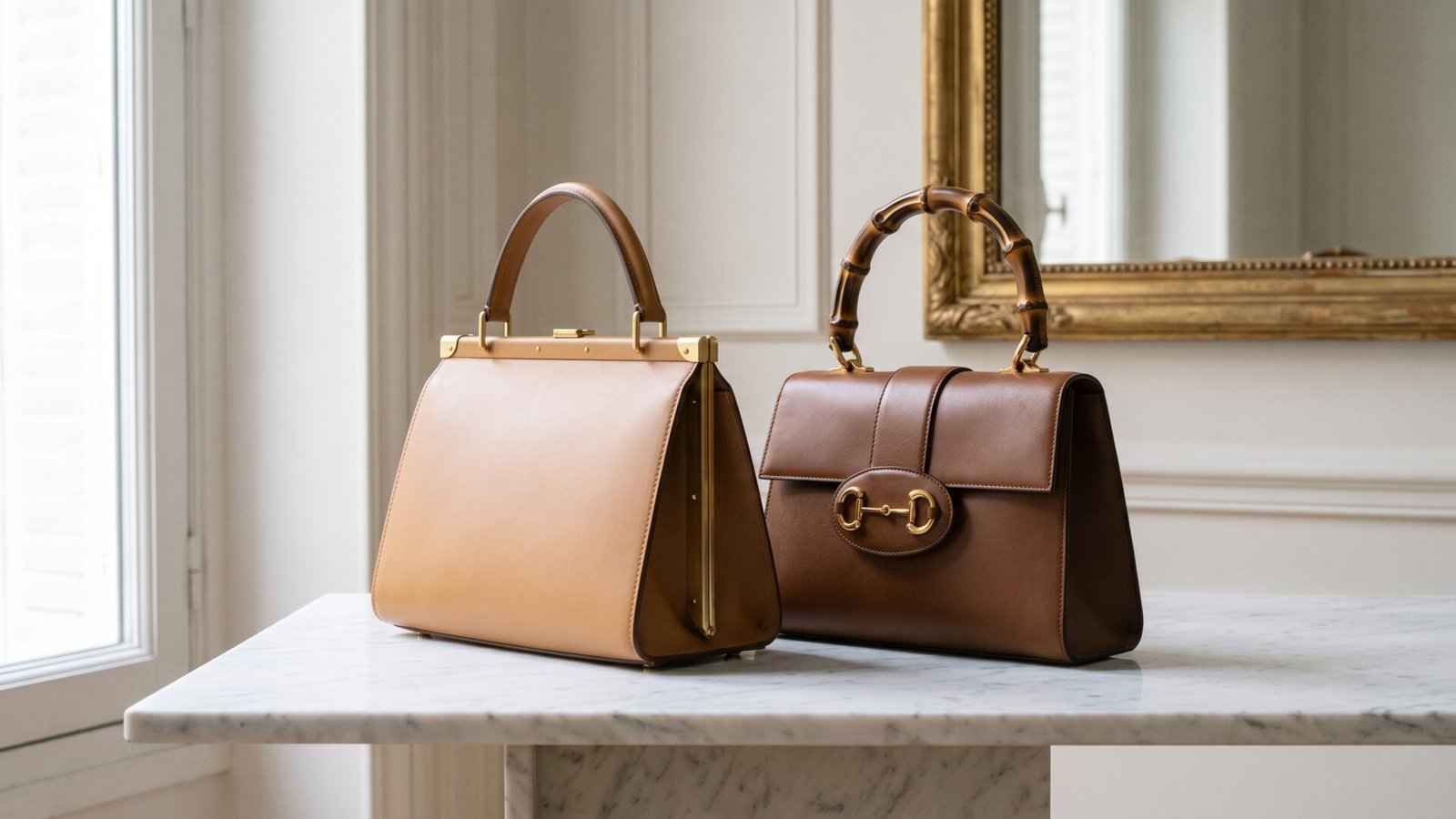
Louis Vuitton vs Gucci: French vs Italian Luxury Explained
The luxury fashion landscape is defined by a handful of powerhouse brands, but few rivalries capture the imagination quite like Louis Vuitton versus Gucci. These two giants represent more than just handbags and ready-to-wear collections—they embody two distinct philosophies of luxury, rooted in different cultural traditions and design sensibilities.
Louis Vuitton, founded in Paris in 1854, stands as the archetype of French luxury: disciplined, heritage-driven, and quietly authoritative. Gucci, born in Florence in 1921, represents Italian luxury at its most expressive: bold, sensual, and unapologetically contemporary. Together, they dominate the global luxury market, with LVMH (Louis Vuitton’s parent company) and Kering (Gucci’s parent company) controlling a significant share of the industry’s revenue.
For the discerning luxury shopper, the decision between these two brands is rarely straightforward. It involves weighing heritage against innovation, understatement against statement, and investment potential against personal expression. This guide breaks down every dimension of the comparison—design philosophy, craftsmanship, pricing, resale value, and long-term wearability—to help you make an informed choice.
[Internal: Explore our Louis Vuitton brand hub] | [Internal: Explore our Gucci brand hub]
Quick Verdict Summary
Reasons to Choose Louis Vuitton
- Timeless appeal: Louis Vuitton designs transcend seasonal trends. The Monogram canvas and Damier Ebene patterns have remained relevant for decades.
- Superior resale value: Louis Vuitton consistently retains 60-80% of its retail value, outperforming most luxury brands in the secondary market.
- Heritage craftsmanship: The brand’s commitment to traditional leatherworking techniques ensures durability that justifies the investment.
- Quiet luxury options: While the monogram is famous, Louis Vuitton also offers understated leather lines like the Capucines and Lockme collections.
Reasons to Choose Gucci
- Innovative design: Creative director Alessandro Michele (2015-2023) and Sabato De Sarno (current) have pushed boundaries, making Gucci a trendsetter rather than a follower.
- Cultural resonance: Gucci’s collaborations and pop culture presence give it a relevance that younger consumers find compelling.
- Bold aesthetic: If you want your accessories to make a statement, Gucci’s maximalist approach delivers.
- Entry-level pricing: Gucci’s lower starting price point makes it more accessible for first-time luxury buyers.
Key takeaway: Choose Louis Vuitton if you prioritize investment value, timeless design, and understated elegance. Choose Gucci if you value creative expression, trend-forward aesthetics, and a more accessible entry point into luxury.
Background on the Brands
Louis Vuitton: The Architect of Modern Luxury
Louis Vuitton founded his eponymous house in 1854 in Paris, specializing in flat-topped trunks that revolutionized travel. Before Vuitton, trunks had rounded tops to allow water runoff; Vuitton’s innovation made them stackable and more practical for railway travel. This practical ingenuity became the foundation of a brand that would define luxury luggage and accessories for generations.
The brand’s evolution from trunk maker to global fashion house began in earnest under the leadership of Bernard Arnault, who integrated Louis Vuitton into the LVMH conglomerate in 1987. Under Arnault, Louis Vuitton expanded into ready-to-wear, shoes, and accessories while maintaining its core identity as a purveyor of timeless luxury.
Today, Louis Vuitton operates over 460 stores worldwide and generates annual revenue exceeding $20 billion. Its design philosophy remains rooted in the principles of its founder: functionality, durability, and understated elegance. The iconic Monogram canvas, introduced in 1896 to combat counterfeiting, remains one of the most recognizable patterns in fashion history.
Gucci: The Renaissance of Italian Glamour
Guccio Gucci founded his leather goods company in Florence in 1921, drawing inspiration from the equestrian world and British aristocracy. The brand’s early products—riding boots, luggage, and leather accessories—reflected Gucci’s fascination with the refined lifestyle of the English upper class.
The Gucci we know today emerged under the creative direction of Tom Ford (1994-2004), who transformed the struggling brand into a symbol of 1990s sex appeal and glamour. Ford’s Gucci was sleek, provocative, and unapologetically modern. After a period of decline following Ford’s departure, Alessandro Michele reinvented Gucci starting in 2015 with a maximalist, eclectic vision that blended vintage references with contemporary streetwear influences.
Gucci’s current creative director, Sabato De Sarno, has moved the brand toward a more refined, minimalist direction while maintaining its Italian heritage. The brand generates approximately $10 billion in annual revenue and operates over 500 stores globally.
Design Philosophy
Louis Vuitton: Discipline and Timelessness
Louis Vuitton’s design language is characterized by restraint. The brand prioritizes clean lines, balanced proportions, and functional elegance. Even when experimenting with collaborations (such as those with Stephen Sprouse, Takashi Murakami, and Jeff Koons), the underlying structure remains conservative.
This philosophy extends to the brand’s approach to color. Louis Vuitton favors neutral palettes—browns, blacks, navy, and beige—with occasional injections of seasonal colors. The result is a wardrobe that ages gracefully, never feeling dated even as trends shift.
The quiet luxury movement has further validated Louis Vuitton’s approach. While the monogram remains popular, the brand’s leather goods—particularly the Capucines, Lockme, and Twist collections—appeal to buyers who want luxury without overt branding. This dual identity allows Louis Vuitton to serve both the status-conscious and the discreet luxury seeker.
Gucci: Expression and Eclecticism
Gucci’s design philosophy is antithetical to restraint. Under Michele, the brand embraced maximalism: bold patterns, clashing prints, vintage-inspired silhouettes, and an almost theatrical approach to fashion. The GG Marmont bag, with its oversized double G logo, became a symbol of this era.
Even with De Sarno’s more restrained direction, Gucci retains a sense of Italian exuberance. The brand’s use of color is bolder than Louis Vuitton’s—vibrant greens, reds, and blues appear regularly. Patterns are more elaborate, and silhouettes are more experimental.
This design philosophy appeals to buyers who view fashion as self-expression rather than investment. Gucci pieces often make statements; they are conversation starters. However, this also means they can feel dated more quickly than Louis Vuitton’s more conservative offerings.
Craftsmanship
Louis Vuitton: Precision and Durability
Louis Vuitton’s craftsmanship is legendary for its consistency. Each bag undergoes rigorous quality control, with specific attention to stitching alignment, edge painting, and hardware finishing. The brand’s canvas products use a coated cotton canvas that is remarkably durable—many vintage Louis Vuitton pieces from the 1990s remain in excellent condition.
The leather used in Louis Vuitton’s higher-end collections—Vachetta, Epi, and Taiga—is sourced from European tanneries and treated for longevity. Vachetta leather, used on the handles and trim of Monogram canvas bags, develops a patina over time that many collectors value as a sign of authenticity and use.
Louis Vuitton produces the majority of its products in France, Spain, Italy, and the United States. While some production has moved to lower-cost European countries, the brand maintains strict quality standards across all facilities.
Gucci: Innovation and Versatility
Gucci’s craftsmanship emphasizes flexibility and innovation. The brand uses a wider range of materials than Louis Vuitton, including leathers with unique finishes, mixed-media combinations, and experimental textiles. This allows Gucci to create more diverse product offerings but can result in variable quality across different collections.
The GG Marmont bag, for example, uses chevron-patterned leather that requires precise cutting and stitching. Gucci’s canvas products, while durable, do not match the longevity of Louis Vuitton’s coated canvas. Leather quality varies by collection, with higher-end pieces using better materials than entry-level items.
Gucci produces primarily in Italy, with some manufacturing in other European countries. The brand’s quality control has improved significantly since the Tom Ford era, but inconsistencies still occur more frequently than with Louis Vuitton.
Popular Products from Louis Vuitton
Louis Vuitton Neverfull Tote
The Neverfull is arguably the most iconic tote bag in luxury fashion. Introduced in 2007, it has become a staple for women seeking a practical, spacious bag that carries the Louis Vuitton cachet.
Dimensions: 29 x 21 x 12 cm (PM), 32 x 29 x 17 cm (MM), 40 x 33 x 20 cm (GM)
Materials: Monogram canvas, Damier Ebene canvas, or Damier Azur canvas with Vachetta leather trim
Capacity: The MM size fits a 13-inch laptop, a water bottle, a makeup bag, and daily essentials with room to spare
Price: $1,800 – $2,200 depending on size and material
The Neverfull’s appeal lies in its versatility. It works for work, travel, and casual outings. The side drawstrings allow for expansion, and the removable pouch adds organization. However, the Vachetta leather requires care—it is sensitive to water and oil, and the patina process can be uneven if not properly maintained.
Resale value: The Neverfull retains approximately 70-80% of its retail value in excellent condition. The Damier Ebene version, which lacks the Vachetta leather concerns, tends to hold value best.
[Affiliate: Check current pricing on the Louis Vuitton Neverfull]
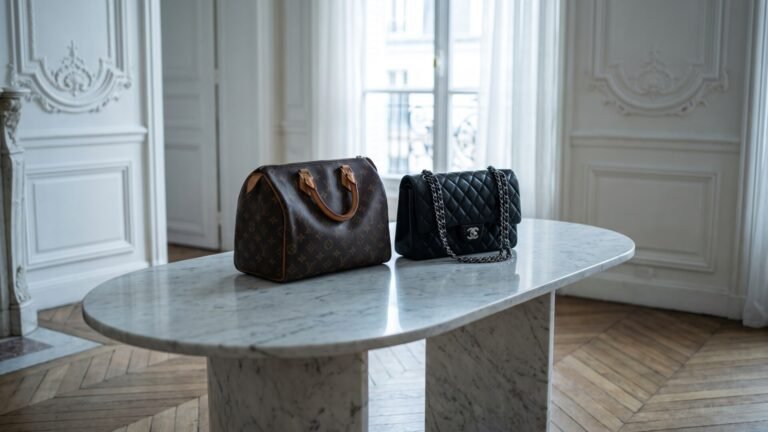
Louis Vuitton Speedy Bag
The Speedy, introduced in 1930 as the “Express” and renamed in 1965, is one of Louis Vuitton’s oldest and most recognizable designs. Its structured yet soft silhouette has made it a favorite for decades.
Dimensions: 25 x 19 x 15 cm (Speedy 25), 30 x 21 x 17 cm (Speedy 30), 35 x 23 x 18 cm (Speedy 35)
Materials: Monogram canvas, Damier Ebene canvas, or Epi leather
Capacity: The Speedy 30 fits a tablet, wallet, phone, and small accessories comfortably
Price: $1,500 – $2,000 depending on size and material
The Speedy’s enduring popularity stems from its classic shape and practical size. It works as an everyday bag for women who prefer a hand-held or crook-of-the-arm carry. The Bandeoulière strap (sold separately or included on newer models) adds crossbody versatility.
Resale value: The Speedy retains 60-75% of retail value. Vintage Speedy bags from the 1980s and 1990s are particularly sought after by collectors.
[Affiliate: Check current pricing on the Louis Vuitton Speedy]
Popular Products from Gucci
Gucci GG Marmont Bag
The GG Marmont, introduced in 2016 under Alessandro Michele, quickly became one of Gucci’s most recognizable designs. Its chevron-quilted leather and oversized double G logo define the maximalist Gucci aesthetic.
Dimensions: 26 x 15 x 7 cm (small), 31 x 18 x 9 cm (medium)
Materials: Chevron leather with gold-toned hardware
Capacity: The medium size fits a small tablet, wallet, phone, and essentials
Price: $1,800 – $2,500 depending on size and material
The GG Marmont’s appeal lies in its contemporary silhouette and bold branding. It works for evening and casual wear, though the chain strap can be heavy for all-day use. The leather is soft and develops a natural patina over time.
Resale value: The GG Marmont retains approximately 50-65% of retail value. Condition is critical, as the chevron quilting can flatten with heavy use.
[Affiliate: Check current pricing on the Gucci GG Marmont]
Gucci Ace Sneakers
The Gucci Ace sneaker, launched in 2016, became a defining piece of the modern luxury sneaker trend. Its clean leather upper, signature Web stripe, and embroidered motifs made it a status symbol for fashion-forward consumers.
Materials: Calfskin leather with rubber sole
Sizing: True to size for most foot shapes
Price: $800 – $1,100 depending on embellishments
The Ace sneaker’s appeal is its versatility—it works with denim, trousers, and even casual dresses. However, the leather requires regular cleaning, and the embroidered details can fray over time.
Resale value: Gucci Ace sneakers retain 40-55% of retail value. Limited edition versions with unique embroidery hold value better than standard styles.
[Affiliate: Check current pricing on Gucci Ace Sneakers]
Pricing and Accessibility
Louis Vuitton Pricing
Louis Vuitton positions itself at the higher end of accessible luxury. Entry-level canvas bags start around $1,200, while leather pieces range from $2,000 to $5,000. Limited edition and exotic skin pieces can exceed $10,000.
The brand has implemented consistent price increases of 5-10% annually over the past decade. This strategy reinforces exclusivity and protects resale value. Buyers who purchase today can expect their bag to be worth more in five years than the current retail price.
Gucci Pricing
Gucci’s pricing is generally lower than Louis Vuitton’s for comparable categories. Entry-level canvas bags start around $800, while leather pieces range from $1,500 to $3,500. The brand also offers more accessible accessories, including belts and wallets, starting under $500.
Gucci also implements annual price increases, but the percentage is typically lower than Louis Vuitton’s. This makes Gucci more accessible for first-time luxury buyers but results in weaker resale value.
Brand Heritage and Cultural Influence
Louis Vuitton: The Symbol of Travel and Status
Louis Vuitton’s heritage is inextricably linked to travel. The brand’s trunks accompanied explorers, royalty, and celebrities on journeys around the world. This association with wanderlust and adventure gives Louis Vuitton a romantic quality that few brands can match.
The brand’s cultural influence extends beyond fashion. Louis Vuitton has been referenced in films, music, and literature as a symbol of success and sophistication. The monogram is instantly recognizable across cultures, making it a universal status marker.
Gucci: The Voice of Pop Culture
Gucci’s cultural influence is more contemporary and more closely tied to pop culture. The brand has been central to fashion moments in film (think “House of Gucci”), music (from hip-hop to pop), and social media. Gucci’s collaborations with artists, musicians, and influencers keep the brand relevant to younger consumers.
The Gucci family’s dramatic history—including murder, betrayal, and scandal—adds a layer of intrigue that Louis Vuitton lacks. This narrative makes Gucci more than a brand; it is a story that consumers can engage with.
Investment Value
Louis Vuitton: The Blue-Chip Investment
Louis Vuitton is widely considered the most investment-grade luxury brand after Hermès. The combination of consistent quality, strong brand equity, and controlled supply means that Louis Vuitton bags typically appreciate or hold value better than any other accessible luxury brand.
Factors driving Louis Vuitton’s investment value:
- Controlled production: Louis Vuitton does not discount or sell through outlet channels, protecting brand exclusivity
- Price increases: Annual increases of 5-10% mean that bags purchased today are worth more than retail within a few years
- Global demand: The brand’s universal appeal ensures a broad buyer pool in the resale market
- Heritage pieces: Vintage Louis Vuitton from the 1980s and 1990s commands premium prices from collectors
Gucci: Emerging Investment Potential
Gucci’s investment value is less established but improving. The brand’s more trend-driven designs mean that some pieces lose value quickly, while others—particularly limited editions and collaborations—can appreciate.
Factors affecting Gucci’s investment value:
- Trend dependency: Pieces tied to specific trends (like the GG Marmont) may lose appeal as tastes shift
- Broader availability: Gucci’s wider distribution and occasional outlet presence dilute exclusivity
- Collector interest: Vintage Gucci from the Tom Ford era is highly sought after by collectors
- Brand momentum: Gucci’s recent shift toward more refined design under De Sarno may improve long-term value
Resale Market Trends
Louis Vuitton Resale Performance
Louis Vuitton dominates the luxury resale market. According to data from leading resale platforms, Louis Vuitton consistently accounts for 20-25% of all luxury bag sales on the secondary market.
Best-performing Louis Vuitton pieces for resale:
- Neverfull MM in Damier Ebene: 80-85% of retail
- Speedy 30 in Monogram: 70-75% of retail
- Pochette Métis: 75-80% of retail
- Alma BB in Damier Ebene: 70-75% of retail
Factors that reduce resale value:
- Heavy patina on Vachetta leather
- Damaged canvas coating
- Worn hardware
- Missing accessories (dust bag, box, receipt)
Gucci Resale Performance
Gucci’s resale market is smaller but growing. The brand accounts for approximately 10-15% of luxury bag sales on resale platforms.
Best-performing Gucci pieces for resale:
- Vintage Gucci horsebit bags (Tom Ford era): 60-70% of original retail
- Limited edition GG Marmont: 55-65% of retail
- Gucci Jackie bag: 50-60% of retail
Factors that reduce resale value:
- Visible wear on leather quilting
- Faded or damaged Web stripe
- Outdated design elements
- Heavy use of logo prints
Who Should Buy Louis Vuitton?
Louis Vuitton is the right choice for buyers who:
- Prioritize investment value: If you view luxury purchases as assets, Louis Vuitton offers the strongest resale potential
- Prefer timeless design: Buyers who want pieces that remain relevant for decades will appreciate Louis Vuitton’s conservative aesthetic
- Need practical luxury: The brand’s focus on functionality means its bags are genuinely useful for daily life
- Value quiet luxury: While the monogram is famous, Louis Vuitton’s leather collections offer understated elegance
- Travel frequently: The brand’s heritage in luggage and travel accessories makes it ideal for frequent travelers
Lifestyle compatibility: Louis Vuitton suits professionals, travelers, and those who prefer a classic, polished aesthetic. It works for corporate environments, formal occasions, and everyday use.
Who Should Buy Gucci?
Gucci is the right choice for buyers who:
- Value self-expression: If you want your accessories to reflect your personality, Gucci’s bold designs deliver
- Embrace trends: Buyers who enjoy following fashion trends will find Gucci’s seasonal offerings exciting
- Prefer a lower entry point: Gucci’s more accessible pricing makes it ideal for first-time luxury buyers
- Enjoy statement pieces: Gucci’s maximalist aesthetic is perfect for those who want their accessories to be noticed
- Follow pop culture: The brand’s deep connection to music, film, and social media appeals to culture-conscious consumers
Lifestyle compatibility: Gucci suits creative professionals, fashion enthusiasts, and those who enjoy making a statement. It works for social events, creative environments, and casual settings.
What Most Buyers Get Wrong
Misconception: Louis Vuitton is Overpriced for Canvas
Many buyers assume that Louis Vuitton’s canvas bags are overpriced because they use coated cotton rather than leather. This misses the point. The canvas’s durability, the precision of the monogram alignment, and the quality of the Vachetta leather trim all contribute to a product that lasts for decades. The cost-per-wear of a Louis Vuitton bag purchased at $1,800 and used for 20 years is $90 per year—less than many fast-fashion bags.
Misconception: Gucci is Lower Quality
Some buyers assume that Gucci’s lower price point means inferior quality. While Gucci’s quality is less consistent than Louis Vuitton’s, the brand’s higher-end pieces use excellent materials and craftsmanship. The issue is not quality but design longevity—Gucci’s trend-driven pieces may feel dated before they wear out.
Misconception: Resale Value is the Only Metric
Both brands offer value beyond resale. Gucci’s lower entry price means you can own luxury without the same financial commitment. For buyers who view fashion as self-expression rather than investment, Gucci’s creative designs may offer more personal value than Louis Vuitton’s conservative offerings.
The Hidden Advantage of Each Brand
Louis Vuitton’s hidden advantage: The brand’s repair and aftercare service is exceptional. Louis Vuitton will repair or replace hardware, restitch seams, and even replace canvas panels for a fee. This extends the life of your bag significantly.
Gucci’s hidden advantage: Gucci’s collaborations and limited editions create unique pieces that can appreciate in value. The brand’s willingness to experiment means you can own something genuinely distinctive.
Future Trends in Luxury Fashion
Louis Vuitton’s Trajectory
Louis Vuitton will likely continue its path of controlled growth and heritage preservation. The brand is investing in higher-end leather goods and ready-to-wear, moving away from its reliance on canvas. This shift could increase prices further but also strengthen the brand’s position in the quiet luxury segment.
The appointment of Pharrell Williams as Men’s Creative Director signals that Louis Vuitton is willing to embrace pop culture while maintaining its core identity. Expect more collaborations that blend streetwear with luxury, similar to the successful Virgil Abloh era.
Gucci’s Trajectory
Gucci’s future under Sabato De Sarno is uncertain but promising. The shift away from Michele’s maximalism toward a more refined aesthetic could broaden Gucci’s appeal to buyers who previously found the brand too loud. If De Sarno’s vision resonates, Gucci could capture a share of the quiet luxury market while maintaining its Italian flair.
The brand’s investment in sustainability and digital innovation may also appeal to younger consumers who prioritize these values. Gucci’s recent focus on circular fashion and resale programs positions it well for a market that increasingly values environmental consciousness.
Market Dynamics
Both brands face challenges from emerging competitors and changing consumer preferences. The rise of independent luxury brands, the growing importance of sustainability, and the shift toward experiential luxury all affect how consumers view traditional luxury houses.
However, Louis Vuitton and Gucci have demonstrated remarkable resilience over decades. Their ability to adapt while maintaining core identity suggests they will remain dominant players in luxury fashion for the foreseeable future.
Final Recommendations
Buy Louis Vuitton if: You value timeless design, strong resale value, and practical functionality. The brand suits professionals, travelers, and those who prefer understated luxury.
Buy Gucci if: You value creative expression, trend-forward design, and a lower entry point into luxury. The brand suits fashion enthusiasts, creative professionals, and those who enjoy making statements.
Consider both if: Your wardrobe has room for both classic investment pieces and trend-driven statement items. A Louis Vuitton Neverfull for daily use and a Gucci GG Marmont for evenings offers the best of both worlds.
[Internal: Explore our luxury handbag investment guide] | [Internal: Compare other luxury brands]
[Affiliate: Shop the latest Louis Vuitton collections] | [Affiliate: Shop the latest Gucci collections]
Frequently Asked Questions About Louis Vuitton And Gucci
What are the main differences between Louis Vuitton and Gucci?
The primary differences are design philosophy, heritage, and investment potential. Louis Vuitton prioritizes timeless, functional design with strong resale value. Gucci emphasizes creative expression and trend-forward aesthetics at a more accessible price point. Louis Vuitton represents French luxury’s discipline; Gucci embodies Italian luxury’s exuberance.
Which brand has a better resale value?
Louis Vuitton consistently outperforms Gucci in resale value. Louis Vuitton bags retain 60-80% of retail value, while Gucci bags retain 40-65%. The gap is widest for canvas pieces, where Louis Vuitton’s monogram holds value better than Gucci’s logo prints.
Are Louis Vuitton bags worth the investment?
For buyers who plan to use their bags regularly and maintain them properly, Louis Vuitton offers excellent value. The cost-per-wear is low over decades of use, and resale value provides a safety net. For pure investment purposes, limited edition pieces and vintage models offer the best returns.
How do Gucci products hold up over time?
Gucci products hold up well with proper care, but they require more maintenance than Louis Vuitton. Leather pieces develop patina gracefully, but canvas and logo prints can show wear more quickly. The brand’s more experimental designs may feel dated faster than Louis Vuitton’s classic silhouettes.
Can I mix and match Louis Vuitton and Gucci in my wardrobe?
Absolutely. Many fashion enthusiasts mix brands to create personal style. The key is to balance the aesthetic differences. For example, a quiet Louis Vuitton leather bag can anchor a bold Gucci scarf or belt. The contrast can be striking when done intentionally.
What should I consider before purchasing a luxury item from either brand?
Consider your lifestyle, budget, and long-term plans. If you want a bag that will last for decades and hold value, choose Louis Vuitton. If you want to experiment with trends at a lower price point, choose Gucci. Always buy what you genuinely love—resale value matters less if you plan to keep the piece. —