Louis Vuitton vs Dior: Heritage vs Modern Luxury
Louis Vuitton and Dior sit under the same LVMH umbrella, yet they sell different things. Louis Vuitton, founded in 1854, built its reputation on trunks, travel and coated canvas. Dior, founded in 1946 and famous for the New Look of 1947, built its reputation on couture silhouettes and sculpted femininity.
Short answer: choose Louis Vuitton for an everyday bag with broad capacity and the deepest resale market; choose Dior for a more design-led, occasion-friendly bag. This comparison covers design, craftsmanship, heritage, investment, resale and daily use, and points to the bags that suit each approach. For the wider picture, see our guide to the French luxury fashion houses.
Louis Vuitton vs Dior: Quick Verdict
Louis Vuitton Strengths
- Long heritage: more than 170 years since the 1854 founding
- Recognizable design language: Monogram and Damier canvas are identified worldwide
- Liquid resale market: classic canvas bags are widely traded, so comparable listings are easy to find
- Practical luxury: many core designs (Speedy, Neverfull, Keepall) prioritize everyday function
- Lower-key options: leather lines such as Capucines are less logo-forward than Monogram canvas
Dior Strengths
- Design-led silhouettes: Lady Dior, Saddle and Book Tote are instantly distinct shapes
- Couture lineage: the house’s identity comes from the 1947 New Look and a line of notable creative directors
- Visible craft details: Cannage stitching and Dior Oblique jacquard are signature codes
- Evolving creative direction: each designer reinterprets the house codes
- Beauty and fragrance: Dior Beauty offers a lower-priced way into the brand
Key takeaway: Louis Vuitton suits buyers who want durability, versatility and an easier resale path. Dior suits buyers who want a distinctive design and are happy to treat the bag as a considered, often occasion-led purchase. Neither is objectively superior.
Louis Vuitton vs Dior at a Glance
| Aspect | Louis Vuitton | Dior |
|---|---|---|
| Founded | 1854, Paris | 1946, Paris (first collection February 1947) |
| Heritage focus | Travel, trunks, coated canvas | Couture, the New Look, sculpted femininity |
| Signature patterns | Monogram, Damier | Cannage, Dior Oblique |
| Iconic bags | Speedy, Neverfull, Keepall, Alma, Capucines | Lady Dior, Saddle, Book Tote, 30 Montaigne |
| Best for | Daily use, travel, classic canvas | Occasions, statement styling, design-led buyers |
| Approximate cost of core bags (USD) | Canvas classics roughly $1,500-$2,500; Capucines roughly $6,500-$8,000+ | Lady Dior roughly $5,500-$8,000 depending on size |
| Everyday practicality | High | Moderate; varies strongly by model |
| Resale | Deep, widely traded market | Narrower market; strongest for classic Lady Dior and sought-after styles |
Prices are approximate US retail ranges for core models and change often by size, material and market; confirm on the brand’s own site before buying.
Design Philosophy
Louis Vuitton: Functional Design and Recognizable Codes
Louis Vuitton’s design thinking starts with travel. The house began with flat-topped trunks that could be stacked, and that practical logic still shows in clean lines, sturdy construction and roomy interiors. The Damier pattern dates to 1888 and the Monogram canvas to 1896; the Monogram was created by Georges Vuitton in tribute to his father, and both patterns also made imitation harder.
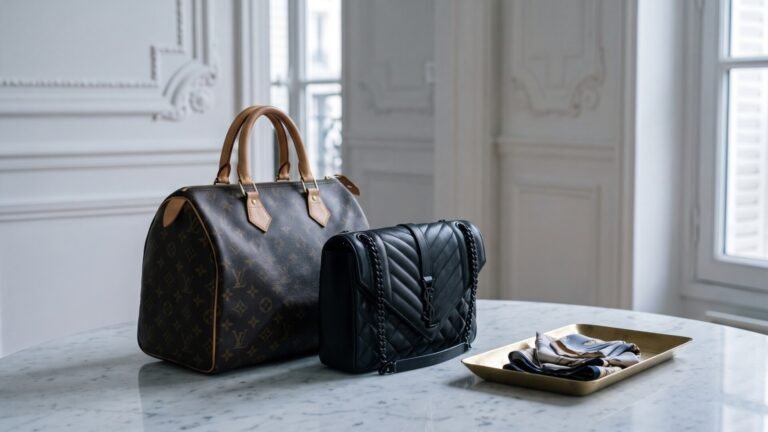
The Speedy, launched in the early 1930s as a smaller version of the Keepall travel bag, and the Neverfull, launched in 2007, carry that philosophy into everyday life: open, structured totes that hold a laptop and daily essentials. Leather lines such as Capucines and Twist offer a less logo-forward take, which fits the quiet luxury approach for buyers who want the quality without the Monogram.
Dior: Sculptural Shapes and Couture Codes
Dior’s design language comes from Christian Dior’s 1947 New Look, with its cinched waist and full skirt, a deliberate break from wartime austerity. Accessories carry that sense of shape and finish.
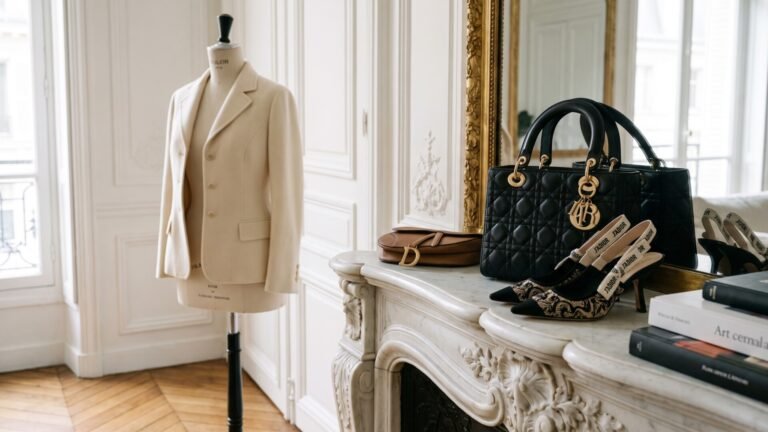
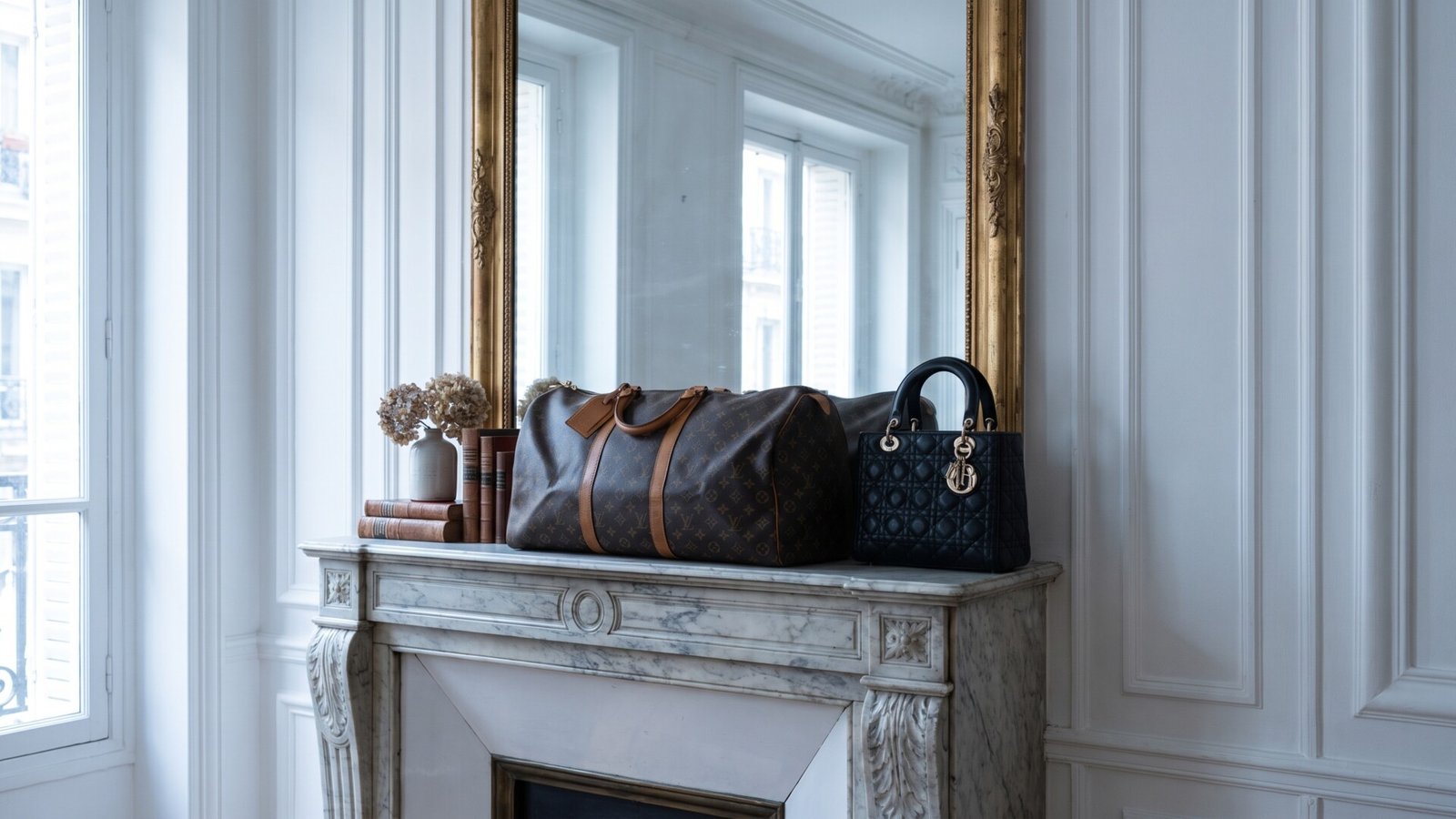
The Lady Dior, named in 1995 after Princess Diana carried it (the model was previously called the Chouchou), is the clearest example. Its Cannage stitching, according to Dior, was inspired by the Napoleon III chairs used at the house’s first salon. The Saddle bag was introduced under John Galliano in 2000 and revived under Maria Grazia Chiuri in 2018. Dior’s creative leadership has changed since then; see the heritage section below.
These bags are designed first as objects to be seen. The Lady Dior’s structured shape and slim handles favor appearance over capacity, which suits evenings and smaller loads better than a full workday.
What This Means for Buyers
A Louis Vuitton Speedy or Keepall design stays in production for decades with few changes, so a new bag looks much like an older one. Dior designs tend to be more tied to a creative director’s era, which makes them distinctive but can date them faster.
Buy Louis Vuitton if you want a bag that stays appropriate for years with minimal fuss.
Buy Dior if you want a bag that makes a deliberate design statement.
If a quieter look matters most, our Louis Vuitton materials guide explains which canvas and leather options are least logo-heavy. You can also browse the full Louis Vuitton guide and the Dior guide.
Craftsmanship and Materials
Louis Vuitton: Coated Canvas, Leather and Workshops
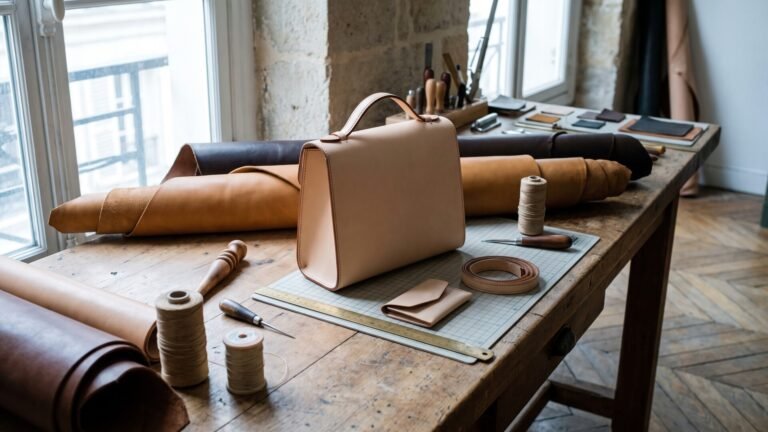
Louis Vuitton states that its bags are made by hand in its workshops (ateliers), with production across France and other countries. The brand’s historic Asnieres workshop, near Paris, is where it began making trunks and is associated with special orders. Monogram canvas is a coated canvas chosen for durability, which is why it tolerates rain, scuffs and daily use better than many smooth leathers.
Leather trim and handles are the parts to watch: they darken with handling and can mark, so cleaning and conditioning matter more than for the canvas body. Louis Vuitton offers a repair service through its stores; ask a boutique about what can be restored and at what cost.
Dior: Atelier Finishing and Delicate Materials
Dior emphasizes its couture heritage in how accessories are finished: Cannage stitching on the Lady Dior, metal charms and refined hardware. Dior leather goods use calfskin, lambskin and other leathers, chosen for look and handle rather than maximum toughness.
Many popular Dior styles, especially lambskin, patent and satin versions, show wear more readily than Louis Vuitton coated canvas. Dior Oblique jacquard is a more durable choice among Dior’s fabric options. Dior also provides repair services through boutiques, though policies vary by market.
Craftsmanship Comparison
| Aspect | Louis Vuitton | Dior |
|---|---|---|
| Primary materials | Coated canvas (Monogram, Damier), Epi leather, calfskin | Calfskin, lambskin, Dior Oblique jacquard, Cannage-quilted leather |
| Durability | Strong for canvas; leather needs care | Good for structured calfskin; delicate for lambskin, patent and satin |
| Signature detail | Coated canvas, brass-tone hardware, rolled handles | Cannage stitching, charms, structured silhouettes |
| Repairs | Offered through Louis Vuitton stores | Offered through Dior boutiques; ask about scope and fees |
| Care effort | Lower for canvas | Higher for lambskin, patent and light colors |
Winner for durability: Louis Vuitton, especially for canvas pieces.
Winner for decorative craft detail: Dior, particularly Cannage work and couture-inspired finishing.
Brand Heritage
Louis Vuitton: The Travel Specialist
Louis Vuitton founded his company in Paris in 1854 and made flat-topped trunks that could be stacked, unlike the rounded trunks of the time. The house’s story is closely tied to rail and ocean travel and the craft of packing.
Collaborations later added artists to that history, including Stephen Sprouse, Takashi Murakami and Yayoi Kusama, each reinterpreting the Monogram. The house today has more than 170 years of continuous history behind it, a point it uses heavily in its own storytelling.
Dior: Revolutionizing Femininity
Christian Dior opened his house in December 1946 with backing from the textile magnate Marcel Boussac, and presented his first collection in February 1947. Its cinched waists and full skirts were named the New Look by the editor Carmel Snow of Harper’s Bazaar.
Dior’s lineage of designers is long: Yves Saint Laurent, Marc Bohan, Gianfranco Ferre, John Galliano, Raf Simons and Maria Grazia Chiuri. In 2025 the house announced Jonathan Anderson as its creative director, covering women’s, men’s and couture. Each director reinterprets house codes, so Dior’s heritage is one of succession and reinvention.
Heritage Implications for Buyers
Louis Vuitton’s heritage is one of continuity: the same core shapes are refreshed with new materials. Dior’s is one of reinvention: the house changes visibly with its creative direction.
Choose Louis Vuitton if you want a bag that belongs to a long, consistent tradition.
Choose Dior if you want a piece tied to couture and to the current direction of the house.
For more on the maisons behind both names, see our guide to French luxury fashion houses.
Modern Luxury: Pricing, Retail and Sustainability
How Each House Approaches Today’s Buyer
Both houses have raised prices over recent years, a trend we cover in why Louis Vuitton is so expensive. Increases differ by product and market, so check current prices rather than relying on any historical figure.
Dior invests in retail experience at 30 Avenue Montaigne in Paris, where the flagship boutique sits alongside the Galerie Dior museum, a restaurant and a garden. Louis Vuitton also operates large flagship stores and cultural projects, so the difference is one of emphasis, not a gap in ambition.
Sustainability
Both brands belong to LVMH and report against the group’s LIFE 360 environmental program. Neither is positioned as a sustainability leader in the luxury sector; if this matters to you, read each brand’s current published environmental reporting and consider pre-owned purchases, which avoid new production altogether.
Beauty and Accessibility
Dior Beauty gives buyers a lower-priced way into the brand through fragrance and makeup. Louis Vuitton’s route in is small leather goods and, for fragrance, its separate perfume line. For handbags, both houses sit in the same upper price tier.
Trend Adaptation
Louis Vuitton adds colors, materials and collaborations to a stable core of shapes. Dior is more willing to reissue or reinvent shapes. The Saddle revival and the popularity of the Book Tote show how Dior responds to trends, while the Speedy and Neverfull show the Louis Vuitton approach of a stable shape in new finishes.
Investment Value and Resale
Handbags are not investments in a financial sense. Resale prices depend on model, condition, color, size, completeness of box and receipt, and current demand, and no brand guarantees a return. The points below describe patterns, not predictions.
Louis Vuitton
Classic canvas bags such as the Speedy, Neverfull and Keepall are widely traded in the pre-owned market. That depth makes pricing easier because you can compare many recent sales. Retail price increases can also lift pre-owned prices for bags still in production. See our value analysis for the full discussion.
Factors that tend to help resale:
- Recognition: strong global awareness supports demand
- Durability: canvas bodies in good condition stay presentable
- Classic sizes: Speedy 25 and 30, Neverfull MM, Keepall 50 and 55 and Alma BB are common choices
- Condition: clean handles, corners and lining matter most
- Authentication: counterfeits are common, so use a reputable platform that authenticates
Dior
The Lady Dior and Saddle have dedicated followings, and the Book Tote is a familiar pre-owned listing. The market is generally narrower than Louis Vuitton’s, so some styles take longer to sell, and results vary by model, color and condition. See the Lady Dior value review, the Saddle bag guide and the Book Tote review.
Factors that tend to affect Dior resale:
- Trend cycles: seasonal prints and colors date faster than neutrals
- Material: lambskin, patent and satin wear faster
- Color: black, beige and other neutral Lady Dior colors tend to be the safest
- Era: shifts in creative direction can change which styles are in demand
- Condition and proof of authenticity: especially important for delicate materials
Resale Comparison
| Aspect | Louis Vuitton | Dior |
|---|---|---|
| Market depth | Broad; many comparable listings | Narrower; more variation between models |
| Safest choices | Monogram or Damier classics | Classic Lady Dior in neutral colors |
| Higher-risk choices | Limited-edition collaborations | Seasonal prints and delicate materials |
| What to check | Handles, corners, glazing and lining | Hardware, leather condition and edge wear |
Winner for resale ease: Louis Vuitton, thanks to market depth. Check recent sold listings for the exact model before you rely on any figure.
Everyday Use and Practicality
Louis Vuitton: Daily Luxury
Several Louis Vuitton designs are built around use. The Neverfull is an open tote with side laces that can hold a laptop and daily items, the Speedy suits commuting and light travel, and the Keepall works as a weekender. Coated canvas resists light rain and dirt. Leather-heavy and large bags can feel heavy, which is worth testing in store.
These bags suit:
- Commuting and travel
- Office and everyday errands
- Casual and smart-casual outfits
Dior: Occasion and Statement Luxury
Dior’s best-known bags lean toward style. The Lady Dior holds essentials rather than a laptop, and the Saddle’s curved shape limits what fits comfortably. The Book Tote is the roomy exception in the range, though a canvas tote has less internal organization than many work bags.
These bags suit:
- Special occasions and events
- Dress-forward outfits
- Evening wear and short days out
Practicality Comparison
| Aspect | Louis Vuitton | Dior |
|---|---|---|
| Everyday usability | Excellent for Speedy, Neverfull and Keepall | Model-dependent; Book Tote is the most practical |
| Capacity | Generous in larger sizes | Smaller in Lady Dior and Saddle |
| Maintenance | Lower for canvas | Higher for delicate materials and light colors |
| Versatility | Works from work to weekend | Best as a statement or occasion bag |
Winner for practicality: Louis Vuitton for most buyers.
Which Bag Fits Which Need?
| If you need | Consider | Why |
|---|---|---|
| A work or laptop tote | Louis Vuitton Neverfull MM, or Dior Book Tote | Both are open totes; the Neverfull is the more utilitarian canvas choice, the Book Tote the more design-led |
| A compact everyday bag | Louis Vuitton Speedy 25 or 30 | Structured, with top handles and a long-standing shape |
| An evening or event bag | Dior Lady Dior | Structured, dressy and designed to be noticed |
| A weekend or travel bag | Louis Vuitton Keepall | Built for travel from the house’s origins |
| A low-key leather bag | Louis Vuitton Capucines or Twist | Less logo-forward than canvas |
| A recognizable shape that is not a logo bag | Dior Saddle | Distinct silhouette without a repeating logo pattern |
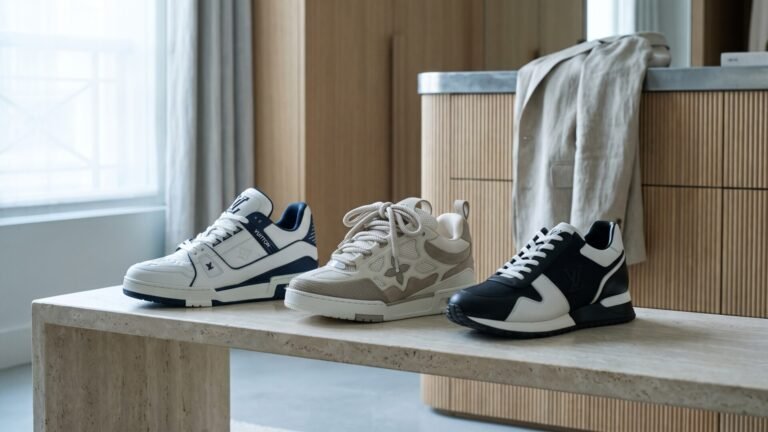
If you are also weighing other houses, see our comparisons of Louis Vuitton vs Chanel, Louis Vuitton vs Saint Laurent and Louis Vuitton vs Gucci. For footwear, see the best Louis Vuitton sneakers.
Buyer Identity and Signaling
Louis Vuitton
Louis Vuitton is recognized almost everywhere, so a Monogram bag communicates the brand instantly. Buyers who want less visibility often move toward leather lines such as Capucines, whose cost starts well above the classic canvas bags.
Dior
Dior’s signaling is more design-driven: a Lady Dior or Saddle is read as a specific bag as much as a specific brand. Most Dior bags are recognizable by shape or Cannage, so the options for staying discreet are narrower.
Identity Comparison
| Aspect | Louis Vuitton | Dior |
|---|---|---|
| Status signal | Recognized heritage brand | Design and fashion awareness |
| Understated options | Yes, leather lines | Fewer; most styles are distinctive |
| Typical occasion | Daily and travel | Special occasions and statement outfits |
What Most Buyers Get Wrong
Misconception: Louis Vuitton Is Just a Logo
Recognition and quality can coexist. Louis Vuitton canvas bags are built to take daily use, and the house offers repair. The Monogram is part of the appeal, but not the only reason the bags last.
Misconception: Dior Is Not Timeless
The Lady Dior has been in production since 1995, and the Saddle has returned across multiple fashion cycles. The choice matters: a black or beige Lady Dior behaves differently on resale and in a wardrobe than a seasonal print.
Misconception: You Have to Pick One
Many people own both. A Louis Vuitton Neverfull or Speedy for daily use and a Lady Dior for events is a reasonable pairing, because the bags do different jobs.
Where Each House Is Heading
These are observations, not forecasts. Both houses sit inside LVMH, and both continue to adjust their lineups, prices and creative leadership. Louis Vuitton’s women’s collections have been led by Nicolas Ghesquière since 2013, while Dior is in a new era following Maria Grazia Chiuri’s departure in 2025 and the appointment of Jonathan Anderson. Creative-director changes can shift which Dior styles are in demand, so check what is currently in the collection before buying a particular model. Both houses also face the same long-term questions: counterfeiting, production volume and consumer interest in pre-owned luxury.
See our French luxury fashion houses guide for how these two sit within the wider market.
Conclusion
Louis Vuitton and Dior are two valid approaches to luxury. Louis Vuitton offers durability, versatility and a deep resale market. Dior offers distinctive silhouettes, Cannage craftsmanship and a couture identity. Neither is objectively better.
Choose Louis Vuitton if you want:
- A bag for daily use and travel
- Classic canvas with an easier resale path
- Lower-key leather options
- Long-running, stable shapes
Choose Dior if you want:
- A design-led, sculpted silhouette
- A statement or occasion bag
- Cannage craftsmanship
- A piece tied to the house’s couture identity
Choose both if you want a daily bag and a dressier option that do different jobs.
[Affiliate: Shop Louis Vuitton Speedy Bag]
[Affiliate: Shop Louis Vuitton Neverfull Tote]
[Affiliate: Shop Dior Lady Dior Bag]
[Affiliate: Shop Dior Saddle Bag]
Frequently Asked Questions About Louis Vuitton Vs Dior
What are the main differences between Louis Vuitton and Dior?
Louis Vuitton is rooted in travel, trunk-making and durable coated canvas, with designs such as the Speedy, Neverfull and Keepall built around daily use. Dior is rooted in couture and the 1947 New Look, with sculpted bags such as the Lady Dior and Saddle that lean toward style and occasion. Louis Vuitton generally offers more everyday practicality; Dior generally offers more distinctive design.
Which brand has better resale value?
Classic Louis Vuitton canvas bags are generally easier to resell because the market is broader and there are more comparable listings. Dior resale is narrower and varies more by model, color and condition; classic Lady Dior styles in neutral colors tend to be the safest. No brand guarantees a return, so check recent sold listings for the exact bag.
How do Louis Vuitton and Dior approach sustainability?
Both belong to LVMH and report against its LIFE 360 program. Neither is positioned as a sustainability leader in luxury. Reading each brand’s latest published environmental reporting, or choosing a pre-owned bag, is the most reliable way to act on this concern.
Are Louis Vuitton bags worth the investment?
A Louis Vuitton bag is best treated as something to use, not a financial investment. Classic canvas models often hold their value better than many fashion bags, but resale depends on condition, model and demand. Popular choices include the Speedy 25 and 30, Neverfull MM, Keepall and Alma BB.
Which brand is better for everyday use?
Louis Vuitton is usually better for everyday use because the Speedy, Neverfull and Keepall are roomy and made from tough coated canvas. Dior’s Lady Dior and Saddle prioritize style over capacity, although the Book Tote is a more practical option.
What are the iconic products from each brand?
Louis Vuitton: the Speedy, Neverfull, Keepall, Alma and Capucines, plus the Monogram and Damier patterns. Dior: the Lady Dior, Saddle, Book Tote and 30 Montaigne, plus Cannage stitching and Dior Oblique jacquard.
Is a Lady Dior or a Louis Vuitton Speedy better?
They do different jobs. The Speedy is a roomier, more casual everyday bag in durable canvas. The Lady Dior is a more structured, dressy bag with Cannage stitching that suits events and lighter loads. Prices also differ, with Lady Dior typically costing more than a canvas Speedy.
Who designs for Louis Vuitton and Dior now?
Nicolas Ghesquière has led Louis Vuitton’s women’s collections since 2013. Dior announced Jonathan Anderson as its creative director in 2025, following Maria Grazia Chiuri’s departure. Leadership can change, so check each house’s official site for the current lineup.