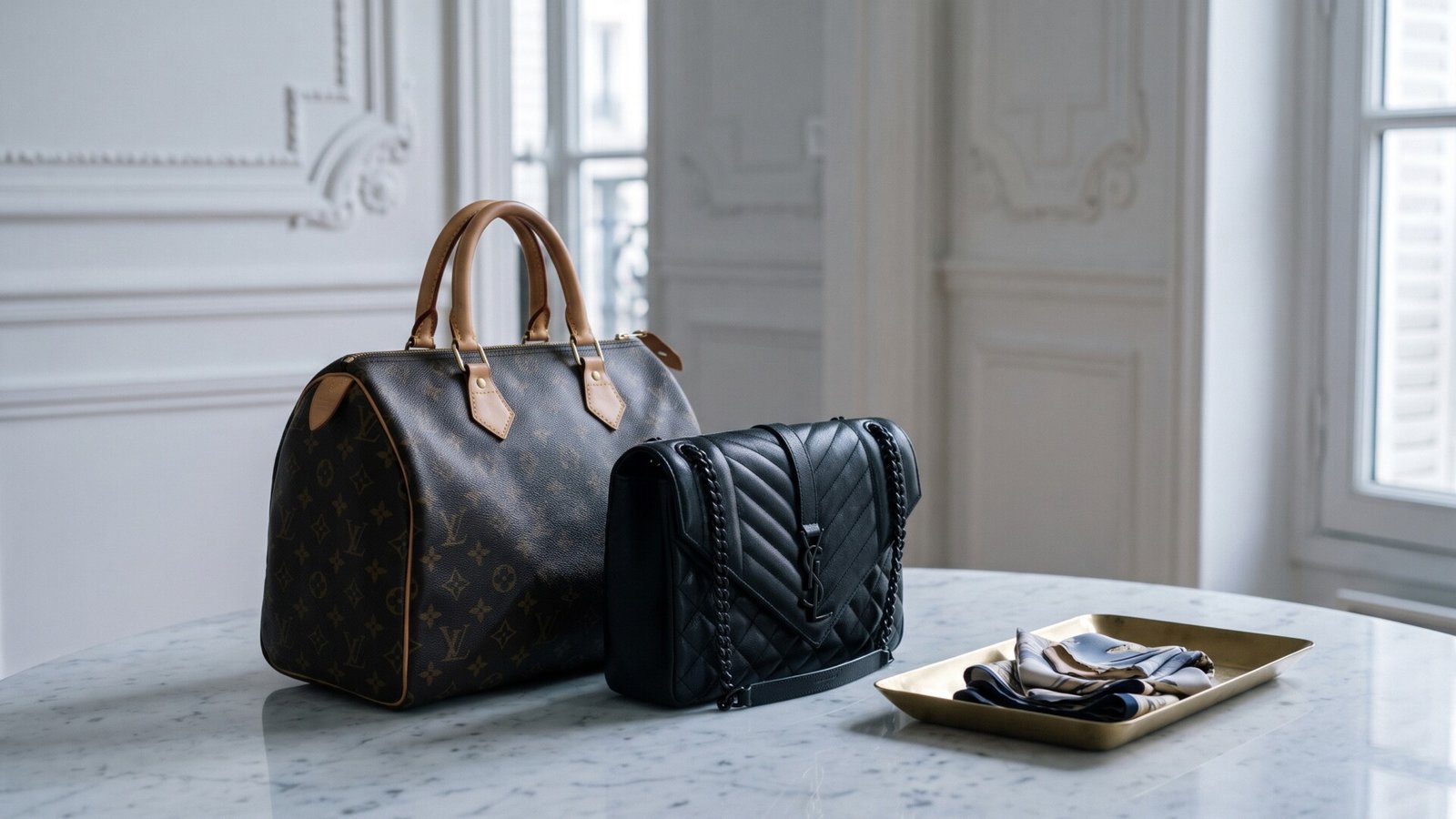
Louis Vuitton vs Saint Laurent: Which Offers Better Value?
The debate between Louis Vuitton and Saint Laurent is one of the most frequent we encounter from discerning luxury shoppers. Both are French powerhouses with distinct identities, yet they appeal to different definitions of value. One buyer might prioritize a bag that holds its value for a decade, while another seeks a design that captures the current cultural moment without breaking the bank.
This guide moves beyond brand prestige to examine what you actually get for your money. We compare construction, resale performance, everyday practicality, and long-term wearability. The goal is not to declare a single winner, but to help you identify which brand aligns with your personal definition of value in 2024 and beyond.
By the end of this analysis, you will understand exactly where your money goes with each brand and which purchase is the smarter investment for your wardrobe. We will also highlight specific products worth considering, which you can explore [Internal: on our Louis Vuitton brand hub] and [Internal: on our Saint Laurent brand hub].
Quick Verdict Summary
For readers short on time, here is the core takeaway:
Louis Vuitton Strengths
- Unmatched heritage and brand recognition, creating a powerful status signal.
- Consistently strong resale value, often retaining 60-80% of retail depending on the model.
- Durable coated canvas construction that withstands daily wear exceptionally well.
- A vast archive of iconic, timeless silhouettes that transcend seasonal trends.
Saint Laurent Strengths
- More accessible entry price points, particularly for leather goods versus LV’s canvas.
- Trend-forward, edgy aesthetic that appeals to a younger, fashion-conscious audience.
- Higher proportion of full-leather construction, offering a different tactile luxury.
- Greater versatility for evening and occasion wear within the same collection.
Key Takeaway: Louis Vuitton wins for long-term investment and heritage-driven status. Saint Laurent wins for fashion-forward design and immediate value in a leather-focused luxury piece. Your choice depends entirely on whether you prioritize resale and timelessness or contemporary style and material purity.
Design Philosophy
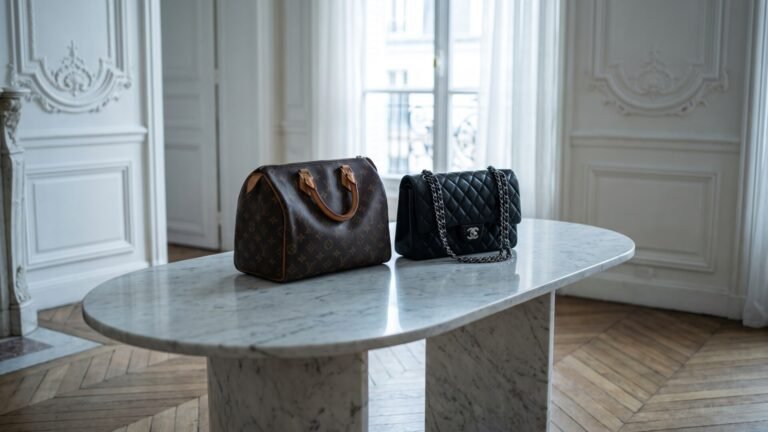
The visual DNA of each brand is the first and most obvious differentiator. Louis Vuitton is built on the concept of heritage luxury. Its most recognizable pieces, from the Speedy to the Neverfull, are defined by the Monogram canvas – a pattern that has been in continuous use since 1896. The aesthetic is one of established wealth, quiet confidence, and a connection to travel and craftsmanship history. Even the leather lines, like the Capucines or the Lockme, adhere to a refined, classic silhouette that prioritizes structure and a sense of permanence.
Saint Laurent, in contrast, embodies a rock-and-roll spirit. Under the creative direction of Anthony Vaccarello, the house has doubled down on an edgy, minimalist, and often androgynous aesthetic. The signature elements are sharp tailoring, black leather, the Cassandre logo, and a silhouette that leans towards the sleek and the subversive. The design language is less about a single repeating pattern and more about a mood – a Parisian nonchalance that feels contemporary and slightly rebellious. While Louis Vuitton designs feel like they belong to a lineage, Saint Laurent designs feel like they belong to a moment.
Value Interpretation: Louis Vuitton’s design offers a form of value insurance. Because the aesthetics change slowly, a bag bought today will not look dated in five years. Saint Laurent’s design offers a different value: the ability to signal that you are current, fashion-literate, and willing to embrace a more provocative edge. The risk is that a trend-forward piece may feel less relevant in a decade.
Quality and Craftsmanship
This is where the value proposition becomes more nuanced. There is a persistent myth that Louis Vuitton uses only leather. In reality, its most famous bags are made from a coated canvas – a material that is exceptionally durable, lightweight, and water-resistant. The canvas is not cheap; it is a proprietary material made with a cotton base and a PVC coating, finished with a top layer of natural leather trim. The craftsmanship lies in the precision of the pattern alignment, the stitching, and the hand-finished edges on the leather parts. However, for the price of a Neverfull MM, you are paying a premium for the name and the canvas technology, not for full-grain leather.
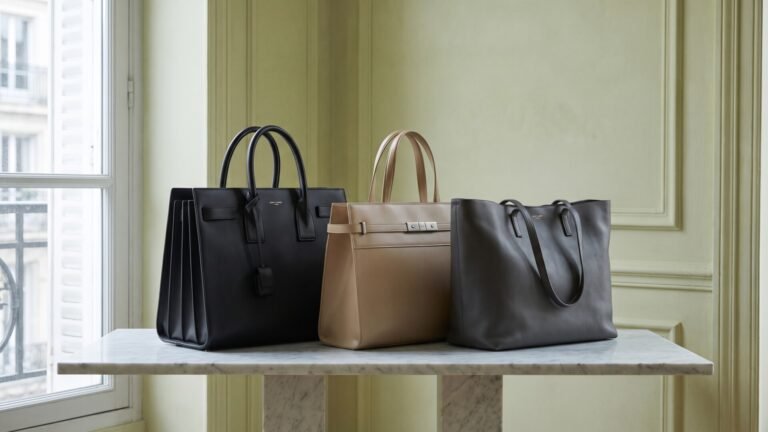
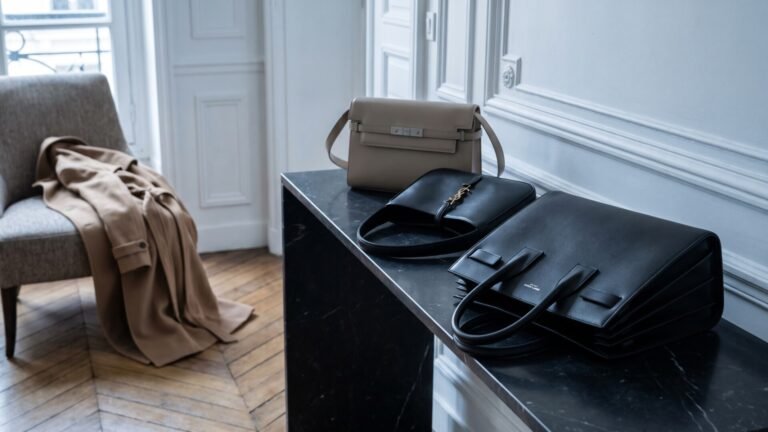
Saint Laurent, by contrast, uses significantly more leather in its core product lines. The Sac de Jour, the Kate, and the Loulou are all constructed from calfskin or lambskin. The leather quality is high – supple, consistent, and with a refined grain. The craftsmanship involves more traditional leatherworking techniques, including edge painting and structured internal frames. At a similar price point to a Louis Vuitton canvas bag, a Saint Laurent bag offers a different material proposition: you are paying for a full-leather construction, which many buyers perceive as a higher form of luxury.
Value Interpretation: The Louis Vuitton coated canvas is arguably more practical for daily use – it is lighter, more resistant to scratches and rain, and requires less maintenance. The Saint Laurent full-leather bag offers a more traditional luxury experience but demands more care. From a pure materials-cost perspective, Saint Laurent often provides more leather for the money. From a longevity perspective, the Louis Vuitton canvas is less prone to visible wear.
Practicality and Functionality
In daily use, the two brands cater to different lifestyles. The Louis Vuitton Neverfull is the ultimate example of functional luxury. It is lightweight, collapses flat for travel, fits a 13-inch laptop with ease, and the coated canvas can withstand being placed on a train floor or caught in a drizzle. The Speedy, in its various sizes, is similarly practical – a spacious, easy-to-carry bag that has been a workhorse for decades. The practicality of Louis Vuitton is rooted in its travel heritage; these bags are designed to be used.
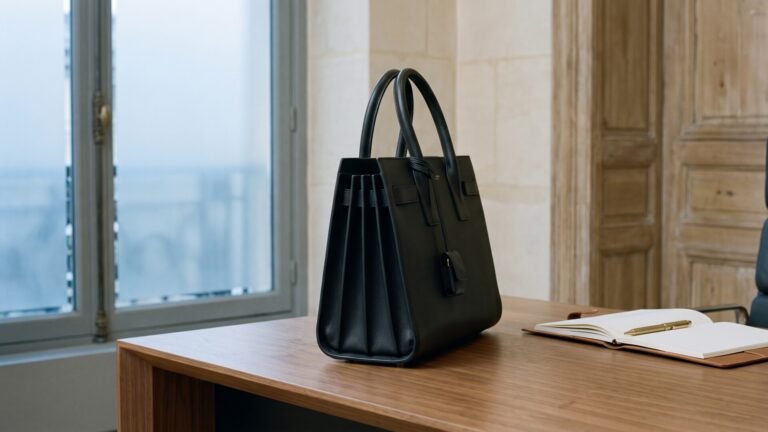
The Saint Laurent Sac de Jour is a different proposition. It is a structured, professional tote that is heavier due to its full-leather construction and internal frame. It fits a laptop, but the weight is a factor. The Kate bag, while iconic, is primarily an evening or occasion piece – it is not designed for daily commuting. The Niki bag offers more practicality with its slouchy, crossbody silhouette, but its chain strap and softer leather require more consideration for daily wear. Saint Laurent’s functionality is often more focused on form and silhouette than on utilitarian versatility.
Value Interpretation: If your definition of value is a bag that you can use every day, in all weather, and for multiple purposes, Louis Vuitton’s canvas line offers superior practicality. If your definition of value is a bag that makes a specific style statement for work or evening events, and you are willing to accept some limitations in daily utility, Saint Laurent’s leather offerings are a strong choice.
Investment Value
The term “investment” in luxury fashion is often misused. A true investment piece should retain or increase in value over time. In this regard, Louis Vuitton is the clear leader. Iconic models like the Speedy, the Neverfull, and the Alma, particularly in Monogram Canvas or Damier Ebene, have a proven track record of strong resale. Limited editions and rare leathers (like the Capucines in exotic skins) can even appreciate. The brand’s consistent price increases, often 5-10% annually, also reinforce the perception of value growth.
Saint Laurent’s investment potential is more variable. The Classic Monogram bag and the Sac de Jour hold reasonable value, but they do not command the same premium on the secondary market as equivalent Louis Vuitton pieces. The brand’s stronger reliance on trend-driven designs means that a bag that is highly sought after today may see a sharper depreciation in two years. Saint Laurent is a better purchase for personal enjoyment and style than for financial appreciation.
Value Interpretation: For buyers who consider future resale a key component of value, Louis Vuitton is the superior choice. For buyers who prioritize wearing the bag and do not plan to sell it, the difference in investment potential is less relevant, and Saint Laurent’s lower entry price may offer better immediate value.
Resale Market Insights
The secondary market data confirms the investment analysis. On platforms like The RealReal, Vestiaire Collective, and Rebag, Louis Vuitton consistently ranks among the top three brands for resale value and turnover speed. A Neverfull MM in good condition typically retains 70-80% of its retail price. A Speedy 30 can retain 60-70%. The demand is constant, driven by both new buyers seeking entry-level luxury and collectors seeking discontinued models.
Saint Laurent performs well on resale but at a lower percentage. A Sac de Jour in good condition typically retains 50-60% of retail. A Kate bag may retain 40-50%. The turnover is slower, and the market is more sensitive to condition and seasonality. The brand’s higher reliance on leather means that signs of wear are more visible and can impact value more significantly. A scratched Louis Vuitton canvas is often considered “patina”; a scratched Saint Laurent calfskin is a defect.
Value Interpretation: If you anticipate selling your bag in the future, Louis Vuitton offers a significantly better return on your initial investment. If you plan to keep the bag until it wears out, the resale differential is less important, and the lower initial cost of Saint Laurent may be more attractive.
Heritage and Brand History
Understanding the heritage of each house provides context for their current value propositions. Louis Vuitton was founded in 1854 as a trunk maker. The brand’s entire identity is built on the concept of luxury travel and durability. The Monogram Canvas was introduced to prevent counterfeiting. The brand’s history is one of craftsmanship, innovation (the flat-top trunk), and association with the elite of the 19th and 20th centuries. This history creates an aura of permanence and established status that is difficult to replicate.
Saint Laurent was founded in 1961 by Yves Saint Laurent and Pierre Berge. It was a revolutionary house that introduced the tuxedo jacket for women (Le Smoking) and blurred the lines between masculine and feminine dressing. The brand’s history is one of cultural disruption, fashion innovation, and a connection to the art and music scenes of Paris. This heritage appeals to buyers who see fashion as a form of personal expression and rebellion rather than as a status symbol.
Value Interpretation: The heritage of Louis Vuitton offers a form of social capital. The bag signals that you belong to a long tradition of luxury. The heritage of Saint Laurent offers cultural capital. The bag signals that you understand fashion history and its role in challenging norms. Which is more valuable depends on the buyer’s identity and social circle.
Who Should Buy Louis Vuitton
Louis Vuitton is the right choice for the buyer who prioritizes longevity, status, and investment. You should consider Louis Vuitton if:
- You want a bag that will remain relevant for 10-20 years.
- You value resale value and may want to trade up in the future.
- You need a practical, durable bag for daily use that can withstand travel.
- You appreciate the quiet status signaling of a recognized luxury house.
- You are building a collection of iconic, timeless pieces.
Who Should Buy Saint Laurent
Saint Laurent is the right choice for the buyer who prioritizes style, material quality, and a fashion-forward edge. You should consider Saint Laurent if:
- You want a full-leather bag at a more accessible price point than comparable LV leather pieces.
- Your personal style leans towards the edgy, minimalist, or rock-and-roll aesthetic.
- You value a bag that makes a specific fashion statement rather than a universal one.
- You are willing to accept lower resale value in exchange for a more contemporary design.
- You are looking for a versatile piece that can move from day to evening.
What Most Buyers Get Wrong
The most common misconception is that a higher price always means better value. Many buyers assume that because a Louis Vuitton bag costs more, it is made from better materials. As discussed, the core canvas bags are not full leather. The value lies in the brand’s heritage, resale performance, and durability, not in the material cost.
Another misconception is that Saint Laurent is a “lesser” brand. This is inaccurate. Saint Laurent is a powerhouse in its own right, with a distinct design philosophy and a loyal following. The value proposition is different, not inferior. A buyer who chooses a Saint Laurent Sac de Jour over a Louis Vuitton Neverfull is not making a mistake; they are making a choice based on different priorities – material purity over canvas practicality, edgy design over timeless status.
A final misconception is that resale value is the only measure of value. For many buyers, the value of a bag is in the joy of wearing it, the confidence it provides, and the way it completes an outfit. If a Saint Laurent bag brings more personal satisfaction than a Louis Vuitton bag, then it offers better value for that individual, regardless of what the secondary market says.
Future Trends in Luxury
The luxury market is shifting in ways that affect both brands. The “quiet luxury” trend, which favors understated designs without logos, has benefited houses like The Row and Loro Piana. This trend poses a challenge to Louis Vuitton’s monogram-heavy aesthetic. The brand is responding by pushing its leather lines, like the Capucines and the Twist, which feature more subtle branding. The long-term value of monogram canvas may face headwinds if the trend continues.
Saint Laurent is well-positioned for the current moment. Its minimalist, logo-forward (but not logo-covered) designs align with the “old money” aesthetic when executed in neutral colors and clean lines. The brand’s focus on leather and tailoring also aligns with the shift towards investment dressing. However, Saint Laurent’s reliance on trend cycles means it must constantly innovate to stay relevant. The brand’s ability to balance its edgy heritage with broader market demands will determine its future value proposition.
Value Interpretation: The future may favor Saint Laurent’s leather-centric, minimalist approach over Louis Vuitton’s canvas and logo dependence. However, Louis Vuitton’s sheer market power and ability to dictate trends through marketing and limited editions should not be underestimated. The safest long-term bet is to invest in the most timeless pieces from each house, regardless of current trends.
Affiliate Product Recommendations
To help you make a purchase decision, here are specific products from each brand that represent strong value within their respective categories.
Louis Vuitton Products:
- Louis Vuitton Neverfull MM Tote: The quintessential luxury tote. It is practical, iconic, and holds its value exceptionally well. Ideal for daily use, travel, and as a work bag. [Affiliate: Check the price on Louis Vuitton]
- Louis Vuitton Speedy 30: A timeless classic available in Monogram Canvas or Damier Ebene. It is versatile, lightweight, and has been a staple for decades. A true investment piece. [Affiliate: Check the price on Louis Vuitton]
Saint Laurent Products:
- Saint Laurent Sac de Jour: The brand’s answer to the structured luxury tote. It is made from high-quality calfskin, is professional and chic, and offers a more traditional luxury experience than a canvas bag. [Affiliate: Check the price on Saint Laurent]
- Saint Laurent Kate Monogram Bag: An iconic evening bag with the signature Cassandre logo. It is a statement piece that adds edge to any outfit. Best for evening wear and special occasions. [Affiliate: Check the price on Saint Laurent]
Frequently Asked Questions About Louis Vuitton Vs Saint Laurent
What are the key differences between Louis Vuitton and Saint Laurent?
Louis Vuitton focuses on classic luxury with a strong heritage, while Saint Laurent is known for its contemporary, edgy designs.
Is Louis Vuitton worth the investment?
Yes, Louis Vuitton items generally retain high resale values and are considered timeless pieces.
Are Saint Laurent products durable?
Saint Laurent products are made from high-quality materials, ensuring durability, but may require more care due to their fashion-forward designs and full-leather construction.
Which brand has better resale value?
Louis Vuitton typically has a stronger resale value due to its heritage, iconic status, and consistent demand on the secondary market.
How do I choose between Louis Vuitton and Saint Laurent?
Consider your personal style, intended use, and long-term investment goals. Choose Louis Vuitton for status and resale; choose Saint Laurent for fashion-forward design and full-leather luxury.
Are there significant price differences between the two brands?
Yes, generally, Saint Laurent offers more accessible entry price points compared to Louis Vuitton’s premium pricing, particularly when comparing leather goods to canvas items.