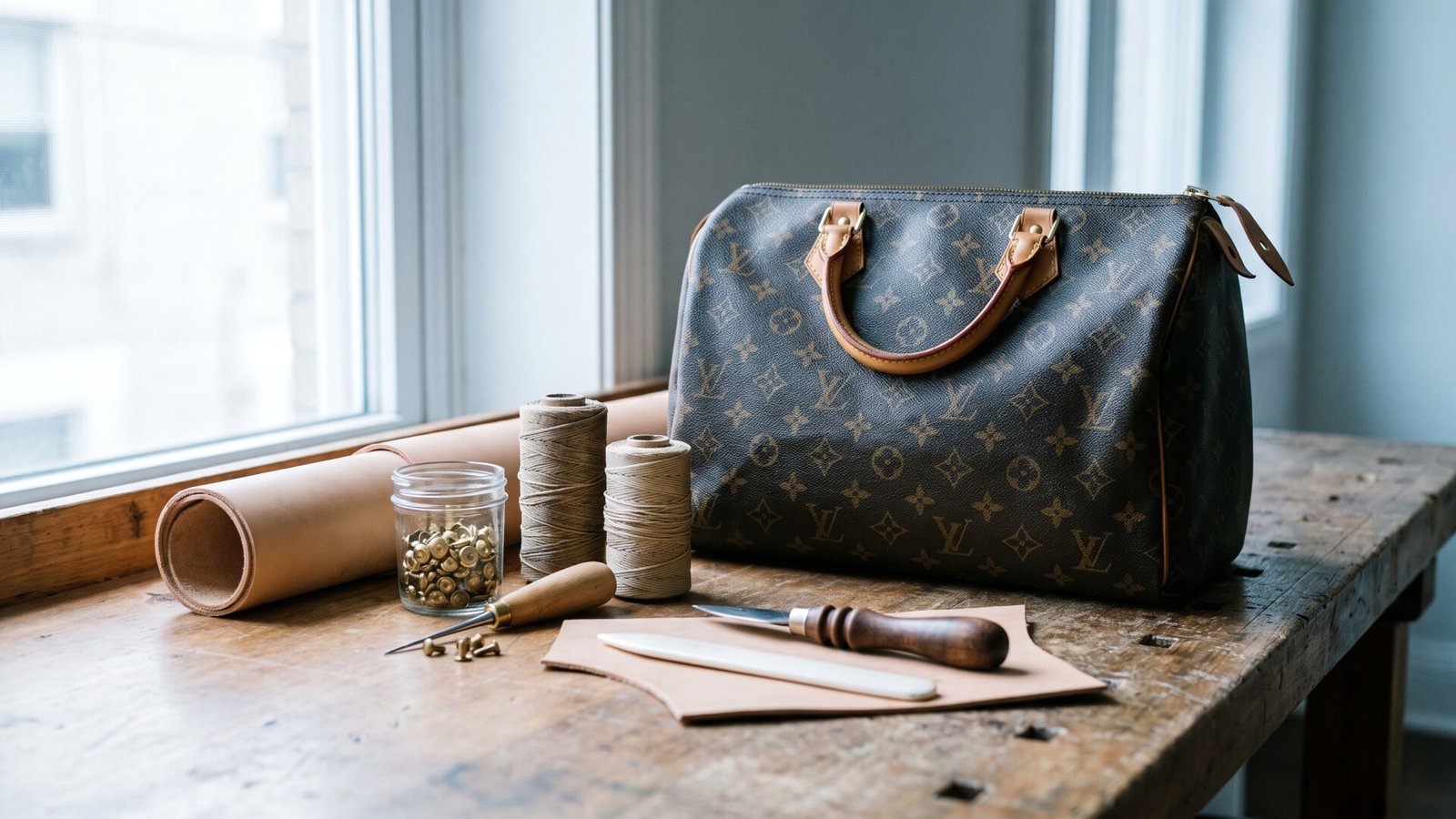
Why Louis Vuitton Is So Expensive (And Is It Worth It?)
Louis Vuitton occupies a singular position in the luxury fashion world. The brand’s monogram canvas is instantly recognizable from Tokyo to New York, and its retail prices consistently command attention. A standard Speedy Bandouliere 30 costs $1,550. The Neverfull GM tote runs $2,120. And the Capucines BB bag surpasses $5,000.
These figures raise an obvious question: What justifies these prices? Is it genuine craftsmanship and enduring value, or is it simply the power of branding and marketing?
This article examines the economics of Louis Vuitton pricing. We analyze the brand’s heritage, production methods, materials, market positioning, and resale performance to determine whether these products represent a sound investment or an overpriced status symbol. By the end, you will have a clear framework for deciding whether a Louis Vuitton purchase aligns with your financial and aesthetic priorities.
[Explore the Louis Vuitton Collection]
Quick Verdict Summary
Reasons to Buy Louis Vuitton Products
- Unmatched craftsmanship and quality: Each piece undergoes rigorous quality control and uses premium materials.
- Strong resale value and investment potential: Iconic styles retain 60-80% of retail value depending on condition.
- Timeless designs that transcend trends: The monogram canvas and classic silhouettes have remained relevant for decades.
- Brand prestige and recognition: Ownership signals an understanding of luxury fashion heritage.
- Durability and longevity: Many products last 10-20 years with proper care.
Reasons to Avoid Louis Vuitton Products
- High initial investment: Entry-level pieces start at $1,000+, which is prohibitive for many budgets.
- Accessibility may diminish exclusivity: Widespread availability reduces the feeling of owning something rare.
- Potential for counterfeit products: The brand’s popularity makes it a target for fakes, complicating secondhand purchases.
- Price increases outpace inflation: Annual increases of 5-10% mean buying earlier is better, but also means prices keep rising.
- Some products show wear faster: Coated canvas can crack over decades, and vachetta leather patinas unevenly.
Key takeaway: While Louis Vuitton products are expensive, their quality and investment potential may justify the cost for dedicated luxury buyers who prioritize longevity and brand heritage over trend-driven purchases.
The Heritage of Louis Vuitton
Louis Vuitton began in 1854 as a trunk-making workshop in Paris. The founder revolutionized luggage design by creating flat-topped trunks that stacked easily, replacing the rounded domed trunks common at the time. This innovation attracted elite clientele, including Empress Eugenie de Montijo, wife of Napoleon III.
The brand’s heritage directly influences its pricing today. Luxury consumers pay for continuity and provenance. When you purchase a Louis Vuitton bag, you are buying into 170 years of design evolution, royal patronage, and artisanal tradition. This historical weight cannot be replicated by newer brands, regardless of their craftsmanship quality.
Key milestones that solidified Louis Vuitton’s premium positioning include:
- 1896: Georges Vuitton created the Monogram Canvas to combat counterfeiting. This pattern remains the brand’s most iconic design.
- 1914: The brand opened its flagship store on the Champs-Elysees, establishing a physical presence in luxury retail.
- 1997: Marc Jacobs became artistic director, introducing ready-to-wear and collaborations that modernized the brand.
- 2013: Nicolas Ghesquiere took over womenswear, bringing architectural silhouettes that appeal to contemporary luxury buyers.
- 2018: Virgil Abloh’s appointment as menswear artistic director attracted younger consumers while maintaining heritage appeal.
The brand’s history provides what economists call “heritage value premium.” Consumers pay more for products with documented lineage because that lineage signals quality consistency. A Louis Vuitton bag made in 2025 uses essentially the same construction techniques as one made in 1925. This continuity justifies premium pricing because it guarantees a predictable level of quality.
[Internal: Explore the Louis Vuitton Brand Hub for detailed history]
Craftsmanship and Materials
Louis Vuitton’s pricing structure begins with materials. The brand uses several distinct material categories, each with different cost implications.
Coated Monogram Canvas
The signature coated canvas is not canvas in the traditional sense. It is a cotton base coated with PVC and treated with a proprietary finish. This material costs less than leather to produce but offers superior water resistance and durability. The coating process involves multiple layers applied by hand, which adds labor costs.
The canvas’s advantage is longevity. A well-maintained Monogram canvas bag can last 20-30 years. However, the coating can crack in extreme temperatures or with improper storage, which reduces lifespan.
Leather Types
Louis Vuitton uses several leather varieties:
- Vachetta: Unlined vegetable-tanned cowhide used for handles, straps, and trim. This leather develops a patina over time, darkening from pale beige to rich honey brown. Vachetta is expensive because it requires careful tanning and is sensitive to water and oils.
- Epi Leather: Textured cowhide treated with a special dyeing process that makes it highly scratch-resistant. Epi leather costs more than canvas but offers greater durability.
- Taiga Leather: Pebbled calfskin primarily used in menswear collections. It resists scratches well and maintains its appearance over time.
- Empreinte Leather: Embossed calfskin with a soft, supple feel. This leather is more delicate than Epi but offers a luxurious hand feel.
- Exotic Skins: Crocodile, alligator, and python skins used in limited-edition pieces. These can cost $10,000-$50,000+ depending on rarity and quality.
Production Process
Each Louis Vuitton bag requires 6-12 hours of labor depending on complexity. The production process involves:
- Cutting: Skilled craftspeople cut leather and canvas by hand, matching patterns for symmetry.
- Assembly: Pieces are stitched using industrial sewing machines, with reinforced stress points.
- Edge painting: Edges are painted with multiple coats of dye, sanded between applications for a smooth finish.
- Hardware attachment: Brass or gold-toned hardware is hand-fitted and tested for function.
- Quality control: Each piece passes multiple inspections before leaving the workshop.
The brand maintains workshops in France, Spain, Italy, and the United States. While some production has moved outside France, quality standards remain consistent across locations.
What Most Articles Get Wrong
Many sources claim Louis Vuitton bags are “hand-stitched” and “handmade.” This is misleading. Most Louis Vuitton bags are machine-stitched for consistency and durability. Hand-stitching is reserved for limited-edition pieces and special orders. The brand’s quality comes from precise machine work combined with skilled hand assembly, not from fully handcrafted production.
The real cost driver is not labor intensity but material quality and brand overhead. Louis Vuitton spends heavily on design, marketing, retail spaces, and customer service. These costs are distributed across every product sold.
[Internal: Compare Louis Vuitton materials to other luxury brands]
Design Philosophy
Louis Vuitton’s design approach balances heritage with innovation. The brand maintains core silhouettes while introducing seasonal variations that keep the collection fresh.
Iconic Patterns
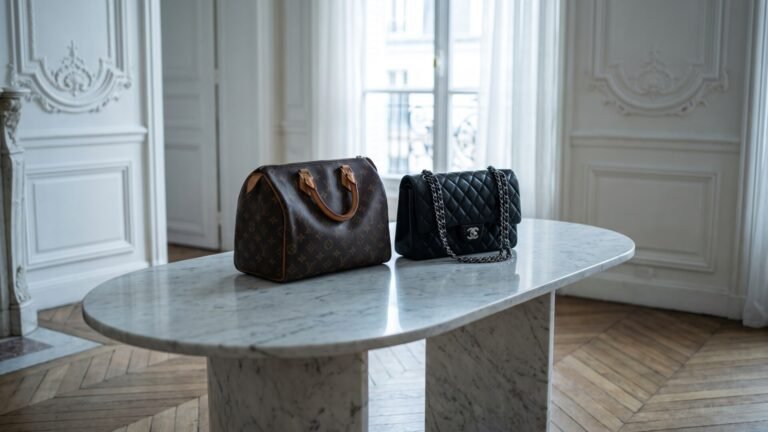
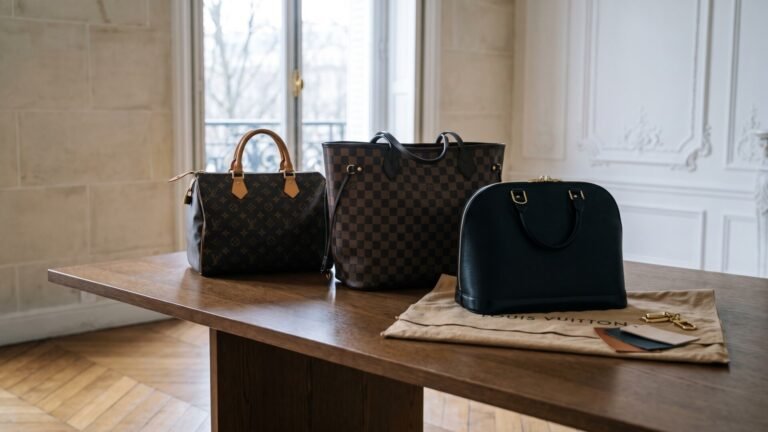
The Monogram canvas remains the most recognizable pattern in luxury fashion. Its LV initials, quatrefoils, and flowers create a visual language that communicates luxury instantly. The Damier Ebene and Damier Azur patterns offer alternatives for buyers who prefer geometric designs.
These patterns serve a dual purpose. They create brand recognition, which drives desire. They also make counterfeiting more difficult because the pattern alignment requires precise manufacturing.
Timeless Silhouettes
Certain Louis Vuitton shapes have remained in production for decades with minimal changes:
- Speedy: Introduced in 1930 as a smaller version of the Keepall travel bag. The Speedy 25 and 30 remain bestsellers.
- Neverfull: Launched in 2007, this tote became an instant classic due to its practicality and versatility.
- Alma: The Alma’s structured shape dates to 1934 and continues to attract buyers seeking a formal silhouette.
- Keepall: The original travel duffle from 1930 remains a staple for luxury travelers.
These designs succeed because they solve real problems. The Speedy fits daily essentials. The Neverfull carries laptops and documents. The Keepall accommodates weekend trips. This functional focus ensures the bags remain useful, not just decorative.
Collaborations and Limited Editions
Louis Vuitton’s collaborations with artists and designers serve multiple purposes. They generate media attention, attract new customers, and justify higher prices for limited-edition pieces. Notable collaborations include:
- Stephen Sprouse (2001): Graffiti-printed Monogram canvas
- Takashi Murakami (2003): Multicolor Monogram
- Yayoi Kusama (2012): Polka dot patterns
- Supreme (2017): Streetwear collaboration that drove unprecedented demand
- Virgil Abloh (2018-2021): Redefining menswear luxury
These collaborations create scarcity and collectibility. Limited-edition pieces often appreciate in value, especially if they remain in good condition. However, most buyers purchase standard collection pieces that hold value through consistent demand rather than rarity.
Brand Positioning and Exclusivity
Louis Vuitton operates in the upper tier of accessible luxury. The brand sits above contemporary brands like Coach or Michael Kors but below ultra-luxury houses like Hermes or Chanel. This positioning allows Louis Vuitton to charge premium prices while maintaining broad appeal.
Exclusivity Strategies
Louis Vuitton maintains exclusivity through several mechanisms:
- Price increases: The brand raises prices 5-10% annually, which prices out some buyers while reinforcing premium positioning.
- Limited availability: Popular items frequently sell out, creating artificial scarcity that drives demand.
- Controlled distribution: Louis Vuitton products are only available through brand-owned stores and the official website. No third-party retailers carry new Louis Vuitton products.
- Purchase limits: The brand restricts how many items a single customer can buy, preventing resellers from dominating supply.
These strategies create what economists call “Veblen good” dynamics. Higher prices actually increase demand because they signal exclusivity. Buyers want what is difficult to obtain.
The Psychology of Ownership
Owning a Louis Vuitton bag communicates several things about the owner:
- Financial success: The ability to spend $1,000+ on an accessory signals disposable income.
- Cultural knowledge: Choosing Louis Vuitton demonstrates awareness of luxury fashion history.
- Aesthetic judgment: Selecting appropriate styles and colors shows personal taste.
- Social belonging: Carrying a recognizable luxury item facilitates connection with other luxury consumers.
This signaling function is why Louis Vuitton remains popular despite high prices. The bag is not just a container for belongings; it is a communication device that broadcasts social information.
Quiet Luxury Considerations
Louis Vuitton occupies an interesting position in the “quiet luxury” trend. While the brand’s Monogram canvas is highly visible, many buyers prefer understated leather pieces like the Capucines or the Lockme line. These products offer the same quality and brand prestige without overt logo display.
The quiet luxury movement has actually benefited Louis Vuitton. Buyers who want to avoid logos can choose leather goods, while those who want recognizable status symbols can choose canvas. The brand serves both segments effectively.
[Internal: Read our Quiet Luxury Guide for more context]
Investment Value and Resale Market
Louis Vuitton consistently performs well in the luxury resale market. The brand’s products retain value better than most competitors, making them viable investment pieces for strategic buyers.
Resale Value by Category
| Product Category | Average Resale Value (as % of Retail) | Notes |
|---|---|---|
| Monogram Canvas Bags | 60-80% | Speedy, Neverfull, Keepall |
| Damier Canvas Bags | 55-75% | Slightly lower demand than Monogram |
| Epi Leather Bags | 50-70% | Dependent on color popularity |
| Limited Edition Pieces | 80-150%+ | Collaboration pieces can exceed retail |
| Exotic Skin Pieces | 40-60% | Smaller buyer pool limits demand |
| Wallets and SLGs | 30-50% | Lower resale due to wear and tear |
Factors That Affect Resale Value
- Condition: Bags in excellent condition with original dust bag, box, and receipt command higher prices.
- Rarity: Limited-edition pieces and discontinued styles appreciate more than standard collection items.
- Color: Neutral colors (brown, black, beige) sell faster and for higher prices than bright colors.
- Hardware: Gold hardware generally outperforms silver hardware in resale markets.
- Age: Bags from the 1990s and early 2000s often command vintage premiums.
Specific Investment Pieces
Louis Vuitton Neverfull Tote: The Neverfull is arguably the best investment piece in the Louis Vuitton lineup. It launched in 2007 at $620 for the GM size. The same bag now costs $2,120. This represents a 242% increase over 18 years, outpacing inflation significantly. The Neverfull’s resale value remains strong because it is practical, versatile, and instantly recognizable.
Louis Vuitton Speedy Bag: The Speedy 30 Bandouliere launched at $1,050 in 2015 and now costs $1,550. While the price increase is less dramatic than the Neverfull, the Speedy’s consistent demand ensures reliable resale value. Vintage Speedy bags from the 1980s and 1990s often sell for $500-$1,000 depending on condition.
Louis Vuitton Monogram Canvas Wallet: Wallets and small leather goods have lower absolute resale values but higher percentage retention. A Monogram Zippy Wallet costing $1,050 may resell for $500-$700, representing 50-65% retention.
What Most Buyers Get Wrong About Investment
The term “investment piece” is often misleading. A Louis Vuitton bag that costs $2,000 and resells for $1,500 after five years represents a $500 loss, not a profit. True investment requires the bag to appreciate above retail, which only happens with limited editions or extreme vintage pieces.
The real value of Louis Vuitton as an investment is cost-per-wear. A $2,000 bag used 200 times costs $10 per wear. A $200 bag used 20 times costs $10 per wear. Because Louis Vuitton bags last longer and remain stylish longer, their cost-per-wear often beats cheaper alternatives.
[Affiliate: Check the latest prices on Louis Vuitton Neverfull Tote]
[Affiliate: Check the latest prices on Louis Vuitton Speedy Bag]
[Affiliate: Check the latest prices on Louis Vuitton Monogram Canvas Wallet]
Consumer Psychology: Why People Buy Louis Vuitton
Understanding why people buy Louis Vuitton requires examining the emotional and psychological drivers behind luxury purchases.
Status Signaling
The most obvious motivation is status signaling. Carrying a Louis Vuitton bag communicates that the owner can afford luxury goods. This signaling is particularly effective in social situations where first impressions matter, such as business meetings, networking events, or social gatherings.
However, status signaling has evolved. Younger consumers increasingly prefer subtle luxury that signals taste rather than wealth. Louis Vuitton accommodates both preferences through its range of logo-heavy canvas and understated leather pieces.
Personal Identity
For many buyers, Louis Vuitton represents an aspirational identity. Owning the bag means the owner has “arrived” at a certain level of success. This identity reinforcement is particularly strong for first-time luxury buyers who view the purchase as a milestone.
The brand also facilitates self-expression through its variety of styles, colors, and materials. A buyer choosing a Damier Ebene Neverfull expresses different values than one choosing a Monogram Speedy. These choices allow consumers to construct their desired identity.
Emotional Fulfillment
Luxury purchases trigger dopamine release similar to other rewarding experiences. The anticipation of buying, the act of purchasing, and the pleasure of ownership all contribute to emotional fulfillment. This psychological reward explains why luxury purchases feel satisfying even when the buyer knows the price exceeds the product’s functional value.
The “Quiet Luxury” Tension
Louis Vuitton’s position in the quiet luxury conversation is complex. The brand’s monogram canvas is the opposite of quiet luxury. It announces itself loudly. However, the brand’s leather goods, particularly the Capucines and Lockme lines, align with quiet luxury principles of understated quality.
Buyers who prefer quiet luxury typically choose:
- Capucines: Named after the Rue des Capucines where Louis Vuitton opened his first store. This bag features minimal branding and exceptional leather quality.
- Lockme: A structured bag with a subtle LV lock closure. The branding is visible but not overwhelming.
- Twist: A modern silhouette with a rotating LV lock. The design is distinctive without being logo-heavy.
These options allow buyers to access Louis Vuitton quality without broadcasting the brand name.
What Most Buyers Get Wrong
Several misconceptions about Louis Vuitton pricing persist in consumer discourse.
Misconception: High Price Equals Superior Quality
Louis Vuitton products are well-made, but they are not necessarily “better” than products from other brands at similar price points. A $2,000 Louis Vuitton bag and a $2,000 Celine bag offer comparable quality. The price difference between Louis Vuitton and lower-tier brands reflects branding and marketing costs as much as material and labor costs.
The real question is whether you value the Louis Vuitton brand identity enough to pay the premium. If you want a durable, well-made bag without the logo, other brands offer similar quality for less money.
Misconception: All Louis Vuitton Products Hold Value
Not all Louis Vuitton products are investment pieces. Seasonal styles, trendy colors, and heavily logoed items often depreciate faster than classic pieces. The Speedy and Neverfull hold value because they are timeless. A limited-edition collaboration piece may appreciate, but only if it remains in demand.
Buyers should research resale values before purchasing, especially for non-classic styles.
Misconception: Louis Vuitton Is the Most Expensive Luxury Brand
Louis Vuitton sits in the upper-middle tier of luxury pricing. Hermes bags cost significantly more, with the Birkin starting around $10,000 and reaching $100,000+ for exotic skins. Chanel’s classic flap bags now exceed $8,000. Louis Vuitton’s pricing is high but not extreme compared to these competitors.
Misconception: Louis Vuitton Products Are Inaccessible
While prices are high, Louis Vuitton offers entry-level products under $1,000, including key holders, card holders, and small accessories. The brand also offers financing options in some markets. Accessibility has increased through online sales and expanded retail presence.
Misconception: Louis Vuitton Is Always a Smart Purchase
For buyers who prioritize practicality over status, Louis Vuitton may not be the best choice. A $200 Longchamp Le Pliage tote performs the same function as a $2,000 Neverfull. The difference is entirely in the brand experience. If you do not value that experience, the purchase is not justified.
Future Trends in Luxury Fashion
Louis Vuitton’s future depends on its ability to adapt to changing consumer preferences while maintaining its heritage identity.
Sustainability Pressures
The luxury industry faces increasing scrutiny over environmental impact. Louis Vuitton has responded with:
- Leather Working Group certification: Ensuring leather sourcing meets environmental standards.
- Reduced packaging: Minimizing waste in retail packaging.
- Repair services: Extending product lifespan through free and paid repairs.
- Circular economy initiatives: Exploring resale and recycling programs.
However, the brand has not embraced “vegan leather” alternatives, which require significant fossil fuel inputs. This positions Louis Vuitton as a defender of traditional luxury materials, which appeals to heritage-focused buyers but may alienate environmentally conscious consumers.
Digital Transformation
Louis Vuitton has invested heavily in digital experiences, including:
- Virtual appointments: Online consultations with sales associates.
- Augmented reality: Try-on features for select products.
- Social commerce: Direct purchasing through social media platforms.
- NFT experiments: Digital collectibles associated with physical products.
These initiatives maintain relevance with younger consumers who expect seamless digital experiences.
Market Challenges
Louis Vuitton faces several headwinds:
- Economic uncertainty: Luxury spending is sensitive to economic conditions. Recessions typically reduce discretionary spending on high-ticket items.
- Counterfeiting: The brand’s popularity makes it a target for fakes. Advanced counterfeiting techniques make authentication increasingly difficult.
- Competition: Brands like Celine, Bottega Veneta, and Loewe offer similar quality at comparable prices, often with more modern aesthetics.
- Consumer fatigue: Logo-heavy luxury may lose appeal as quiet luxury trends continue.
What the Future Holds
Louis Vuitton is likely to maintain its position as a top-tier luxury brand. The company’s parent, LVMH, has the resources to invest in innovation and marketing. However, the brand may need to:
- Increase focus on leather goods over canvas to appeal to quiet luxury buyers.
- Expand personalization options to create unique products.
- Strengthen sustainability credentials to meet regulatory and consumer demands.
- Develop emerging markets in Asia and the Middle East.
The brand’s ability to evolve while preserving its heritage will determine its long-term success.
[Internal: Explore our Luxury Market Trends Guide]
Final Verdict
Louis Vuitton is expensive for legitimate reasons. The brand’s heritage, materials, craftsmanship, and market positioning justify premium pricing within the luxury ecosystem. Products like the Neverfull and Speedy offer exceptional durability and resale value that make them smart purchases for strategic buyers.
However, Louis Vuitton is not for everyone. The high initial investment requires careful consideration of your budget and priorities. If you value brand prestige, timeless design, and long-term durability, Louis Vuitton delivers. If you prioritize function over status or prefer understated luxury, other brands may offer better value.
The key is understanding what you are paying for. You are not just buying a bag. You are buying 170 years of design evolution, access to a global luxury community, and the confidence that comes from owning an object of enduring quality. For the right buyer, that is worth the price.
[Affiliate: Explore the full Louis Vuitton Collection]
Frequently Asked Questions About Louis Vuitton
What makes Louis Vuitton handbags so expensive?
The combination of heritage, craftsmanship, materials, brand positioning, and exclusivity justifies the prices. Louis Vuitton invests heavily in design, production quality, retail experiences, and marketing. These costs are distributed across every product. The brand also maintains premium pricing through annual increases and controlled distribution.
Is buying Louis Vuitton a good investment?
Yes, for specific products. The Neverfull, Speedy, and classic canvas pieces retain 60-80% of retail value in excellent condition. Limited-edition pieces can appreciate above retail. However, not all Louis Vuitton products are good investments. Seasonal styles, trendy colors, and heavily used items may lose significant value.
How do I spot a counterfeit Louis Vuitton?
Look for quality craftsmanship, consistent stitching patterns, and authentic materials. Counterfeit bags often have uneven stitching, incorrect font spacing on logos, poor hardware quality, and off-color canvas. Purchase only from authorized Louis Vuitton stores or reputable resale platforms with authentication guarantees.
Are Louis Vuitton products worth the high price?
For buyers who appreciate quality, heritage, and design, they often are. The cost-per-wear calculation typically favors Louis Vuitton because the bags last 10-20 years with proper care. However, if you prioritize function over brand, cheaper alternatives offer similar utility.
What are some timeless Louis Vuitton pieces to consider?
The Neverfull Tote, Speedy Bag, and Monogram Canvas Wallet are highly recommended for their durability, versatility, and resale value. The Keepall travel bag and Alma structured bag are also classic choices. For leather options, the Capucines and Lockme lines offer understated luxury.
Can Louis Vuitton products lose value?
Yes. While many retain their value, it depends on condition, rarity, and market demand. Damaged bags, unpopular colors, and heavily logoed seasonal pieces may depreciate significantly. Proper storage and care are essential for maintaining value. —