Louis Vuitton vs Chanel: Which Brand Is Better in 2026
The rivalry between Louis Vuitton and Chanel represents the most significant debate in luxury fashion. These two French houses dominate the industry with distinct philosophies, product strategies, and customer bases. In 2026, the question of which brand is “better” has become more nuanced than ever.
Both brands have navigated post-pandemic luxury market shifts, price increases, and changing consumer expectations. Louis Vuitton has strengthened its position as the world’s most valuable luxury brand, while Chanel has maintained its aura of exclusivity through strategic scarcity and consistent price hikes. Each approach has merits, but they serve different buyers with different priorities.
This comparison examines every dimension that matters to the discerning luxury shopper: heritage, product quality, investment potential, resale performance, craftsmanship, and long-term value. By the end, you will have a clear framework for deciding which brand aligns with your personal style, budget, and investment goals.
[Explore our comprehensive [Louis Vuitton Brand Hub] and [Chanel Brand Hub] for deeper dives into each house.]
Quick Verdict Summary
Louis Vuitton Strengths
- Unmatched global brand recognition and accessibility
- Consistently strong resale value across core product lines
- Practical, durable designs suited for daily use
- Broader product range at more accessible price points
- Stronger performance in the travel and luggage categories
Chanel Strengths
- Superior craftsmanship and material quality in handbags
- Higher percentage of retail value retention in resale market
- More exclusive brand positioning with controlled distribution
- Timeless designs that transcend seasonal trends
- Stronger emotional connection with loyal clientele
The key takeaway: Louis Vuitton offers better value for practical luxury buyers seeking versatile, everyday pieces. Chanel serves those prioritizing exclusivity, investment-grade handbags, and heritage craftsmanship. Neither brand is objectively superior; the right choice depends entirely on your priorities.
Brand Heritage and History
Louis Vuitton’s Evolution
Louis Vuitton founded his company in 1854 as a trunk-making workshop in Paris. The brand’s original innovation was a flat-topped trunk that stacked easily, replacing the domed trunks that dominated the era. This practical breakthrough established Louis Vuitton’s DNA: functional luxury designed for travel.
The introduction of the Monogram canvas in 1896, created by Georges Vuitton to combat counterfeiting, became the brand’s most recognizable signature. For over a century, Louis Vuitton remained primarily a luggage and travel goods company. The brand expanded into handbags in the 1930s with the Keepall and Noé, but its identity remained rooted in travel.
The acquisition by LVMH in 1987 transformed Louis Vuitton into a global luxury powerhouse. Under the leadership of executives like Yves Carcelle and creative directors including Marc Jacobs and Nicolas Ghesquière, the brand expanded into ready-to-wear, footwear, and accessories. Today, Louis Vuitton operates over 500 stores worldwide and generates annual revenue exceeding $20 billion.
Chanel’s Legacy
Gabrielle “Coco” Chanel opened her first millinery shop in Paris in 1910. Her revolutionary approach to women’s fashion rejected the restrictive corsets of the era in favor of comfortable, practical designs. The Chanel No. 5 perfume launched in 1921, followed by the iconic Chanel Suit in the 1920s.
The 2.55 handbag, introduced in February 1955, redefined women’s accessories with its shoulder strap, quilted leather, and mademoiselle lock. This bag remains the foundation of Chanel’s handbag empire. Karl Lagerfeld’s appointment as creative director in 1983 revitalized the brand, modernizing its codes while preserving its heritage.
Unlike Louis Vuitton, Chanel has remained privately held, controlled by the Wertheimer family. This independence allows the brand to prioritize exclusivity over rapid expansion. Chanel does not report detailed financial results, but industry estimates place annual revenue around $15 billion. The brand operates approximately 310 stores worldwide, significantly fewer than Louis Vuitton.
Key Milestones Comparison
| Milestone | Louis Vuitton | Chanel |
|---|---|---|
| Founding Year | 1854 | 1910 |
| Founding Purpose | Travel trunks | Fashion and perfumes |
| Iconic Pattern | Monogram Canvas (1896) | Quilted Leather (1955) |
| First Handbag | Keepall (1930) | 2.55 (1955) |
| Ownership | Public (LVMH) | Private (Wertheimer family) |
| Annual Revenue | ~$22 billion | ~$15 billion (estimated) |
| Global Stores | 500+ | ~310 |
The ownership structure difference matters. Louis Vuitton operates under LVMH’s growth-oriented strategy, which prioritizes market expansion and shareholder returns. Chanel’s private ownership allows it to focus on brand preservation and controlled growth. This fundamental difference influences everything from pricing to product availability.
Signature Products Analysis
Louis Vuitton’s Core Offerings
Speedy Bag
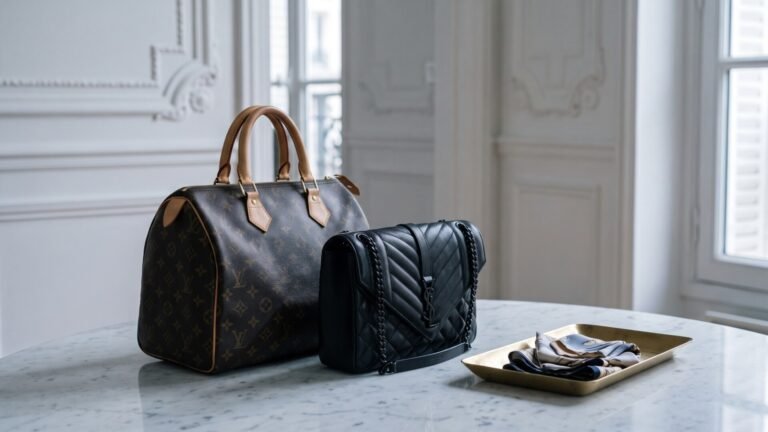
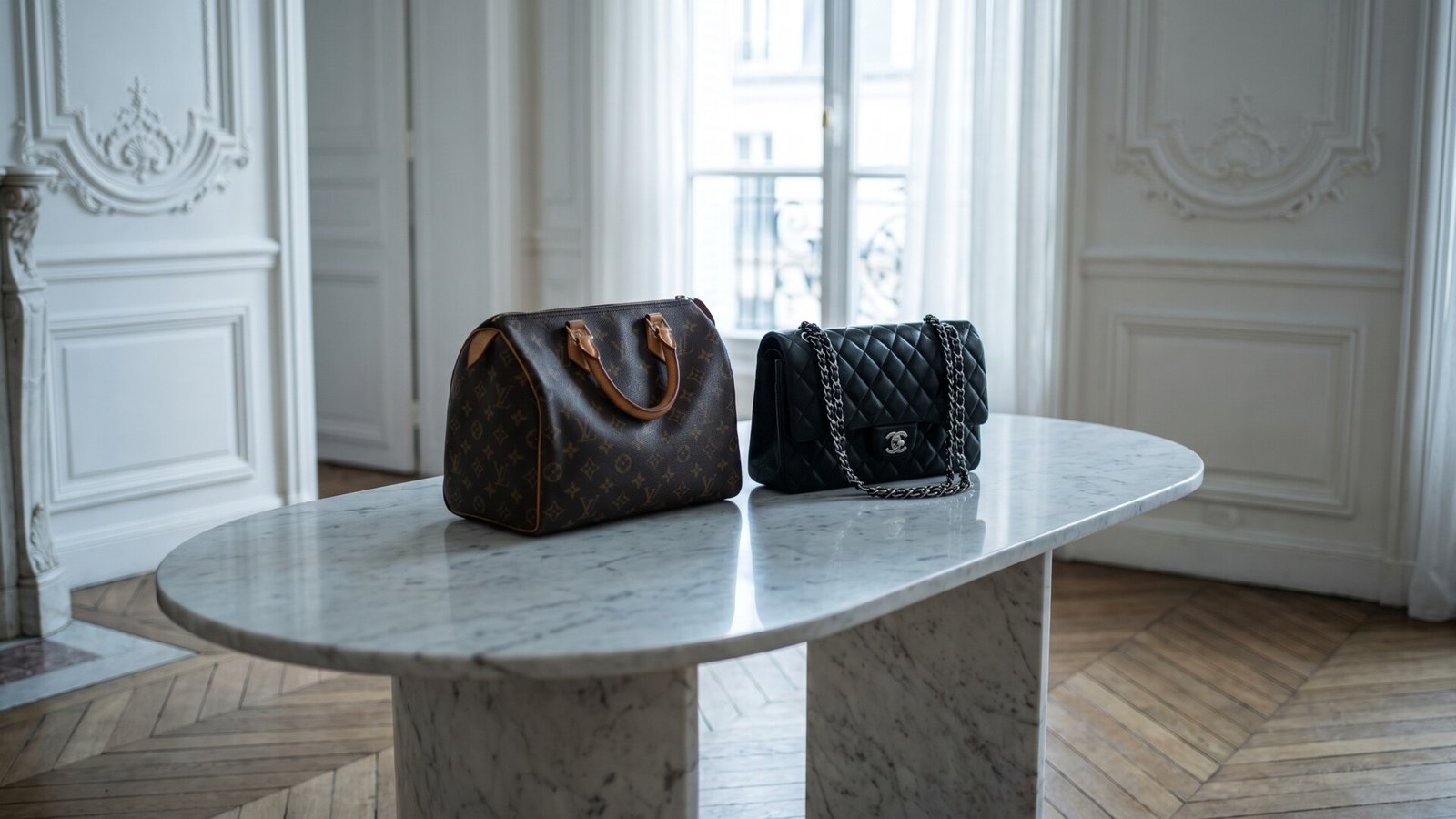
The Speedy, introduced in 1930 as a downsized Keepall, remains Louis Vuitton’s most iconic handbag. Available in sizes from Speedy 20 to Speedy 40, the bag works across casual and professional settings. The Monogram canvas version starts around $1,600, while leather iterations like the Speedy Bandoulière 20 in Empreinte leather cost approximately $2,400.
The Speedy’s enduring appeal lies in its versatility. It fits a 13-inch laptop in the larger sizes, transitions from day to evening, and maintains its shape with minimal care. The bag has been produced continuously for nearly a century, making it one of the most recognizable luxury accessories worldwide.
Neverfull Tote
The Neverfull, launched in 2007, became Louis Vuitton’s best-selling bag within five years. Its open-top design, side cinch straps, and removable pouch make it exceptionally practical for daily use. The Monogram canvas Neverfull MM retails for approximately $2,100, while leather versions cost $2,800 to $3,500.
The Neverfull fits a 15-inch laptop, gym clothes, or travel essentials. Its lightweight construction and comfortable shoulder straps make it ideal for commuting. The bag’s popularity has created a strong resale market, with pre-owned Neverfulls in good condition retaining 60-70% of retail value.
Keepall Duffel
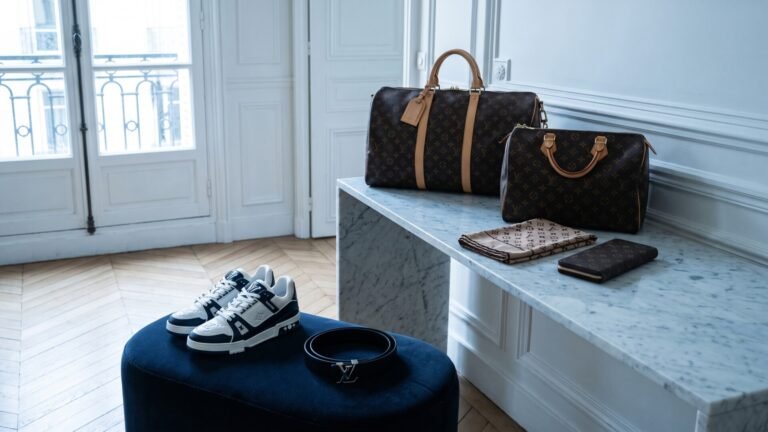
The Keepall, introduced in 1930, remains Louis Vuitton’s premier travel bag. Available in sizes 45, 50, and 55, the Keepall combines canvas durability with leather trim accents. Prices range from $2,200 for the Keepall 45 Bandoulière to $3,200 for larger sizes.
The Keepall’s lightweight construction and collapsible design make it superior to hard-sided luggage for weekend travel. The bag fits under most airplane seats when not fully packed, a practical consideration that aligns with Louis Vuitton’s travel heritage.
Chanel’s Core Offerings
Classic Flap Bag
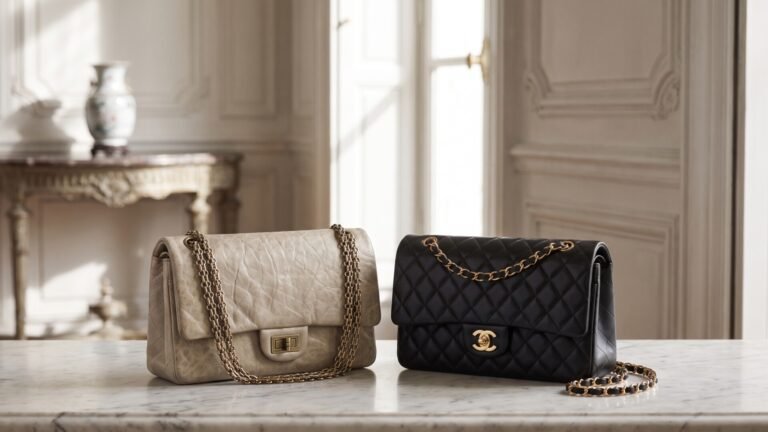
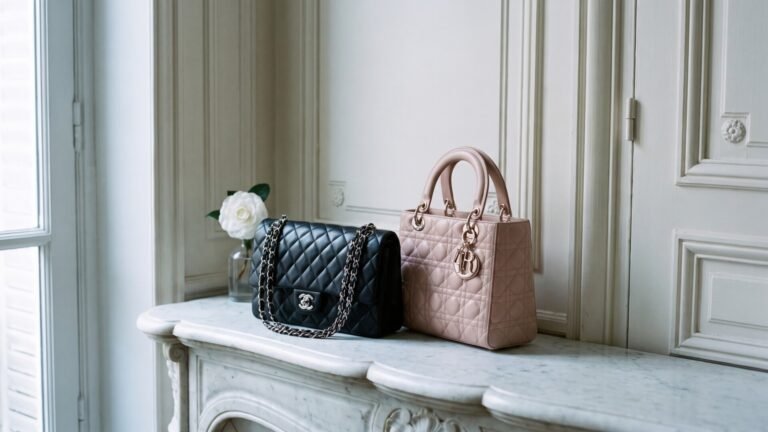
The Classic Flap Bag, introduced by Karl Lagerfeld in 1983 as an update to the 2.55, represents Chanel’s most iconic handbag. The bag features the signature CC turn-lock closure, quilted leather, and interwoven chain-and-leather strap. Prices in 2026 start at approximately $8,800 for the small size in lambskin and exceed $10,000 for the medium size.
The Classic Flap’s appeal extends beyond aesthetics. The bag’s construction involves 18 separate pieces of leather, hand-stitched by artisans. The chain strap interwoven with leather requires specialized craftsmanship. Each bag takes approximately 10 hours to produce.
The Classic Flap has demonstrated remarkable price appreciation. Chanel has increased prices on the Classic Flap by 60-70% since 2020, reflecting both inflation and strategic brand positioning. Pre-owned Classic Flaps in excellent condition often sell for 80-90% of current retail prices, making them among the strongest luxury investments.
Boy Bag
The Boy Bag, introduced in 2011 under Karl Lagerfeld, offered a more structured, androgynous alternative to the Classic Flap. The bag features a rectangular silhouette, chunky chain strap, and distinctive CC lock. Prices range from $5,500 for the small size to $7,500 for the large.
The Boy Bag appeals to younger buyers seeking a modern Chanel aesthetic. Its structured shape holds its form well over time, and the bag’s popularity has created a robust resale market. However, the Boy Bag has not achieved the same iconic status as the Classic Flap, and its resale value retention is slightly lower.
Chanel No. 5 Perfume
While not a handbag, Chanel No. 5 deserves mention as the brand’s most financially significant product. Launched in 1921, it remains the world’s best-selling luxury perfume. A 3.4 oz bottle retails for approximately $150. The perfume’s cultural cachet and consistent sales provide Chanel with a stable revenue stream independent of fashion cycles.
Comparative Analysis
| Product | Price Range | Resale Value Retention | Practicality Score | Iconic Status |
|---|---|---|---|---|
| LV Speedy | $1,600-$2,400 | 60-70% | 9/10 | 9/10 |
| LV Neverfull | $2,100-$3,500 | 60-70% | 10/10 | 8/10 |
| LV Keepall | $2,200-$3,200 | 55-65% | 8/10 | 9/10 |
| Chanel Classic Flap | $8,800-$10,000+ | 80-90% | 7/10 | 10/10 |
| Chanel Boy Bag | $5,500-$7,500 | 65-75% | 7/10 | 8/10 |
The data reveals a clear pattern. Louis Vuitton products offer higher practicality scores and lower entry prices. Chanel products command higher prices and deliver superior resale value retention. The choice between them depends on whether you prioritize daily usability or investment potential.
Design Philosophy
Louis Vuitton: Practical Luxury
Louis Vuitton’s design philosophy centers on functional luxury. The brand’s original trunk-making heritage established a focus on products that serve a purpose while maintaining aesthetic excellence. This practical orientation manifests in several ways.
Canvas materials dominate Louis Vuitton’s product range. The Monogram and Damier patterns offer durability that surpasses many leather alternatives. Canvas resists scratches, water damage, and daily wear better than calfskin or lambskin. This material choice reflects a design priority on longevity over luxury perception.
Louis Vuitton bags prioritize accessibility. The Speedy’s top handles and optional shoulder strap accommodate various carrying styles. The Neverfull’s open top allows quick access to contents. The Keepall’s lightweight construction makes travel easier. These features reflect a brand that designs for real-world use, not display cases.
The brand’s logo visibility has evolved. While Monogram canvas remains prominent, Louis Vuitton has expanded its leather offerings with more understated branding. The Empreinte leather collection features embossed monogram patterns that read as texture rather than overt logo display. This shift reflects changing consumer preferences toward quiet luxury.
Chanel: Timeless Elegance
Chanel’s design philosophy prioritizes timeless elegance over practical innovation. Gabrielle Chanel famously said, “Fashion fades, only style remains the same.” This principle guides every product decision.
Chanel handbags use premium materials almost exclusively. Lambskin, caviar leather, and tweed feature prominently. These materials require more care than canvas but offer superior tactile quality and visual depth. The brand’s commitment to leather reinforces its positioning at the highest tier of luxury.
Chanel designs prioritize silhouette and proportion over functionality. The Classic Flap’s chain strap cannot be removed or adjusted. The bag’s interior organization is minimal compared to Louis Vuitton’s multiple-pocket designs. These choices reflect a philosophy where aesthetics take precedence over utility.
The brand maintains strict control over its visual identity. The CC logo appears prominently on most products. The quilted pattern and chain straps are instantly recognizable. Chanel does not offer the same range of sizes or variations as Louis Vuitton, preferring to maintain a focused product line.
Contemporary Resonance
In 2026, both design philosophies find receptive audiences. Louis Vuitton’s practical luxury appeals to professionals who need bags that perform in daily life. The brand’s willingness to innovate with materials and silhouettes keeps it relevant for younger buyers.
Chanel’s timeless elegance attracts buyers seeking pieces that transcend trends. The brand’s resistance to seasonal fashion cycles appeals to those building curated, long-term wardrobes. Chanel’s higher prices also reinforce exclusivity, which some consumers value as a status signal.
The quiet luxury trend has benefited Chanel more than Louis Vuitton. While both brands offer understated options, Chanel’s heritage of discreet elegance aligns more naturally with contemporary preferences for subtle status signaling. Louis Vuitton’s Monogram canvas, while iconic, can feel conspicuous in settings where logo visibility is frowned upon.
Market Position in 2026
Current Market Share and Sales Performance
Louis Vuitton maintains its position as the world’s most valuable luxury brand, with annual revenue estimated at $22 billion. The brand has grown consistently at 8-12% annually over the past five years, driven by expansion in Asia and the Middle East. Louis Vuitton’s accessible price points and broad product range allow it to capture customers across multiple income brackets.
Chanel’s revenue, estimated at $15 billion, has grown more slowly at 5-8% annually. The brand’s higher price points and controlled distribution limit its addressable market. However, Chanel’s profitability per customer significantly exceeds Louis Vuitton’s, as the brand captures higher margins on each sale.
Sustainability and Digital Presence
Both brands have invested heavily in sustainability initiatives, though with different approaches. Louis Vuitton has focused on supply chain transparency and material innovation, introducing recycled canvas options and traceable leather. Chanel has emphasized craftsmanship preservation and carbon reduction, investing in sustainable farming practices for its raw materials.
Digital presence differs significantly. Louis Vuitton maintains a robust e-commerce platform with global shipping and virtual consultation services. The brand has embraced social media marketing, particularly on Instagram and TikTok, reaching younger demographics effectively. Chanel has resisted full digital integration, maintaining a more selective online presence. The brand does not sell all products online, preserving the in-store experience as a key differentiator.
Clientele Demographics
Louis Vuitton’s customer base skews younger, with a median age of 34. The brand attracts aspirational luxury buyers making their first significant luxury purchase, as well as established collectors. The Neverfull and Speedy serve as entry points, with many customers upgrading to leather pieces over time.
Chanel’s customer base is older, with a median age of 42. The brand attracts established professionals and wealthy individuals who prioritize quality and exclusivity over trendiness. Chanel customers tend to be more loyal, with higher repeat purchase rates and stronger emotional attachment to the brand.
Emerging Consumer Behaviors
Several trends are reshaping luxury brand positioning in 2026. The shift toward experiences over possessions has reduced demand for logo-driven products. Both brands have responded by emphasizing craftsmanship and heritage in their marketing.
The rise of resale platforms has democratized access to luxury goods. Louis Vuitton and Chanel dominate the pre-owned market, accounting for over 40% of luxury resale transactions. This secondary market affects brand perception, as consumers can access products at lower prices while brands maintain full retail pricing.
Sustainability concerns have grown more prominent. Younger consumers increasingly consider environmental impact when making luxury purchases. Both brands have faced scrutiny over their environmental practices, with Chanel receiving more criticism due to its reliance on animal-derived materials.
Craftsmanship and Quality
Materials Comparison
Louis Vuitton uses a mix of coated canvas and leather across its product lines. The Monogram canvas, made from cotton and PVC, offers excellent durability but lacks the tactile quality of leather. The brand’s leather options include Epi, Taïga, and Empreinte, each with distinct characteristics. Epi leather features a textured grain that resists scratches. Taïga leather offers a smooth finish with subtle grain. Empreinte leather provides a soft, supple feel with embossed monogram patterns.
Chanel uses primarily lambskin and caviar leather. Lambskin offers an unmatched softness and sheen but requires careful handling to avoid scratches. Caviar leather, with its pebbled texture, provides greater durability while maintaining a luxurious appearance. Chanel also uses tweed, jersey, and other textiles for seasonal collections.
The quality difference is noticeable. Chanel’s leathers are generally thicker, more consistent in texture, and more carefully selected. Louis Vuitton’s leathers, while good, do not match Chanel’s standards in terms of raw material quality. This difference reflects the brands’ pricing and positioning strategies.
Production Processes
Louis Vuitton produces most of its handbags in France, Spain, Italy, and the United States. The brand operates 16 workshops globally, producing approximately 5 million handbags annually. Production is semi-automated, with skilled workers operating specialized machinery for cutting, stitching, and assembly.
Chanel maintains stricter production control. The brand owns several of its suppliers, including leather tanneries and hardware manufacturers. Chanel handbags are produced primarily in France and Italy, with each bag requiring 8-12 hours of handcrafting. The brand produces approximately 500,000 handbags annually, one-tenth of Louis Vuitton’s volume.
This production scale difference has quality implications. Chanel’s lower volume allows for more rigorous quality control and greater attention to detail. Louis Vuitton’s higher volume requires standardized processes that can lead to occasional consistency issues.
Durability and Long-Term Wear
Louis Vuitton’s coated canvas products offer superior durability to most leather alternatives. The canvas resists water, scratches, and daily wear effectively. Many Louis Vuitton canvas bags remain in good condition after 10-20 years of regular use. Leather Louis Vuitton products show wear more quickly, with corner scuffing and edge wear appearing after 3-5 years.
Chanel’s leather products require more care but age gracefully when maintained. Lambskin develops a patina over time, with wear marks adding character. Caviar leather maintains its appearance longer, resisting scratches better than lambskin. Chanel bags typically require professional cleaning and conditioning every 2-3 years to maintain optimal condition.
The durability comparison depends on material choice. Louis Vuitton canvas outperforms Chanel leather in terms of scratch and water resistance. Chanel caviar leather outperforms Louis Vuitton’s coated canvas in terms of tactile quality and appearance. Each material serves different priorities.
Investment Value
Historical Appreciation
Louis Vuitton products have appreciated moderately over time. The Speedy bag, priced at approximately $500 in 2000, now retails for $1,600, representing 5.5% annual appreciation. The Neverfull, introduced at $1,200 in 2007, now costs $2,100, reflecting 4.5% annual growth. These increases track inflation and brand pricing strategy rather than exceptional investment returns.
Chanel products have appreciated significantly more. The Classic Flap Bag, priced at $3,100 in 2010, now retails for $8,800, representing 11% annual appreciation. This growth far exceeds inflation and reflects Chanel’s aggressive pricing strategy. The brand has raised prices annually since 2020, sometimes by 15-20% in a single year.
Investment-Grade Products
Louis Vuitton’s strongest investment products include limited edition collaborations and discontinued styles. The brand’s collaborations with artists like Jeff Koons and Yayoi Kusama have produced bags that appreciate significantly in the resale market. Discontinued leather colors and seasonal releases also command premiums.
Chanel’s Classic Flap Bag represents the strongest investment product in luxury fashion. The bag’s consistent price increases and strong resale demand make it a reliable store of value. Limited edition Chanel bags, particularly those from the brand’s annual Métiers d’Art collection, can appreciate substantially.
Investment Perspective
For pure investment purposes, Chanel offers superior returns. The Classic Flap Bag has outperformed most luxury goods and many traditional investments over the past decade. However, this performance depends on continued price increases, which may not persist indefinitely.
Louis Vuitton offers more modest but more reliable investment returns. The brand’s broad product range and consistent demand create a stable resale market. While individual pieces may not appreciate as dramatically as Chanel, the risk of significant depreciation is lower.
[Explore our [Luxury Fashion Investment Guide] for detailed analysis of investment-grade products from both brands.]
Resale Market Insights
Current Resale Trends
The luxury resale market has grown substantially, with Louis Vuitton and Chanel accounting for the largest share. The RealReal reports that Louis Vuitton represents 25% of its handbag sales, while Chanel accounts for 20%. Both brands maintain strong demand across all product categories.
Louis Vuitton canvas products retain 60-70% of retail value in excellent condition. Leather products retain 50-60%. Limited editions and discontinued styles can retain 80-100% or more. The Neverfull and Speedy are the most traded Louis Vuitton bags on the resale market.
Chanel products retain 70-90% of retail value in excellent condition. The Classic Flap Bag in caviar leather retains the highest percentage, often selling for 85-95% of current retail. Lambskin versions retain slightly less due to greater wear sensitivity. Seasonal colors and limited editions can sell above retail.
Brand Reputation and Resale
Chanel’s resale performance benefits from the brand’s pricing strategy. Annual price increases create a perception of scarcity and value. Buyers view pre-owned Chanel as a bargain compared to new retail prices, driving demand.
Louis Vuitton’s resale performance benefits from the brand’s accessibility. More buyers can afford pre-owned Louis Vuitton, creating a larger addressable market. The brand’s consistent production of core styles ensures steady supply, which stabilizes prices.
What Most Buyers Get Wrong About Resale
Many buyers assume that all luxury products retain value equally. This is incorrect. Resale value depends on specific factors: material, color, condition, and market demand. A Chanel Classic Flap in beige lambskin will retain less value than one in black caviar. A Louis Vuitton Neverfull in Damier Ebene will retain more than one in Monogram.
Another misconception is that limited editions always appreciate. Many limited edition Louis Vuitton and Chanel products sell below retail on the resale market. The most reliable investments are core styles in classic colors and durable materials.
Consumer Perceptions and Brand Loyalty
Survey Insights
Consumer surveys reveal distinct perceptions of each brand. Louis Vuitton is viewed as more accessible, practical, and modern. Chanel is perceived as more exclusive, timeless, and prestigious. These perceptions influence purchasing decisions and brand loyalty.
Louis Vuitton enjoys higher brand awareness globally, particularly in emerging markets. The brand’s broader distribution and lower price points create a larger customer base. However, this accessibility can reduce exclusivity perception among some consumers.
Chanel benefits from stronger emotional connection with its customer base. The brand’s heritage, craftsmanship, and limited availability create a sense of belonging among owners. Chanel customers report higher satisfaction and stronger loyalty than Louis Vuitton customers.
Social Media and Influencer Impact
Social media has transformed luxury brand perception. Louis Vuitton has embraced influencer marketing, collaborating with fashion bloggers and celebrities to reach younger audiences. The brand’s Instagram presence is polished and aspirational, featuring product shots and lifestyle content.
Chanel has maintained a more selective approach to social media. The brand does not pay influencers for posts, instead relying on organic content from loyal customers and celebrities. This approach reinforces Chanel’s exclusive positioning but limits reach among younger consumers.
The impact of social media on brand perception is mixed. Louis Vuitton benefits from wider exposure but risks overexposure. Chanel maintains mystique but misses opportunities to connect with emerging luxury buyers.
Who Should Buy Each Brand
Ideal Louis Vuitton Buyer
The ideal Louis Vuitton buyer values practicality and versatility. They need a bag that performs in daily life, fitting a laptop, gym clothes, or travel essentials. They appreciate the brand’s heritage but prioritize function over exclusivity.
This buyer is likely younger, aged 25-40, and building a luxury wardrobe. They may be making their first significant luxury purchase or expanding a collection. They value value for money and appreciate Louis Vuitton’s accessible entry prices.
Louis Vuitton suits buyers who travel frequently. The brand’s luggage and travel accessories are among the best in the luxury market. The Keepall and Horizon luggage offer practical luxury for frequent flyers.
Ideal Chanel Buyer
The ideal Chanel buyer prioritizes exclusivity and craftsmanship. They view luxury as an investment and appreciate the brand’s heritage and quality. They are willing to pay a premium for products that hold value and convey status.
This buyer is typically older, aged 35-55, and established in their career. They have experience with luxury goods and understand the nuances of quality and brand positioning. They value discretion and prefer understated elegance over obvious logos.
Chanel suits buyers who attend formal events and social functions. The Classic Flap Bag transitions seamlessly from day to evening, making it ideal for professional and social settings. Chanel’s ready-to-wear and accessories complement a polished, sophisticated lifestyle.
Lifestyle Alignment
The choice between Louis Vuitton and Chanel often reflects lifestyle priorities. Busy professionals who need practical, durable bags for commuting and travel will find Louis Vuitton more suitable. Those who attend events, value exclusivity, and view handbags as investments will prefer Chanel.
Neither choice is wrong. The brands serve different needs and different customers. Understanding your priorities will guide you to the right decision.
What Most Buyers Get Wrong
Common Misconceptions
Myth: Chanel is always better quality than Louis Vuitton.
Reality: Quality depends on specific products and materials. Louis Vuitton’s coated canvas offers superior durability to Chanel’s lambskin. Chanel’s caviar leather offers superior tactile quality to Louis Vuitton’s canvas. Each brand excels in different areas.
Myth: Louis Vuitton is for people who can’t afford Chanel.
Reality: Many luxury buyers own both brands. Louis Vuitton offers different products at different price points. The brands serve different needs rather than different income levels.
Myth: Chanel bags always appreciate in value.
Reality: While Chanel bags have appreciated historically, this trend may not continue. Price increases have slowed, and resale demand can fluctuate. Past performance does not guarantee future returns.
Myth: Louis Vuitton canvas is cheap.
Reality: Louis Vuitton’s Monogram canvas is a proprietary material developed over decades. Its durability and water resistance exceed many leathers. The material’s value lies in its performance, not its cost of production.
The Hidden Advantage of Each Brand
Louis Vuitton’s hidden advantage is its product range. The brand offers everything from handbags to luggage to accessories, allowing customers to build a complete luxury wardrobe. This breadth creates customer loyalty and repeat purchases.
Chanel’s hidden advantage is its pricing strategy. Annual price increases create a sense of urgency among buyers. The perception that prices will continue rising drives demand and supports resale values.
The Hidden Drawback of Each Brand
Louis Vuitton’s hidden drawback is overexposure. The brand’s ubiquity can reduce exclusivity perception. Some consumers avoid Louis Vuitton because they see it as too common.
Chanel’s hidden drawback is maintenance cost. Leather care, professional cleaning, and hardware replacement can be expensive. Chanel bags require more maintenance than Louis Vuitton canvas products.
Future Trends and Predictions
Evolution by 2030
Louis Vuitton will likely continue its growth trajectory, expanding into new markets and product categories. The brand will invest heavily in sustainability, introducing more recycled and traceable materials. Digital innovation, including virtual try-ons and personalized shopping experiences, will become more prominent.
Chanel will maintain its exclusive positioning but may face pressure to adapt. The brand’s resistance to e-commerce and digital marketing may limit growth among younger consumers. However, Chanel’s private ownership allows it to prioritize brand preservation over revenue growth.
Market Trends
The luxury market will continue shifting toward sustainability and ethical production. Both brands will face increasing scrutiny over their environmental impact. Louis Vuitton’s use of PVC-coated canvas may become a liability as consumers demand more natural materials.
The resale market will continue growing, potentially affecting new product sales. Brands may need to adapt their pricing and distribution strategies to account for the secondary market. Chanel’s aggressive price increases may face resistance if resale values plateau.
Emerging Competitors
New luxury brands are challenging established houses. Brands like The Row, Khaite, and Bottega Veneta offer quiet luxury alternatives that appeal to consumers seeking understated elegance. These brands may capture market share from both Louis Vuitton and Chanel.
Heritage brands like Hermès and Dior remain strong competitors. Hermès offers unparalleled craftsmanship and exclusivity, while Dior combines heritage with modern design. The competitive landscape will remain intense.
Frequently Asked Questions About Louis Vuitton Vs Chanel
What are the main differences between Louis Vuitton and Chanel?
Louis Vuitton focuses on practical luxury with accessible price points and durable canvas materials. Chanel emphasizes exclusivity, premium leather craftsmanship, and timeless design. Louis Vuitton has broader distribution and lower entry prices, while Chanel maintains stricter control over availability and commands higher prices.
Which brand holds its value better in the resale market?
Chanel generally retains a higher percentage of retail value. The Classic Flap Bag in caviar leather can retain 80-90% of retail value in excellent condition. Louis Vuitton canvas bags retain 60-70%, while leather pieces retain 50-60%. However, resale values depend on specific products, materials, and market conditions.
Are Louis Vuitton bags more practical than Chanel bags?
Yes, for most daily use cases. Louis Vuitton bags feature lightweight canvas materials, multiple compartments, and comfortable straps. The Neverfull fits a 15-inch laptop, while the Speedy transitions from day to evening. Chanel bags prioritize aesthetics over utility, with less interior organization and heavier chain straps.
Which brand is considered more timeless?
Chanel is widely considered more timeless due to its consistent design language and resistance to seasonal trends. The Classic Flap Bag has remained essentially unchanged since 1983. Louis Vuitton, while iconic, has evolved more significantly and offers trend-driven seasonal collections alongside core styles.
How do Louis Vuitton and Chanel compare in terms of craftsmanship?
Chanel offers superior craftsmanship in its handbags, using higher-quality leathers and more hand-finishing. Each Chanel bag requires 8-12 hours of production. Louis Vuitton’s craftsmanship is good but standardized for higher volume production. The difference is noticeable in leather quality and attention to detail.
Which brand is better for new luxury buyers?
Louis Vuitton is better for new luxury buyers due to its lower entry prices, practical designs, and broader product range. The Speedy and Neverfull offer accessible entry points into luxury fashion. Chanel’s higher prices and more specialized designs are better suited for experienced luxury buyers. — [Internal: Explore our complete [Louis Vuitton vs Chanel Comparison Guide] for detailed product-by-product analysis] [Internal: Read our [Luxury Brand Investment Guide] for strategies on building a valuable collection] [Internal: Visit our [Louis Vuitton Brand Hub] and [Chanel Brand Hub] for comprehensive brand information]