Longchamp: The Complete 2026 Guide to France’s Most Practical Luxury Handbag Brand
Why Longchamp Has Been a French Icon for More Than 75 Years
Longchamp occupies a rare position in the world of French luxury. It is a brand that has achieved global ubiquity without sacrificing its identity, a family-owned house that has remained independent while competitors have been absorbed by conglomerates, and a leather goods maker that has built its reputation not on exclusivity alone but on a combination of quality craftsmanship, functional design, and timeless French style.
Founded in Paris in 1948, Longchamp began as a small tobacco shop specializing in leather-covered pipes. The brand’s journey from smoking accessories to one of the world’s most recognized handbag houses is a testament to the vision of the Cassegrain family, who have guided the company through three generations of growth and innovation. Today, Longchamp operates in eighty countries through approximately fifteen hundred retail outlets and employs thousands of people worldwide.
What sets Longchamp apart from other French handbag brands is its unwavering commitment to practicality. While heritage maisons like Hermès and Chanel have built their reputations on exclusivity and investment value, Longchamp has focused on creating bags that people actually use every day. The brand’s most famous creation, the Le Pliage tote, was designed to be folded, packed, and carried anywhere. It is lightweight, durable, and unpretentious, yet unmistakably French in its elegance.
Unlike many luxury brands built on exclusivity alone, Longchamp has earned its reputation by combining quality craftsmanship, functional design, and timeless French style. It occupies a sweet spot between premium and accessible, offering bags that feel luxurious without the five-figure price tags of the heritage maisons. This positioning has proven remarkably resilient, with the brand posting strong growth even as the broader luxury sector has faced headwinds.
Quick Brand Snapshot
| Category | Rating |
|---|---|
| Heritage | Five stars |
| Craftsmanship | Four stars |
| Everyday Practicality | Five stars |
| Value for Money | Five stars |
| Quiet Luxury Appeal | Four stars |
| Investment Potential | Three stars |
| Travel Friendliness | Five stars |
Best For
Everyday handbags, travel, work, first luxury purchase, quiet luxury wardrobes
Best-Known Collections
Le Pliage, Le Roseau, Box-Trot, Épure
Longchamp excels by offering timeless French design and exceptional practicality rather than chasing trends or exclusivity.
The History of Longchamp
Origins
The Longchamp story begins in 1948, when Jean Cassegrain took over his father’s traditional tobacco business, Au Sultan, located in the heart of Paris. The shop was situated on boulevard Poissonnière in the second arrondissement, a busy shopping area at the foot of the city’s historic covered passageways.
Jean Cassegrain’s innovation was simple yet transformative. He began covering wooden pipes with supple leather, allowing them to be customized and instilled with character. This technique of encasing objects in leather would become the foundation of Longchamp’s leatherworking expertise. On February 1, 1948, Cassegrain formally established Longchamp as a brand, setting the stage for a great adventure in French leather goods.
The brand’s name and logo have their own story. Jean Cassegrain passed the Longchamp racecourse in Paris during his daily rides between home and the city center. The racecourse, whose name means long field, was adjacent to an old mill. Cassegrain, whose surname evokes the French word for miller, commissioned Turenne Chevallereau to design a galloping horse emblem that has remained the brand’s symbol ever since.
Expansion
Following the success of leather-covered pipes, Jean Cassegrain expanded the brand’s offerings to include small leather goods such as passport covers, which he embossed with gold leaf. The company debuted women’s handbags in 1971, marking a significant shift in its trajectory.
The next generation brought fresh vision. Philippe Cassegrain, Jean’s son, introduced bags into the Longchamp offering in the 1970s, beginning with nylon luggage. This lightweight, innovative luggage would later inspire the creation of Le Pliage. Sophie Delafontaine, Philippe’s daughter, joined the company and brought a fresh perspective on color and material, introducing more feminine and fashion-forward elements to the brand.
Why Longchamp Endured
Longchamp’s longevity can be attributed to several factors. The brand has maintained consistent quality across decades of growth, never compromising on materials or construction. Its functional innovations, particularly the foldable bag design, addressed real consumer needs that other brands overlooked. The brand’s design language has remained remarkably consistent, creating a recognizable aesthetic that transcends trends. And its broad global appeal, from students to professionals to royalty, has built a customer base that spans generations.
The Secret Behind Longchamp’s Global Success
While many French leather brands remained niche, Longchamp became a worldwide staple. The brand’s accessible luxury positioning allowed it to reach customers who might never afford a Hermès or Chanel bag. Its practicality-first philosophy addressed the needs of real women living real lives. Its consistent design language created brand recognition without reliance on loud logos. And its appeal across generations, from grandmothers to grandchildren, has built a multigenerational customer base.
What Makes Longchamp Different
Longchamp occupies a unique space in the French handbag landscape. It is not a heritage maison like Hermès or Chanel, nor is it a contemporary startup like Polène. It is something in between, a brand that has been family-owned for three generations and has built its reputation through quiet consistency rather than splashy campaigns.
French Elegance Without Excess
Longchamp’s aesthetic is distinctly French but never ostentatious. The brand’s bags are characterized by clean lines, thoughtful proportions, and an understated elegance that communicates quality without shouting. This approach has become increasingly relevant as consumer preferences have shifted toward quiet luxury and away from logo-heavy designs.
Practical Luxury
Perhaps nothing distinguishes Longchamp more than its commitment to practicality. The brand’s bags are designed to be used, not just admired. They are lightweight, durable, and versatile. The Le Pliage tote can be folded into a compact square and stored in a suitcase. The bags are washable and low-maintenance. This focus on real-world usability sets Longchamp apart from brands that prioritize aesthetics over function.
Understated Branding
Longchamp’s approach to branding is notably restrained. The brand’s signature horse logo appears on a discreet leather flap, but there are no large monograms or conspicuous logos. The bags communicate quality through their materials and construction rather than through visible branding. This quiet confidence has made Longchamp a favorite among those who prefer their luxury understated.
Longchamp Craftsmanship and Materials
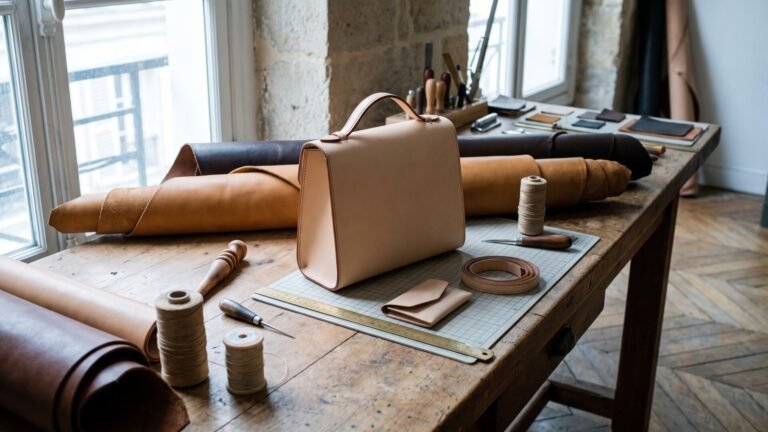
Leatherworking has always been a vitally important skill at Longchamp. From pipes and small leather goods to bags and luggage, the brand’s savoir-faire is expressed through the mastery of leather as a material.
Leather Selection
Longchamp works with a variety of leathers, each chosen for its specific characteristics. Russian leather, an embossed cowhide leather, is used in the iconic Le Pliage line. Its diamond grain boasts an aged, patina effect inspired by Russian reindeer skins salvaged from a ship that sank two centuries ago. Drummed calfskin, recognizable by its grained texture, has been a Maison signature since the 1970s and is used in the Foulonné line. Washed calfskin, characterized by its exceptionally supple feel and irregularities in grain and color, is used in the Longchamp 3D line.
The brand is deeply committed to responsible sourcing. The majority of leather purchases by Longchamp are made from tanneries certified by the Leather Working Group, with a significant portion achieving Gold certification, the highest level achievable. The leathers come from animals raised in Europe, Africa, and South America, and Longchamp ensures that related livestock farming does not contribute to deforestation, particularly in the Amazon rainforest. The house no longer uses exotic species or farmed fur-bearing animals in the manufacture of its collections.
Canvas Innovation
Longchamp’s use of nylon canvas has been as revolutionary as its leatherwork. The Le Pliage bag is crafted from washable nylon canvas, a nod to the innovative and lightweight nylon luggage the brand spearheaded in the 1970s. This material is lightweight, durable, and practical for everyday use.
In recent years, Longchamp has expanded its commitment to sustainable materials. The Le Pliage Green line uses recycled nylon fabric. The Le Pliage Energy collection is crafted from recycled polyamide. Since 2019, Longchamp has launched several product lines using recycled materials.
Construction Quality
Longchamp bags are built to last. The stitching is precise and durable. The hardware, including zippers and clasps, is high-quality and functional. The foldable engineering of the Le Pliage is a feat of design, allowing the bag to be reduced to a fraction of its size by three simple folds.
What Most Buyers Don’t Realize About Longchamp Quality
Many buyers assume that lightweight bags are cheaply made. Longchamp proves otherwise. The brand’s lightweight construction is the result of thoughtful engineering, not cost-cutting. The nylon used in Le Pliage is durable and resistant to wear. The leather trims age beautifully over time. And the foldable design requires precision manufacturing to ensure that the bag retains its shape and function after years of folding and unfolding. Compared to heavier luxury bags, Longchamp offers exceptional durability without the weight.
Longchamp’s Most Important Collections
Le Pliage
Le Pliage is not just Longchamp’s most famous collection, it is one of the most recognizable handbag designs in the world. Designed in 1993 by Philippe Cassegrain and inspired by the Japanese art of origami, Le Pliage has become a global icon. The name itself means folding in French.
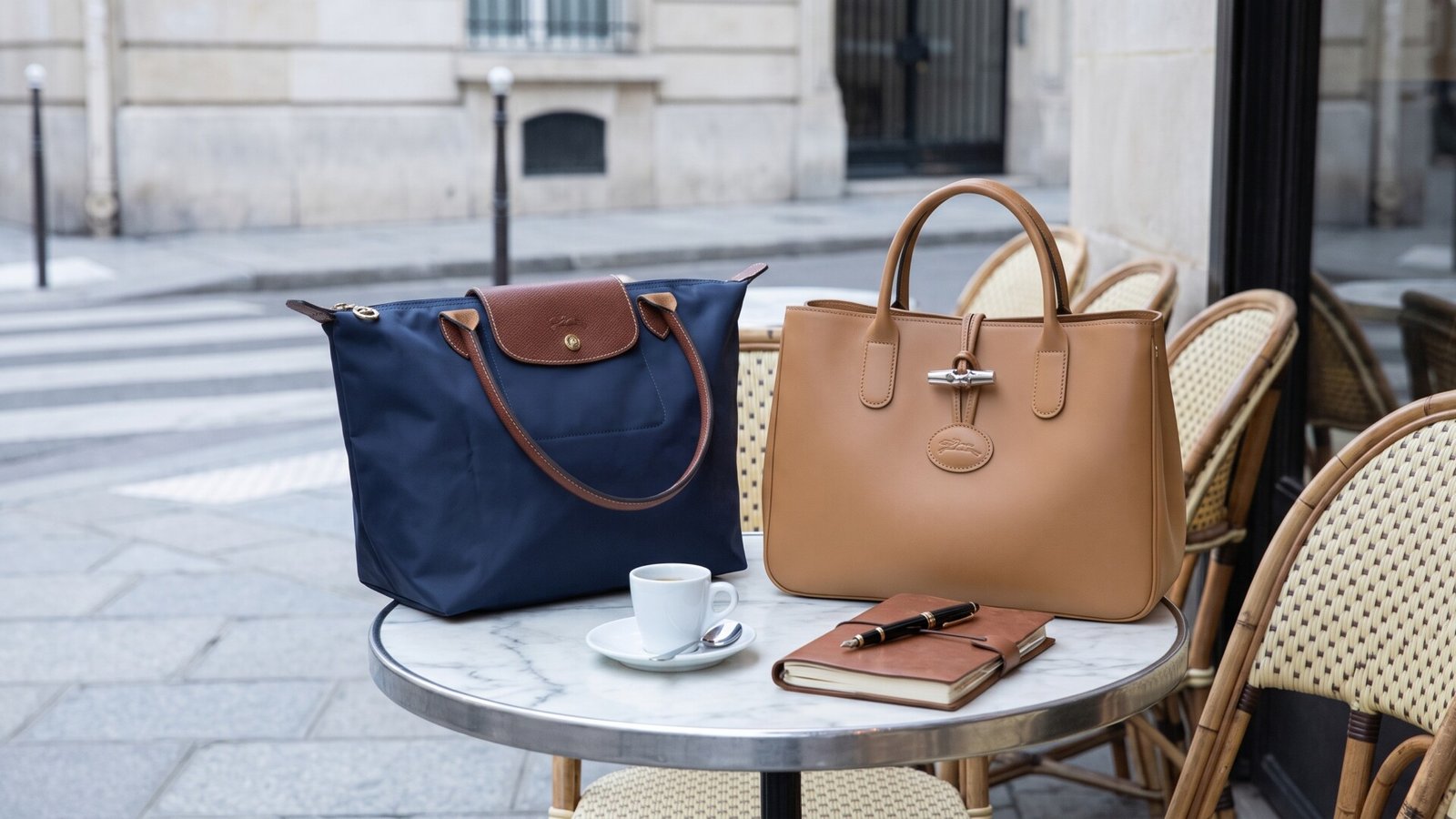
The bag’s design is deceptively simple: a trapezium-shaped tote crafted from lightweight nylon canvas, equipped with a zip, two leather handles, and a snap-closing flap. The genius lies in its foldability, the bag can be reduced to a fraction of its size by three simple folds, making it wonderfully transportable. Over thirty years on, this timeless creation continues to be carried with elegance across generations.
Le Pliage is available in multiple sizes, from small handbags to large travel bags. The line has expanded to include backpacks, crossbody styles, and personalized options through the My Pliage program, which allows customers to design their own bags with custom colors, motifs, and monograms.
The bag has achieved cult status. It has been ranked among the hottest fashion items, with searches for Longchamp surging during key periods. On social media, the hashtag has amassed significant engagement.
Who it’s for: Everyone. Le Pliage is one of the most democratic luxury bags ever created, carried by students, professionals, travelers, and royalty alike.
Best sizes: The medium tote is the most versatile for everyday use. The large shopping tote works for work and travel. The small crossbody styles are ideal for evenings and casual outings.
Pros: Lightweight, foldable, durable, affordable, timeless
Cons: Nylon construction lacks the prestige of full leather, not an investment piece
Why it’s iconic: Le Pliage democratized French luxury. It made a beautifully designed, well-made French handbag accessible to a broad audience without compromising quality or style.
Le Roseau
Le Roseau represents Longchamp’s commitment to minimalist elegance. The collection is characterized by clean lines, refined silhouettes, and the signature bamboo-inspired clasp that gives the line its name.
Available in cowhide leather, Le Roseau bags range from hand-carry styles to crossbody and shoulder bags. The collection includes large and small handbags with detachable shoulder straps, trapeze-shaped shoulder bags, and spacious options for everyday use.
Le Roseau is designed for the woman who values quiet sophistication. The bags are polished enough for the office but relaxed enough for weekends. The bamboo clasp adds a distinctive touch without being ostentatious.
Who should buy it: Professionals seeking a work-appropriate bag, those who prefer structured elegance over casual styles.
Box-Trot
Box-Trot is Longchamp’s answer to the quiet luxury movement. With its clean lines and compact silhouette, the Box-Trot elegantly revisits the crossbody bag with a flap. Both refined and relaxed, structured and supple, it stands out as an everyday companion.
The bag features an adjustable shoulder strap, making it practical for city living. It comes in three compact sizes, all ideal for travel. The Box-Trot is crafted from smooth calfskin leather with a solid, smooth feel and fine details that reflect the brand’s craftsmanship. The metal emblem clasp features the brand’s classic horse and rider motif, adding weight and significance.
Reviewers praise the Box-Trot as the perfect everyday crossbody, comfortable, elegant, and versatile enough to go with everything. It is casual enough for daytime and sleek enough for evenings.
Who should buy it: Those seeking a quiet luxury shoulder bag, travelers wanting a versatile crossbody, minimalists who appreciate clean design.
Épure
The Épure collection showcases timeless designs and colors. The line includes crossbody bags with flaps, phone cases with press studs, and the famous bucket bag.
Épure represents Longchamp’s commitment to modern leather craftsmanship. The designs are minimalist, the materials are premium, and the functionality is uncompromising. These are bags designed for everyday use, offering the practicality Longchamp is known for in more refined, leather-focused silhouettes.
Who should buy it: Those seeking a minimalist everyday bag, quiet luxury enthusiasts, buyers who prefer leather over canvas.
Other Collections
Daylong: A collection of casual, everyday bags designed for modern lifestyles.
Le Foulonné: Characterized by drummed calfskin leather with a grained texture, a Maison signature since the 1970s.
Energy: A reimagining of the original Le Pliage line, crafted from fully recycled canvas.
Cabas: Simple, structured totes for everyday use.
Seasonal releases: Longchamp regularly introduces limited-edition colors, patterns, and collaborations that keep the brand fresh and exciting.
Which Longchamp Bag Should You Buy
| If You Want… | Choose… |
|---|---|
| Everyday tote | Le Pliage |
| Work bag | Le Roseau |
| Quiet luxury shoulder bag | Box-Trot |
| Crossbody | Épure |
| Travel bag | Le Pliage Travel |
| Weekend bag | Le Pliage Travel |
Why Each Recommendation Fits Different Lifestyles
Le Pliage for everyday: The lightweight nylon construction, foldable design, and spacious interior make Le Pliage the ultimate everyday tote. It can handle everything from groceries to laptops to gym clothes, and it folds flat when not in use.
Le Roseau for work: The structured silhouette, premium leather, and elegant bamboo clasp make Le Roseau appropriate for professional settings. It carries documents, laptops, and daily essentials with polish.
Box-Trot for quiet luxury: The compact crossbody silhouette, smooth calfskin leather, and understated branding make Box-Trot perfect for those who want a bag that communicates quality without shouting. It works for day or evening.
Épure for crossbody: The minimalist design and practical functionality make Épure ideal for hands-free days. The crossbody styles are comfortable and secure.
Le Pliage Travel for travel: The large size, lightweight construction, and foldable design make Le Pliage Travel the perfect carry-on companion. It packs flat and expands to hold everything needed for a weekend away.
Longchamp vs Other French Handbag Brands
Longchamp vs Polène
Polène has emerged as one of the most talked-about contemporary French handbag brands, known for sculptural design and quiet luxury at accessible prices. Longchamp and Polène occupy similar price points but offer very different aesthetics. Polène bags are characterized by architectural shapes, soft curves, and full-grain leather construction. Longchamp offers more traditional silhouettes with a focus on practicality and versatility.
Polène produces in Ubrique, Spain, while Longchamp maintains production in France and other locations. Polène’s designs are more fashion-forward, while Longchamp’s are more timeless. Polène appeals to those seeking a contemporary, sculptural aesthetic, while Longchamp appeals to those who prioritize practicality and versatility.
Longchamp vs APC
APC built its reputation on minimalist essentials. The brand’s Demi-Lune and Grace bags have become contemporary classics, prized for their clean lines and understated sophistication. Like Longchamp, APC favors quiet luxury over conspicuous branding.
The key difference lies in material and construction. APC bags are typically crafted from full-grain leather with minimal hardware. Longchamp offers a wider range of materials, from nylon canvas to various leathers, and a broader range of silhouettes. APC is more strictly minimalist, while Longchamp offers more variety in both style and function.
Longchamp vs Lancel
Lancel represents traditional French leather craftsmanship with a heritage that spans over one hundred and fifty years. Both brands offer classic French style at accessible prices, but they approach design differently. Lancel’s Premier Flirt and Origami bags are more feminine and fashion-forward. Longchamp’s designs are more practical and versatile.
Lancel’s prices tend to be slightly higher than Longchamp’s. Both brands appeal to buyers seeking heritage craftsmanship without the spotlight, but Longchamp has achieved greater global reach and recognition.
Longchamp vs Louis Vuitton
Louis Vuitton represents the pinnacle of heritage luxury travel goods. The brand’s canvas bags are durable, practical, and instantly recognizable. Longchamp offers a similar practicality-first philosophy at a more accessible price point.
The key difference is positioning. Louis Vuitton is a heritage maison with centuries of history and significant investment value. Longchamp is an accessible luxury brand focused on everyday usability. Louis Vuitton bags command premium prices for brand heritage and status signaling. Longchamp offers exceptional quality without the premium.
Why Longchamp Is One of the Smartest First Luxury Purchases
For those buying their first luxury handbag, Longchamp represents an exceptionally smart choice. The financial risk is lower than with heritage maisons, yet the quality and design are unmistakably French. The bags are exceptionally usable, with cost-per-wear that is difficult to beat. They are easy to own, requiring minimal maintenance and offering durability that lasts for years. And their timeless appeal means they will remain stylish for decades, not just seasons.
Is Longchamp a Luxury Brand
This question arises frequently, and the answer depends on how one defines luxury.
Longchamp occupies a distinctive position at the intersection of accessible luxury. The brand offers premium craftsmanship, quality materials, and timeless design, but at price points that are significantly lower than heritage maisons like Hermès or Chanel. This accessible luxury positioning allows Longchamp to reach customers who might never afford a five-figure handbag while maintaining the quality and design standards of a luxury house.
The brand’s success suggests that luxury exists on a spectrum. At one end are heritage maisons defined by exclusivity, investment value, and centuries of history. At the other are mass-market accessories. Longchamp sits comfortably in the middle, offering the craftsmanship and design of luxury at prices that are accessible to a broader audience.
Longchamp’s craftsmanship is unquestionably premium. The brand uses high-quality leathers from certified tanneries, employs skilled artisans, and maintains rigorous quality standards. The brand’s designs are timeless and distinctly French. And its bags are built to last, often surviving decades of daily use.
What Longchamp lacks is exclusivity. The brand’s bags are widely available and widely carried. They do not appreciate in value like Hermès or Chanel bags. They do not confer the same status signaling as more exclusive brands. But for many buyers, this accessibility is precisely the appeal.
Who Should Buy Longchamp
Longchamp’s broad appeal means it works for a wide range of buyers.
Professionals appreciate Longchamp for its work-appropriate silhouettes, particularly Le Roseau, which offers structured elegance for the office. The bags are professional without being stuffy, polished without being precious.
Frequent travelers value Longchamp for its lightweight construction and foldable designs. Le Pliage Travel can be packed flat in a suitcase and expanded at the destination. The bags are durable enough for the rigors of travel yet elegant enough for city exploring.
Students have made Le Pliage a campus staple. The bags are affordable, durable, and spacious enough for textbooks and laptops. They fold flat for storage in dorm rooms. And they communicate a sense of style without being ostentatious.
Minimalists appreciate Longchamp’s clean lines, understated branding, and timeless designs. The bags are free of unnecessary details and loud logos, appealing to those who prefer their accessories simple and elegant.
First-time luxury buyers find Longchamp an accessible entry point. The price points are manageable, the quality is evident, and the designs are timeless enough to remain relevant for years. A Longchamp bag is a gateway to French luxury without the intimidation of a heritage maison.
Quiet luxury enthusiasts have made Longchamp a favorite. The brand’s understated approach to design, minimal branding, and focus on quality over status signaling align perfectly with the quiet luxury aesthetic.
The Future of Longchamp
Longchamp is better positioned than ever as consumer preferences shift toward practical luxury, understated design, and sustainability.
Sustainability
Longchamp has made significant strides in sustainability. Since 2019, the brand has launched several product lines using recycled materials. The Le Pliage Green line uses recycled nylon fabric. The Le Pliage Energy collection is crafted from recycled polyamide. The Re-Play line, created in 2019, gives new life to inactive stock, transforming leather, nylon fabrics, silks, and other materials into new products.
The brand has also established a repair service to extend the life of its bags. This commitment to repairability reflects a broader shift toward sustainability in luxury fashion.
Contemporary Leather Collections
While Le Pliage remains the brand’s most famous collection, Longchamp has been investing in contemporary leather collections that appeal to a more fashion-forward audience. Box-Trot, Épure, and Le Roseau offer leather-focused alternatives to the nylon tote, expanding the brand’s appeal.
Global Expansion
Longchamp continues to grow globally, with strong performance across regions. The brand has achieved significant growth in global sales, with remarkable increases across Europe, the United States, and Asia. Online sales continue to grow at a healthy rate.
Why Longchamp Is Better Positioned Than Ever
Several trends are working in Longchamp’s favor. The shift toward practical luxury means consumers are seeking bags they can actually use, not just admire. Logo fatigue has driven demand for understated brands that communicate quality through materials rather than branding. The demand for versatile bags that work for multiple occasions has never been higher. And the rising appreciation for understated brands has made Longchamp’s quiet confidence more relevant than ever.
Final Verdict: Is Longchamp Worth Buying
Buy Longchamp If
You value practicality over prestige. Longchamp bags are designed to be used every day, not saved for special occasions. You travel frequently and need a bag that packs flat and withstands the rigors of travel. You want timeless design that will remain stylish for decades, not just seasons. You prefer understated luxury that communicates quality without shouting.
Consider Another Brand If
You are seeking investment appreciation. Longchamp bags do not appreciate in value like Hermès or Chanel. You prefer bold statement bags with dramatic silhouettes or loud branding. You want highly exclusive luxury that signals status through scarcity.
Final Conclusion
Longchamp has remained relevant for decades because it prioritizes thoughtful design over trends. Its bags may not command the same prestige or resale values as ultra-luxury maisons, but they consistently deliver exceptional functionality, quality, and timeless Parisian style, making them some of the smartest everyday luxury purchases available.
The brand’s commitment to craftsmanship, its family-owned independence, and its ability to evolve while staying true to its identity have built a legacy that spans three generations. Whether you are buying your first luxury handbag or adding to a collection, Longchamp offers something rare: French elegance without the attitude, quality without the pretension, and timeless style that actually works for real life.
Frequently Asked Questions About Longchamp
Is Longchamp a luxury brand?
Longchamp is considered an accessible luxury brand. It offers premium craftsmanship, quality materials, and timeless design at price points that are lower than heritage maisons like Hermès or Chanel. Luxury exists on a spectrum, and Longchamp occupies a distinctive position between mass-market accessories and ultra-premium luxury.
Which Longchamp bag is the most popular?
The Le Pliage tote is Longchamp’s most popular bag. Designed in 1993 and inspired by Japanese origami, it has become a global icon. It is consistently one of the brand’s best-selling styles.
Is Le Pliage worth buying?
Yes. Le Pliage is lightweight, durable, foldable, and timeless. It offers exceptional value for money and is one of the most practical luxury handbags available. The nylon canvas is durable and washable, and the leather trims age beautifully.
Are Longchamp bags made in France?
Longchamp designs in Paris and manufactures in its own workshops, with production facilities in France and other locations. The My Pliage personalized bags are made to order in the Maison’s workshops in Segré, France.
Which Longchamp bag is best for work?
Le Roseau is the best Longchamp bag for work. Its structured silhouette, premium leather, and elegant bamboo clasp make it appropriate for professional settings. It carries documents, laptops, and daily essentials with polish.
How long do Longchamp bags last?
Longchamp bags are built to last for many years with proper care. The brand offers repair services to extend the life of its bags. Many customers report using their Le Pliage bags for a decade or more.
Is Longchamp better than Polène?
Neither is objectively better, they serve different preferences. Longchamp offers more traditional silhouettes with a focus on practicality and versatility. Polène offers more fashion-forward, sculptural designs. Longchamp has a longer heritage and wider global recognition. Polène appeals to those seeking contemporary, architectural design.
What is the best first Longchamp bag?
The Le Pliage medium tote is the best first Longchamp bag. It is the brand’s most iconic style, versatile enough for daily use, and affordable enough to be an accessible entry point into French luxury.